Showing posts with label Bounty Arms. Show all posts

Bounty Arms: Going Data West

Uh-oh. I haven’t written about Bounty Arms in over a year! That’s perhaps understandable, since an unreleased PlayStation action game from 1995 doesn’t exactly make daily tabloid headlines (like BANNED BOUNTY BABES BOUND BACK). Yet I, as the president and sole member of the Bounty Arms Preservation Society, remain dedicated to chronicling every new mention and detail about this intriguing and still partially lost game. 

The standard introduction applies: Bounty Arms is a canceled action game from the first year of the PlayStation, and it combined familiar genre staples as mecha enemies and stylish anime heroines with a unique multifunctional Relic Arm weapon. It looked neat and got as far as a bare-bones demo (which you can find here), but publisher Data West delayed and eventually canceled it, leaving Bounty Arms yet another intriguing and likely unfinished title. 

Data West intrigues me as well. They were yet another technology company that dipped into game development and pulled out when it stopped making them money, and they’re still around today. Their website offers some of their old games for sale, though only for Japan. That may reflect the fact that Data West’s games were seldom known on an international scale. Even today, a lot of people assume you’re talking about Data East. 

That brings me to the catalyst for this update: a nice YouTube video from F_T_B, discussing Data West’s history with an eye on their adventure games. It’s a reminder of just how much of Japan’s game industry remains relatively unknown in the English-speaking world. Series like The 4th Unit and Psychic Detective had strong followings in Japan yet no recognition in the West outside of some scattered and astute importers. And again, even today people might assume you’re talking about the unrelated Electronic Arts FMV game that was also called Psychic Detective.

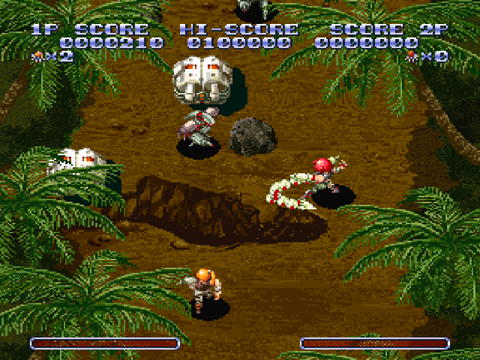
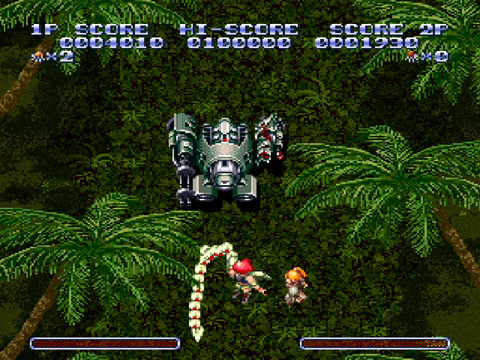
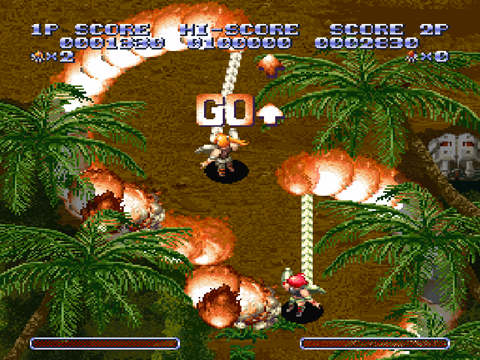
The video refers to Bounty Arms as a shooter, however, and that is incorrect. As you can see from the demo itself, the game allows heroines Chris and Rei to wield their telescoping cyber-arms like whips, grappling hooks, bullet-deflectors, and spinning flamethrowers—but never firearms. That’s part of what fascinates me about Bounty Arms.

That aside, the video does a great job of covering Data West’s catalog beyond Brave Prove and the Rayxanber series. It makes one realize how graphic adventures like The 4th Unit were the company’s most abundant creations, and it makes the cogent point that Data West often backed the wrong horses when it came to putting their games on consoles like the LaserActive. 

In fact, that makes Bounty Arms all the more tantalizing. For once Data West was on a winning team, getting in at the ground floor of the PlayStation’s first year and, according to an interview with Yasuhito Saito, getting Sony’s earnest support for the game. By the time they canceled Bounty Arms and published Brave Prove in 1999, the PlayStation scene was far more crowded. 

So would Bounty Arms have succeeded back in 1995? It might have been overshadowed by other action games like Gunners Heaven, but there certainly wasn’t anything like Bounty Arms’ 2-D overhead approach and Relic Arm mechanics in the PlayStation’s early lineup. Would fans of arcade-style action games and traditional hand-drawn graphics have rallied around it, or would Bounty Arms have been seen as archaic and limited by critics who dismissed traditional games while feverishly lionizing many mediocre games with new 3-D visuals that would age as well as sour cream on the summer pavement? Could Bounty Arms have made it in a world where a magazine might fawn over the embarrassment of Toshinden while fobbing off such hand-drawn brilliance as Darkstalkers 3 and Guardian Heroes with banal three-out-of-five-star reviews? No, I’m not still bitter over that. Not me.

These are the things we might discuss at regular meetings of the Bounty Arms Preservation Society. Joining is free and confers nothing, but since the society has no vice president, treasurer, press secretary, minutes-taker, research assistant, or caterer, all of those positions are open to the first applicants. They’ll look sharp on your CV or resume.

Bounty Arms: The Hermie Hopperhead Connection

So what's new with Bounty Arms? Nothing major, as you might expect when it comes to a PlayStation action game canceled back in 1995. However, I made a Twitter post about how Data West’s Bounty Arms is chief among my video-game white whales, edging out Mega Man Legends 3 and Ultimate Journey and even Super Dog Booby. 


It received a decent number of likes for a game that never got noticed much when it was viable and in development, and I'm grateful for all of the responses—even the one from somebody who wants to see Bounty Arms heroines Chris and Rei as muscular circus clowns. Sometimes the best way to keep an obscure video game alive is through equally obscure predilections.  

So it's a good time to discuss Bounty Arms. In the absence of real news, I'll just speculate about the connection between Bounty Arms and Yuke's.   

Yuke’s is best known these days for their extensive lineup of wrestling games, but they’ve tried all sorts of genres since Yukinori Taniguchi founded the company in 1993. Taniguchi figures tangentially into Bounty Arms’ history, as he worked on a number of Data West titles, including Rayxanber III and the LaserActive shooter Vajra.  

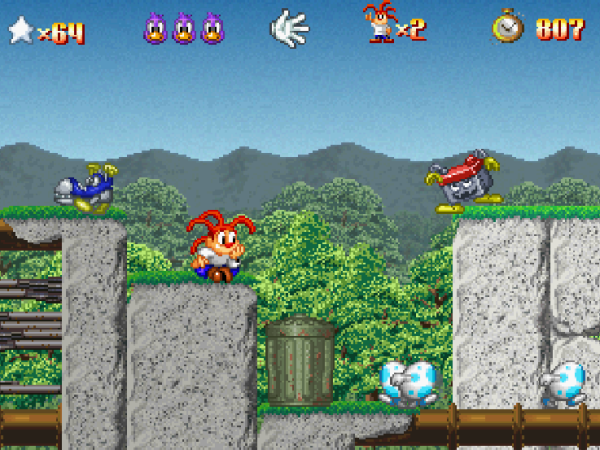
The first Yuke’s game unrelated to wrestling was an early Japan-exclusive PlayStation action-platformer called Hermie Hopperhead. While perhaps not a genre trailblazer in its depictions of a red-haired kid jumping on enemies and hatching allies from eggs, Hermie charmed GameFan founder Dave Halverson so thoroughly that he vowed to put it in every issue of his magazine until a publisher brought it to North America.   

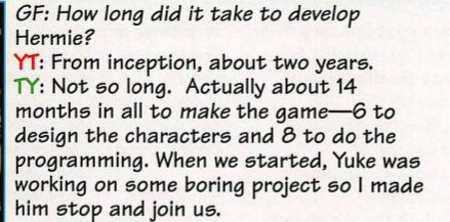
This did not come to pass, but before giving up, GameFan ran an extensive interview with Taniguchi and Sony’s Tetsuji Yamamoto. They discuss a lot about the company’s history, and there’s one interesting detail for the Bounty Arms files.  

Yamamoto mentions that Taniguchi was working on “some boring project” before they developed Hermie Hopperhead. Might this refer to Bounty Arms?  

I doubt that for two reasons. One: the timeline doesn’t quite add up, as Taniguchi had founded Yuke’s and apparently stopped working with Data West in 1993, years before Bounty Arms was announced or canceled. Two: I refuse to believe that anyone would find Bounty Arms boring, even in jest.   

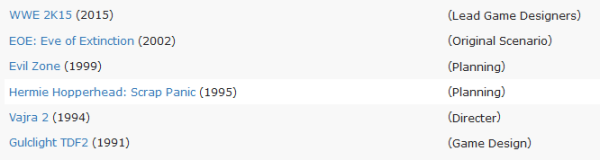
Yet there’s another connection. I’ve previously speculated about a former Data West staffer named Kenji Nakamura—and how he may be the same as Kazuhide Nakamura, who directed the first Vajra and designed or directed the three Rayxanbers. Even when sticking to separate credits, Kazuhide Nakamura directed Vajra 2, the last game Data West released before starting up Bounty Arms, and I suspect his departure was either a result of or the reason for Data West canceling it.   After leaving Data West, Nakamura joined Yuke’s. And what was his first game contribution there? 


Yep. Nakamura was a designer on Hermie Hopperhead. And that brings more speculation from me. Did he leave Data West to work on a new game at Yuke’s? Was he lured away by the opportunity to make a side-scroller about a street-savvy tentacle-haired boy and his battle against garbage enemies? Did Hermie Hopperhead kill Bounty Arms?  

Probably not, but it’s still interesting to play Hermie Hopperhead and other Yuke’s games that involved Nakamura, looking for any common ground or residual influences of Bounty Arms. I’m particularly curious about EOE: Eve of Extinction, a PlayStation action game with Nakamura as scenario creator and lead designer. It’s fallen into such obscurity that I can’t even remember if I ever played it, but I’m still driven to investigate for the sake of the Bounty Arms Preservation Society. And because the English version has a nice lineup of then-ubiquitous voice talent. Cam Clarke! Kim Mai Guest! Jennifer Hale!  

A few notes for those just learning about Bounty Arms: You can download the only known playable demo of the game here. And if you want to trick it into playing the entire first stage, check out these directions. And then you can devise nonsensical theories of your own!  

Bounty Arms: The Famitsu Spread

Let’s take yet another look at Bounty Arms. We here at the Bounty Arms Preservation Society (tax-exempt status pending) are dedicated to researching, archiving, and presenting all known information about this canceled PlayStation game from 1995. That may seem oddly narrow and of potential interest to very few, but we’re all busy and can’t very well devote ourselves to cataloging every unreleased game that ever got past a napkin doodle.

Our most recent discovery is a preview of Bounty Arms from the February 10, 1995 issue of Famitsu. This is likely all the magazine ever ran about Bounty Arms; the game disappeared after missing its April release date in Japan and for months afterward persisted only in those nebulous TBA sections of release schedules. Moreover, 1995 was a remarkably busy year, and Famitsu covered every video-game platform. Bounty Arms merited a few pages in early PlayStation-centric publications simply for existing, but in Famitsu it had to fight for space in between Virtua Fighter 2 comics, lengthy Chrono Trigger features, and 3DO ads with Albert Einstein.


It’s no surprise, then, that Famitsu’s preview is a mere quarter-page. It offers the barest introduction to Bounty Arms; we’re told that it’s an overhead-view action game, it’s developed and published by Data West, and its heroines use extending mechanized Relic Arms as grappling hooks, whips, and huge flamethrowers. The preview doesn’t mention the main characters by name, nor are there any screenshots showing Rei Misazaki and Chris, whose last name we still haven’t properly translated. Here it is if you care to try.


The screenshots show little that we at the Bounty Arms Preservation Society have not uncovered previously. Every image we have of the game shows one of two stages: the initial jungle level (available entirely in the demo) and an industrial factory of some kind. We see both in the Famitsu preview. Composer Yasuhito Saito estimates that Bounty Arms was 60 percent complete when it was canceled, which may well mean that game had four or five stages.


One thing stands out, though. The factory stage has large metal frames appearing over the characters, as shown in the screenshot above. The tiny startburst in the Famitsu preview appears to show Chris standing ON the metal frame. Was the entire stage multi-layered, like…uh, Vertical Force for the Virtual Boy? That would add a lot to Bounty Arms’ otherwise straightforward arcade formula and compensate for it being only a few levels long.

Perhaps we’ve made too much of this single image, but these are the discussions that keep the Bounty Arms Preservation Society going. They’re also the reason why the Bounty Arms Preservation Society has exactly one member.

Bounty Arms: The Demo in Full

If you’ve followed this website for a while, you likely noticed my obsession with an unreleased game called Bounty Arms. Data West announced it for the first round of PlayStation games in 1995, and it brought a novel idea. The game’s two anime heroines wander overhead-view stages, much like the protagonists of Mercs or Outzone or dozens of similar shooters. Instead of standard-issue firearms, however, they wield telescoping Relic Arms that serve as whips, grappling hooks, and all-destroying flamethrowers.

Alas, this promising title vanished from sight around the middle of 1995, with Data West moving on to another game and subsequently retreating from the industry. A scrap of Bounty Arms made its way to the public, though.


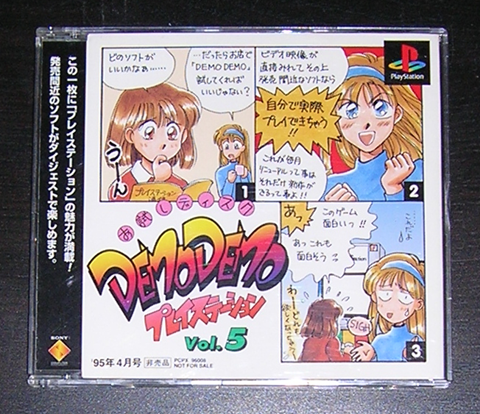
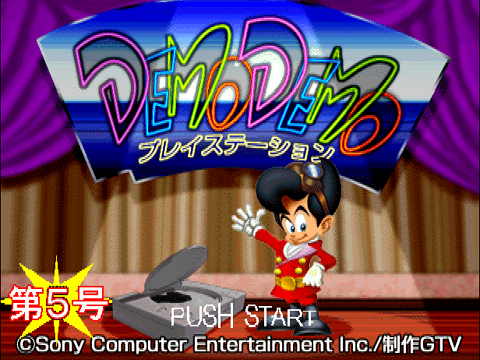
Demo Demo PlayStation, a Japan-only line of discs meant primarily for kiosks, includes a Bounty Arms preview video on its fourth volume and a playable half-stage on its fifth. The demo’s very limited: protagonists Rei Misazaki and Chris Prenaculutaoraroato (which is how I’ll translate her last name for the time being) don’t take damage at all, and the game reboots once they destroy the mid-stage boss. Yet the graphics for the entire first stage appear to be in the demo, and I always hoped that someone would figure out how to play the entire level.

Well, someone did! Tumblr user Human of Mi-Com Age ran the demo alongside Cheat Engine and tricked the game into letting you play the whole first stage, including a clash with the electricity-spewing robotic serpent boss. I’ll let Human’s brilliant post detail the actual method. It’s a relatively easy hack once you figure out Cheat Engine, and I pulled it off despite having no programming knowledge beyond remembering some passwords for the NES version of Strider.

To sum it up, the mid-boss won’t appear when its value is disabled, and this allows Chris and Rei to march beyond the usual cutoff point. From there, the rest of the first level of Bounty Arms is yours to explore.


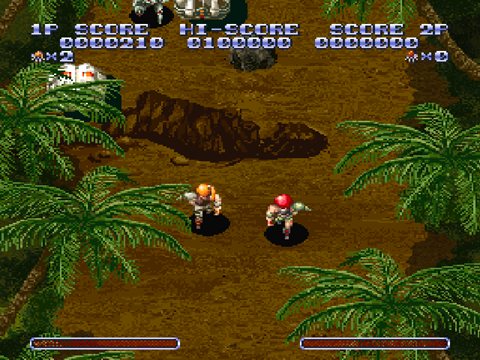
There are no grand secrets beyond, I admit. The game just throws denser waves of the same enemies Chris and Rei faced in the level’s first leg, and since our heroines are invincible we’re left to imagine how difficult it all might be in finished form. Even so, some new and interesting sights await.

Blade Strangers and Stranger Places

What was the biggest surprise of E3? Metroid Prime 4 and a Metroid II remake? A PlayStation 4 revamp of Shadow of the Colossus? Microsoft actually calling a system the Xbox One X? All were unexpected, but nothing caught me off guard like Blade Strangers. A PS4/PC/Switch fighting game that nabs its roster from Code of Princess, Umihara Kawase, and Cave Story? I’d sooner have bet on Sony announcing another Hermie Hopperhead.

Blade Strangers isn’t so farfetched a crossover when you look behind the scenes. It’s the work of Studio Saizensen, a developer with a hand in both in the brawler Code of Princess and the puzzle platformer Umihara Kawase, while Cave Story, an indie marvel ever since 2004, has a link through publisher Nicalis. Apparently in an early state, the game could use more animation frames and background detail. Even so, the characters have a vibrant look thanks to a 3-D engine that imitates hand-drawn animation.


As with any fighting game, it’s the cast that intrigues me. Umihara Kawase’s eponymous heroine and Cave Story’s android Curly Brace are unorthodox picks for a fighting game, though they’re both suited to the genre; Kawase has a grappling line and giant fish at her command, while Curly has a machine gun and, presumably, other Cave Story power-ups. However, Blade Strangers leans heavily on Code of Princess. Early footage of the game includes protagonist Solange, thief Alie, and the powerhouse Master T (the mace-packing nun Helga and masked swordsman Liongate are apparently in there as well). That accounts for half of the game’s ten character-selection icons.

There are two reasons for such favoritism. Code of Princess has a wide selection of playable characters, including a magic pharaoh cat and a zombie sorceress, from which a fighting game might choose. Code of Princess also has Solange, who wears more armor on her elbows than she does on her entire torso. Not kidding.

Bounty Arms: The Demo

Bounty Arms shouldn’t be anything special. It’s a PlayStation action title from Data West, an obscure software publisher that rarely made actual games. This particular game also revolves around an awkward idea: anime heroines using telescoping cybernetic arms as whips, grappling hooks, and flamethrowers. Besides, Bounty Arms was canceled, and that strongly implies something was wrong with it, that it wouldn't stand out at all.

But it does.
 
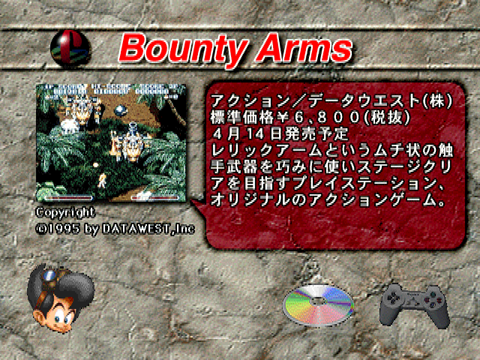
For those aware of it, Bounty Arms seemed unlikely to ever show itself. Unreleased Japanese games are hard to lay hand on, and Bounty Arms is quite low-profile. Yet part of it saw an official release. In 1995, a brief demo of the game appeared on the fifth volume of Demo Demo PlayStation, Sony’s early line of discs made for Japanese store kiosks. The demo is incomplete and barely lasts for two minutes of the game’s first stage (five minutes if you take it slow), but it might be all of Bounty Arms we’ll ever play. And it’s better than I ever thought it'd be.

Data West planned to ship Bounty Arms in April 1995, the same month it appeared in Demo Demo PlayStation. Yet the demo included here isn’t finished. That much is apparent even on the title screen, which mentions a lack of “game balance." One can’t help but catch a whiff of desperation in it, as though Data West itself is confessing that their game isn’t ready and asking you to please patiently enjoy this fine product sample.


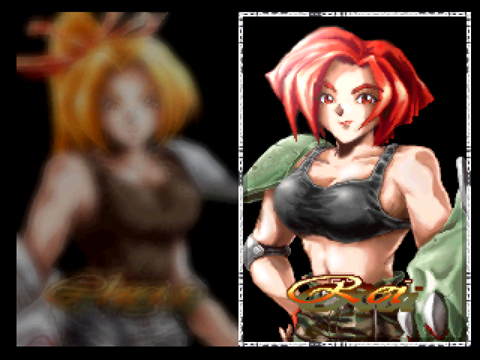
The character-select screen presents two playable leads: the dissatisfied, red-haired, red-eyed Rei Misazaki and the blonde, ponytailed, coquettishly grinning Chris Prenacaluto (which is how I’m spelling her mess of a last name until this contest is over). While the artwork recalls a low-rung (and possibly adults-only) 1990s Japanese PC game, it’s an improvement on the washed-out illustration that Data West used in a Bounty Arms ad, and the portraits come close to giving Chris and Rei trace amounts of personality, however stereotyped. They’re identical in gameplay except for one thing: Chris wears her Relic Arm on the right, Rei on the left. It’s a seemingly pointless distinction, but it has subtle effects in battle.

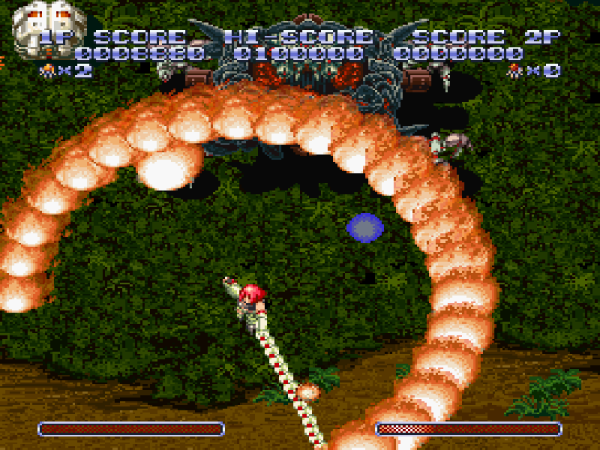
The first level of Bounty Arms is a jungle raid, just like Ikari Warriors and Mercs and every other top-down arcade shooter that might’ve inspired Bounty Arms. Once Chris and Rei get going, their Relic Arms show off the game’s novel approach. Press the one and only attack button, and Chris or Rei whips her Relic Arm like a Castlevania lead, lashing out and retracting the pointy, tentacle-like appendage. The Relic Arm does heavy damage, and any bullets it strikes are bounced back at enemies. Holding down the button charges a meter at the bottom of the screen, and releasing it makes our heroines whirl their Relic Arms in huge circles of flame.

Important Bounty Arms Update

What's this?


Fuck yes. More soon.

Bounty Arms: Visual Conversation

I recently rewrote my Bounty Arms article, partly to clear up errors and partly because I can’t forget about the game. There are scores of unreleased titles to obsess over, but Data West’s Bounty Arms draws my interest like nothing else. After all, I can’t think of another game that combines overhead perspectives, cybernetic grappling arms, flamethrowers, manga-eyed heroines, and strangely substandard production art.


For years my article meandered under the mistaken impression that Bounty Arms is a shooter like Ikari Warriors when the game’s really more like an overhead Bionic Commando with huge explosions. The new article is functional and curt, but it gets the point across. The point being that I want to find Bounty Arms. I’ve posted about it at Lost Levels, I edited Giant Bomb’s entry, and I even worked the game into a list of amazing unreleased things.

Perhaps a contest is the best way to drum up interest in Bounty Arms. See, I can’t translate the last name of Chris, one of the two Bounty Arms characters. Here’s the katakana for it.


The first word is, of course, “Chris,” but I’m mystified by the second one, separated from the first by a dot. The katakana comes out as “Purenakaruto,” which could turn into all sorts of bizarre phrases. None of them seems to be a typical surname, and someone suggested that the word is, in fact, just a bunch of gibberish that wasn’t supposed to be any familiar name.

So that’s the contest: come up with some interpretations of Chris’ last name and post it below. I’ll pick the one that makes the most sense (or, alternatively, amuses me the most). The winner gets a box full of crap, including games, anime DVDs, game-and-anime trinkets, and maybe some magazines. Here's a katakana chart for reference.