Star Quest: The Wings of Randy Wilson

We have an absurd amount of anime at our disposal online. Even beyond the numerous shows that companies stream for free, there are those devoted nerds who track down obscure releases and offer them for mockery and edification. You can see many of these relics on YouTube or at the anime convention panels that specialize in such things. Heck, we can even download an amazing Prince of Tennis fandub once suspected lost to the ages. That’s historical preservation for you.


However, there’s one especially mysterious release that, to my knowledge, never found its way online: Star Quest. Its story begins with Gainax’s uncompromisingly ambitious Royal Space Force: The Wings of Honneamise, which was a really big deal back in 1987. My opinion of the film is not entirely praise, but there’s no denying the imaginative vision that Gainax brought to the movie. It’s the tale of another world’s first manned spaceflight, and just about every scene gives off the fascinating air of a reality that’s not quite ours but every bit as flawed. Honneamise caught the attention of many fans when it debuted in 1987, and a North American outfit called Go East Productions snapped it up and renamed it Star Quest.

Star Quest involved more than a title change, of course. Go East dubbed the film with a noticeably different script, changing a good deal of the dialogue and most of the names into a strange mix of Westernized titles and fantasy neologisms. Honneamise avoids any obvious Japanese or American names, cheating only by nicknaming its protagonist Shirotsugh Lhadatt “Shiro.” The Star Quest dub dispenses with most of this. Shirotsugh becomes Randy Wilson, pious street preacher Riquinni becomes Diane, and General Khaidenn becomes General Dixon. Oddly, the planet itself gets a name in this new dub: Eeya. Eeya indeed.

According to esteemed anime historian Carl Horn, Star Quest premiered on February 19, 1987 at Mann’s Chinese Theatre (now known as TCL Chinese Theatre) and never again appeared in public. Longtime anime collectors reportedly have copies of the film, but no clips or other records are available online. Contemporary reviews of Star Quest are also hard to find, but there’s an interesting account in the second issue of Anime-Zine. An article by Toren Smith recounts the plot of Honneamise and spends two pages explaining some of the differences between the original script and Star Quest.
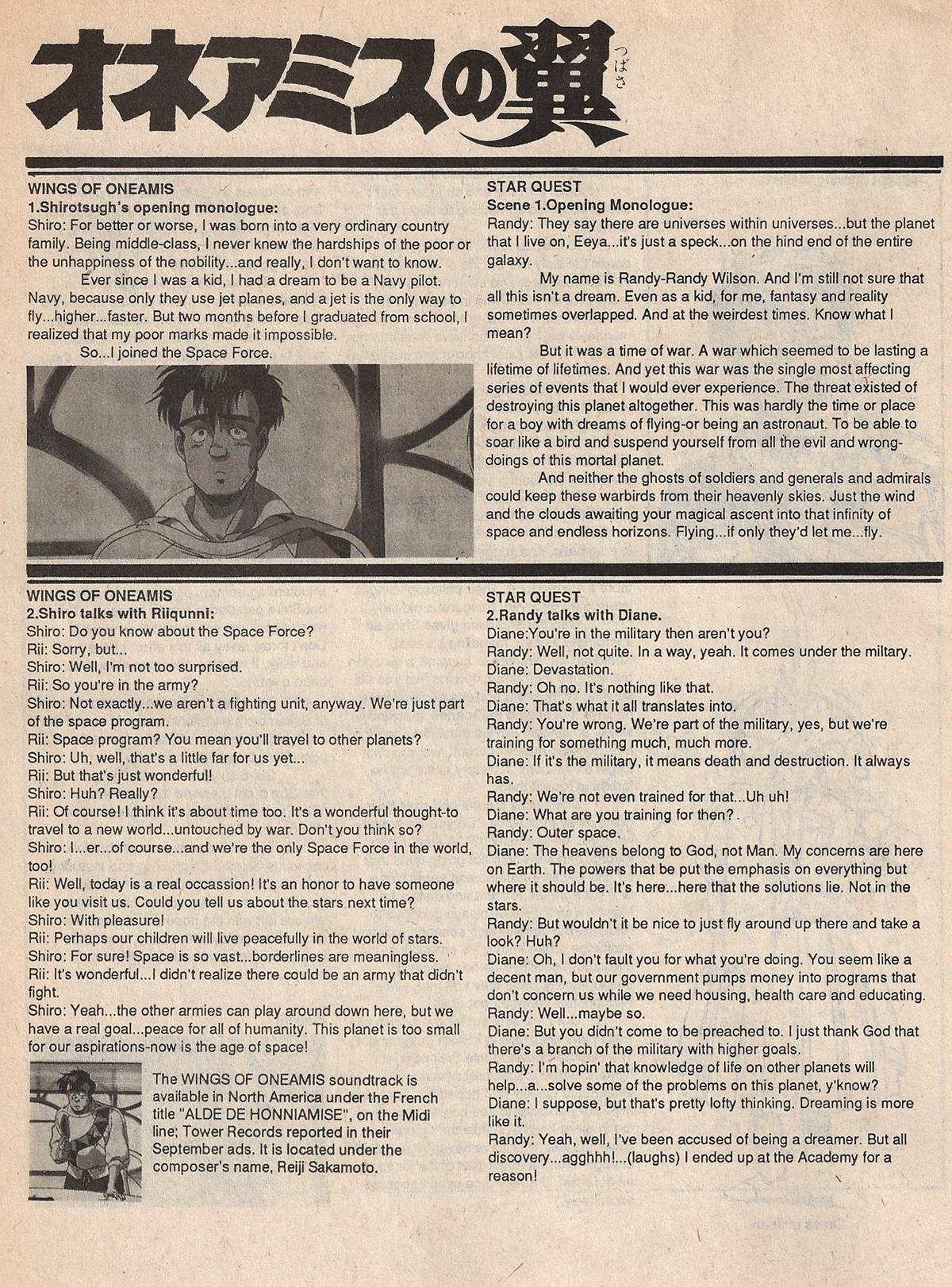
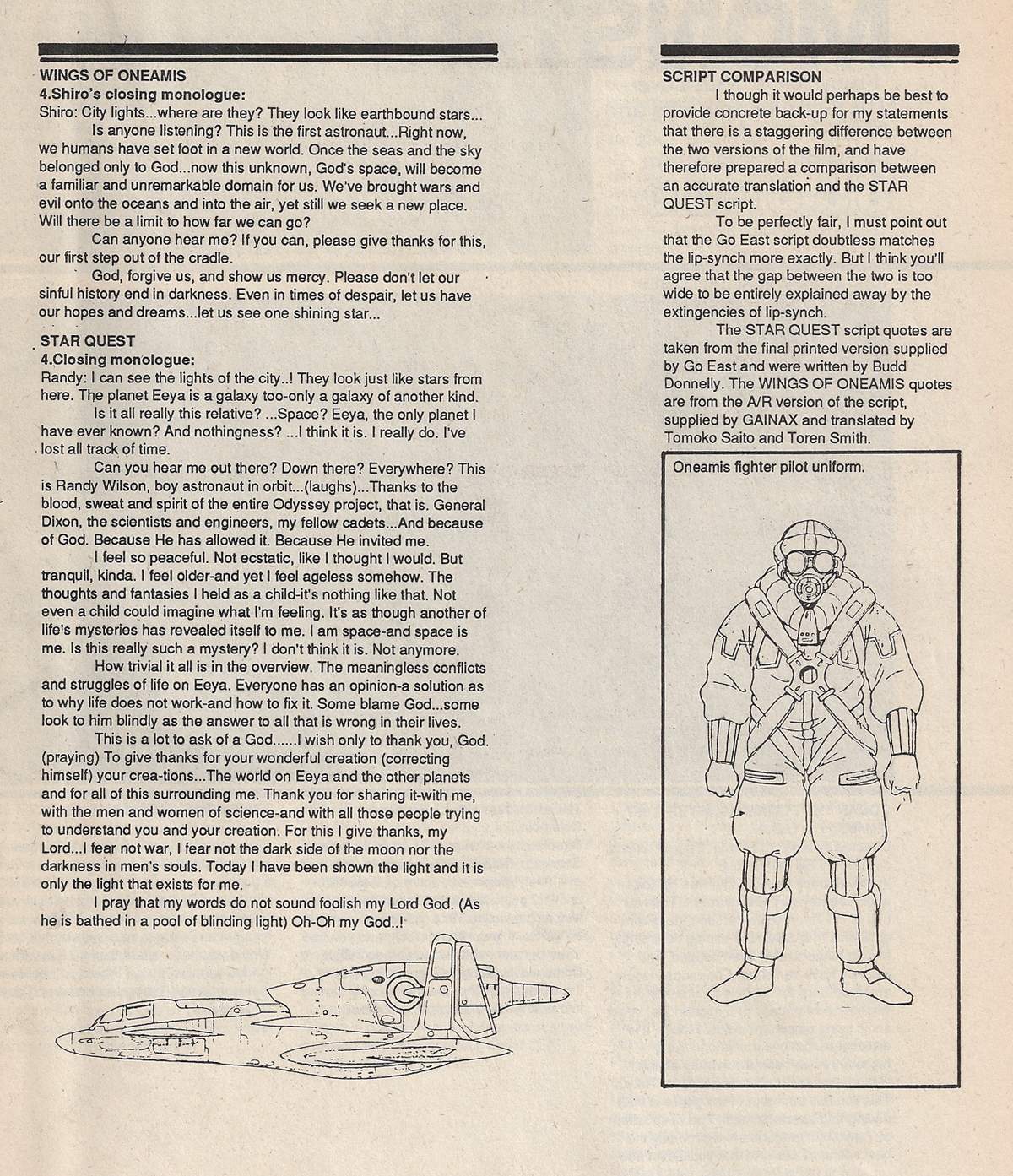
Smith’s examples reveal a considerably different tone to the movie. Star Quest breaks the film’s mood almost instantly, with the main character describing his planet of Eeya just before he gives his name as Randy Wilson. For a denizen of a planet with an unimpressive space program, he sure knows a lot about its astrogeographical location. Likewise, Randy’s orbital homily at the end of the film is a lot longer and preachier than Shiro’s speech in Honneamise.

Go East Productions is nearly as puzzling as Star Quest. Horn’s old Usenet post links the company to My Little Pony, but it’s hard to find any firm details about the group (which shares a name with several unrelated outfits). Both Horn and Smith credit the Star Quest script to Budd Donnelly, whose IMDB page links him to ‘70s B-movies like Cinderella 2000 but not Star Quest. It’s a forgotten film, and by all available accounts it deserves that fate.

Yet Star Quest seems an interesting relic in the history of bastardized anime. It’s not just a meddlesome dub. It’s a full-scale rewrite of a film that, in its original version, tries to encompass the whole of human progress and civilization. How did Star Quest handle that? How did it approach the attempted rape that, in my opinion, wrecks the movie? How did it translate scenes of a rival nation’s leaders, who speak in a subtitled fictional language? It may be that we’re all better off not knowing, and of course that’s why we want to find out.

Sega, Strider, and Sex

It won’t be long before academia and pop culture expand and entwine so much that courses are taught in video-game history. When the lecture turns to the great System Wars of the late ‘80s and early ‘90s, professors will detail the numerous reasons Sega pulled ahead of Nintendo for a few years. The Sega Genesis had several things the old Nintendo Entertainment System didn’t, they will say. The Genesis had sharper graphics, games astonishingly close to the arcade versions, and compellingly aggressive advertising. If they’ve done their research, they’ll also mention that the Genesis had sex appeal.

This was considerably important to Sega’s target market: the teenage boys who had outgrown Nintendo and didn’t know it yet. Their hormones stewed in secret disdain for the largely sanitized NES library and the kid-safe pages of Nintendo Power. Young gamers might see something suggestive on the NES covers of Battle Chess or Swords and Serpents, but those were rare finds in the Nintendo-bordered aisles of Toys R Us or Kay-Bee. Nintendo defined more childhoods than Sega ever could, but Nintendo rarely pushed things past the level of a PG-rated movie.


Sega possessed no such scruples. The covers of Genesis games embraced sexuality whenever they could, and Sega proper led the charge with the Vallejo-grade adornments of Golden Axe II and Alisia Dragoon, the horror-movie luridness of Night Trap, and whatever was going on with Altered Beast. Like the comics and imported anime that youngsters embraced in the 1990s, Sega’s games strove to show that they were not kid stuff.

Yet there’s one piece of Sega packaging more sexual than any other: the back cover of Strider.


There’s no need for literary analysis. Strider's pitch quickly casts both hero and player as “a crunching hulk of muscle.” What’s Strider crunching? That’s not clear, but he’ll stiff-arm his way through enemies that end up “shuddering heaps.” Next come the "alluring Amazones” who will “turn your mind manic,” and then it’s on to the snarling musclemen, grappling with our hero in a biceps-bursting embrace. My hat goes off to the writer of this, as it snuck risqué material into an innocent product even more slyly than the original VHS cover of Disney’s The Little Mermaid.

Amusingly enough, Strider itself isn’t a very suggestive game. It’s a weird one, to be sure, but the closest it gets to sexuality is a cadre of jungle amazons and their odd semi-German battle cries.


There’s a story behind that, in fact. According to the ever-informative The Cutting Room Floor, Strider’s amazons at first walked around with one breast uncovered, as consistent with ancient Greek depictions of their kind. Capcom quickly changed this, of course.

Capcom’s solution was to affix leaves over the exposed breasts, and the whole thing seems really obvious once you know the story. The leaves don’t really fit with the amazons’ palette, and they actually disappear during animation frames that wouldn’t reveal anything in the first place. The Genesis version makes it even more apparent by giving the women slightly redesigned outfits instead of leaf-tops.

I find it amazing that someone, perhaps even Strider director Kouichi Yotsui, considered showing this in the first place. Strider ended up in arcades around the world, and I can only imagine what would’ve happened if the first round of cabinets had shipped with actual nudity in the game. Cynical conjecture suggests that the game would’ve sold better, perhaps prompting Capcom to make Strider sequels a little more often. Yet it would never have made it into the Genesis version. Even Sega’s sex appeal had limits.

Pandora's Despair

[What follows spoils pretty much every ending in Pandora’s Tower. If you want a more even look at the game, you’ll find my review here. I also agree with IGN’s take, but I think we’re supposed to pretend that nothing worthwhile ever comes from IGN.]  

Pandora’s Tower sets its tone quite early. Timid farmgirl Elena and her reticent soldier boyfriend Aeron head into a wasteland, hoping to revoke a curse that’s turning Elena into some tentacle-sprouting nightmare. Their hunchbacked guide Mavda lays it all out: in other to get better, Elena must wolf down the flesh of the creatures who dwell in a ring of towers suspended above an ominous chasm. So Aeron heads out to slay some monsters and bring back their purple innards. Elena, shakily recovered after her first taste of monster spleen, says that she wants to come along. Aeron shakes his head. Off to the kitchen Elena goes.


That is no real exaggeration. For most of the game, Elena stays at an outpost that she and Aeron find near the chained-up towers. She does the laundry, cooks the meals, sweeps the floor, sews the curtains, and generally keeps house while her man is off killing lizard-knights and giant barnacle cannons. Each beastly organ he brings home is devoured by Elena—reluctantly at first, and later with alarming rapacity. On top of fetching these grotesque cures, Aeron helps keep up Elena’s spirits with compliments and gifts. She responds with childish extremes, her anime-mannequin face brightening at the sight of a new dress or recoiling in horror if Aeron presents an animal fang or something else mildly unpleasant. Elena seems an embarrassing and simplistic stereotype of femininity, a coquettish phony girlfriend for the insecure young man. It’s not helped by her actress, who was apparently told to play the character as though she’s not a person but rather a half-blind kitten.

This chauvinism dominates most of Aeron’s interactions with Elena, and developer Ganbarion evidently intended some of that. Company director Chikako Yamakura states that she thought up Pandora’s Tower as a game for male players ages thirteen to twenty-ish, and the central idea became “a woman who was pure being somehow spoiled or corrupted and then becoming pure once more.” The game bears this out time and time again, repeating positioning Elena as a delicate country blossom in need of constant tending. Her relationship with Aeron is measured by a glowing line of links at the edge of the screen, and it can be raised by any insipid kindness and lowered by even mild setbacks. Poor Elena. Thank heavens she has a man to fend for her.


Yet there’s more to Elena and Pandora’s Tower. At first her affliction is just a nasty bit of body horror; if she’s left without monster flesh for too long, she’ll sprout tendrils and degrade into some barely human aberration. At her last stage, she’s melting into some legless creature and seeping ichor all about. She’s broken down to the last shred of her being, and watching her fight for it is the most disturbing scene in the game.

It’s also the most intriguing. It reveals Elana’s curse as more than just a gruesome motivator or pitiable flourish. It’s a degrading affliction she faces every moment. From there the game easily becomes allegory for something far more understandable than a distressed damsel. It could be the slow agony of cancer treatments, with Mavda peddling lengthy and uncertain remedies. It could be some other illness that leaves Elena fragile and domestic. Or it could be the vaguer bindings of depression.

Flash Hiders: Safety First


Flash Hiders and Battle Tycoon rarely draw notice in the history of fighting games. The two titles were the now-defunct Right Stuff’s attempts at snatching a piece of the genre’s sugary and super-saturated pie in the 1990s. Neither succeeded, but I suspect they were ahead of the curve. Every modern fighting game has a console-oriented story mode with RPG-ish customization, and Right Stuff explored that territory with the original Flash Hiders in 1993. More can be read in this GameSetWatch piece I wrote years ago, even though I now see some typos and at least one factual error: Patchet is a were-polar-bear, not a werewolf.

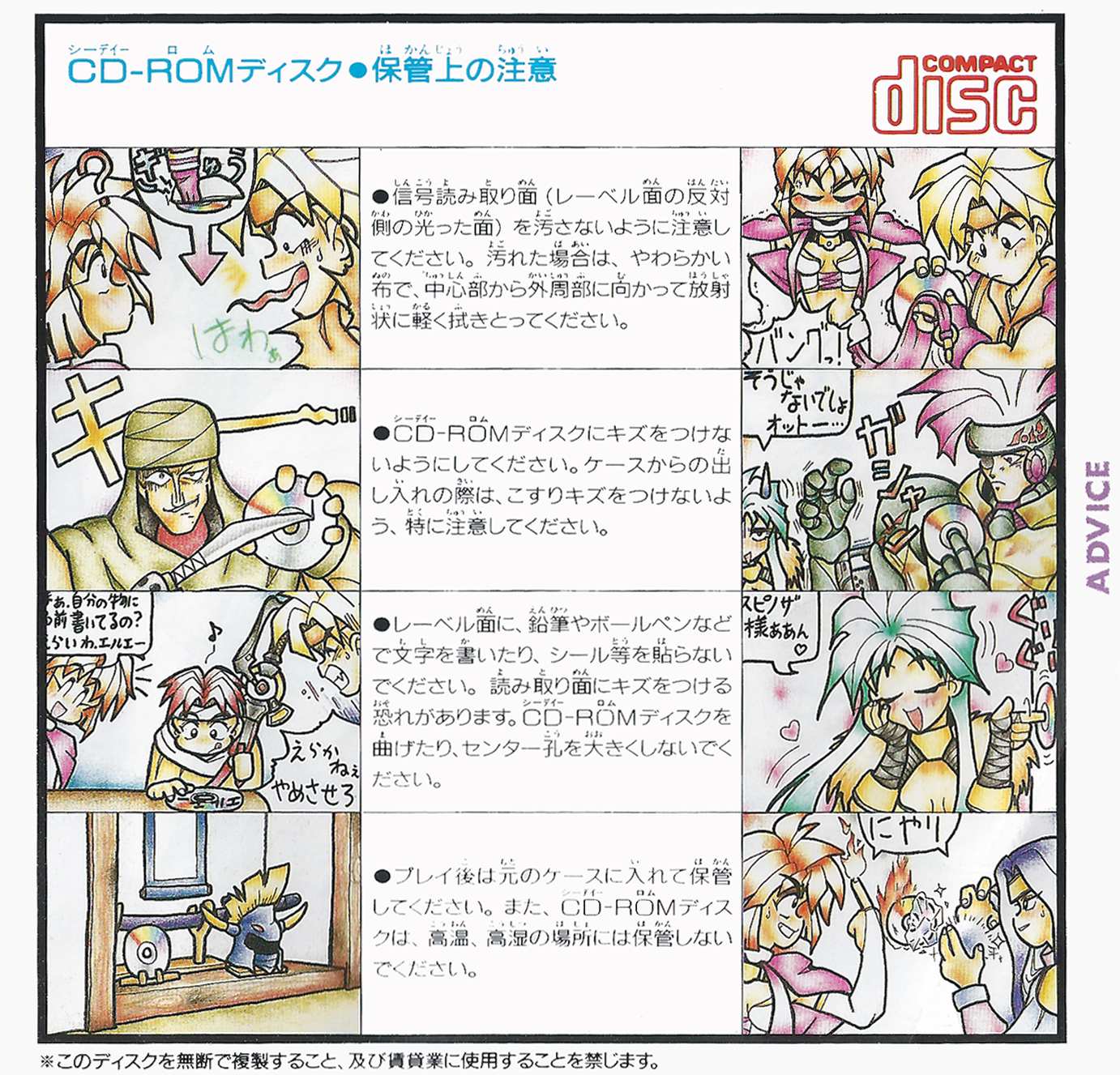
I like Flash Hiders, and I also like its manual. Game instructions usually include guidelines for handling a cartridge or CD, and every so often the publisher might add little comics of the game’s characters failing to heed such advice. This is a lost art today, but it was common in the Japanese market of the early 1990s, when CDs were a new technology and there was always the chance that some consumers would try to play a game by breaking the disc apart and picking their noses with the shards.

My favorite game-safety guides are the ones from Phantasy Star III and IV, but the last page of the Flash Hiders manual is also very helpful. It offers plenty of illustrated advice for first-time CD-ROM owners.

Little Things: Sylphia

Well, that’s kind of rude.


Sure, the title heroine of Sylphia, a 1993 Compile shooter for the PC Engine, may not seem all that socially active. She’s not exuding charm from every pore or delivering bon mots that leave the bourgeoisie in stitches. But let’s give her a break.


Women in Video Games: Earlier Correspondence

There’s a good deal of talk these days about how video games depict women, from the latest Game Developers Conference scandal to that Feminist Frequency series that’s enraging idiots all over the place. The subject’s gotten more and more attention over the past few years, and I really think it’s long overdue. In decades past, the game industry’s misogynistic attitudes were periodically brought up, hemmed over, and then either neglected or dismissed with specious mockery.

The game magazines of the 1990s rarely challenged the issue of video-game sexism on their own, instead allowing the occasional letter from a reader to explore the matter. One such letter ran in the October 1995 issue of Nintendo Power.


As I mentioned in The X Button this month, I'm struck by how the letter's complaints still resonate today. Now, the “favorites” listed aren’t exactly bastions of sexual equality; Earthworm Jim features a largely helpless princess, and Killer Instinct’s lone woman is…well, B. Orchid. Yet LaBrie’s letter raised an important question, and it drew a few responses in the February 1996 Nintendo Power.

Toren Smith and the Right Words

Toren Smith passed away on March 4. Many remember him as a pioneer in the manga-translating world, and there’s a lot to his story: how he scraped by while living in Japan, how he made friends with the Gainax crew, how his name was affixed to a Gunbuster character, and how he brought all sorts of manga to North America, starting with Masamune Shirow’s Appleseed. You can read more about Smith’s illustrious career in Jonathan Clements’ writeup and Mike Toole’s recent column, so I'll just concentrate on one small thing.

I was introduced to Smith’s work in the very first manga I ever bought: volume two of Appleseed. In those days I took for granted all of the colorful and coherent dialogue rendered into my native tongue by Smith and his fellow translator Dana Lewis. It was only after I’d digested some manga from other sources that I appreciated how much effort Smith and Lewis put into the process. It was all the more amazing that they'd handled something as technologically dense as Masamune Shirow manga.

Smith and Lewis did excellent work all around, and yet there’s one particular panel that comes to mind whenever I think of their output. It shows up in Shirow’s original Dominion Tank Police manga. Our spitfire heroine Leona has once again destroyed property and endangered lives in her pursuit of justice, and once again she expects a chewing-out from the chief of police. That doesn’t happen.


It’s one little exclamation, but it captures the way Smith and Lewis could find the perfect word for a situation. Oik. Not “huh?” Not “eh?” Not some drawn-out “Say what now?” Those would be adequate, but they fall short of the simple sputtering “oik.” It's pure bewilderment crystalized in three letters, and it fits Leona’s look in a way that no other interjection could.

Finding the best possible phrase is very hard. It’s a ubiquitous challenge for anyone who writes, edits, translates, or, in my case, babbles childishly about old Sega Genesis games. Most of us compromise. To paraphrase Mark Twain, we settle for the lightning bug instead of the lightning. Toren Smith didn't, and a great many manga titles were all the better for it.

1up and Me

You most likely know that 1up is closing. The site endured numerous layoffs and cutbacks in recent years, and it was just sold to Ziff-Davis, the company that started it in the first place. Things have come full circle, and now we're losing something great.


For most of 1up’s life, I was just a reader. I remember when the site launched back in 2003, debuting with that cool little logo and a staff from all corners of the gaming press. It had names I knew from Electronic Gaming Monthly, IGN, GameSpot, The Gaming Intelligence Agency, and just about every other website I followed. It was like watching that glorious multi-character crossover game you and your friends always lied about on the playground. You know, the one with Mario and Sonic and Simon Belmont and Chun-Li.

I started freelancing for 1up in 2011, well after the site was sold to UGO and the layoffs took their toll. I was in some grindingly dull staff meeting at work when a Twitter message from Bob Mackey popped into my phone. He wanted to know if I was interested in writing for 1up. And there I was, typing out YES YES YES and being rude to my coworkers. Oh well, it was more important.

By this time 1up wasn’t chasing the same news-and-reviews rabbit that just about every other site pursues. The remaining staff focused more on features, and the next year saw them switch over to running week-long cover stories, with multiple articles about the same topic. This worked wonders. So much of the video-game press is fixated on the latest, the shiniest, and the quickest-and-dirtiest way to cover it all. It results in ephemeral things, previews and news bits irrelevant within weeks. The features at 1up were more than that. They were about such subjects as the history of the Atari VCS, the portrayal of women in games, and, in this very week, the relationship between movies and the game industry. They’re all interesting reads, and as long as someone backs up the website, they’ll be just as interesting years down the road.


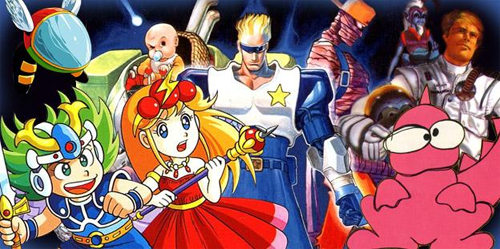
I loved pitching stories to 1up.com, and I dare say the results are some of the most rewarding stuff I’ve written about video games. I researched doomed game systems, covered the concept of video-game afterlife, and studied the symbiosis between games and those Japanese cartoons. I’m not sure if any other site would’ve let me write about long-abandoned mascot characters like Wonder Boy and that hideous Asmik thing up there—and then let me take on another round of them. Looking back, a lot of my features were about failure and regret: forgotten characters, faded companies, canceled games, and the paths not taken. Maybe I have a problem.

Yet I have just one regret when it comes to 1up: I didn’t write more.

Little Things: Alisia Dragoon

Alisia Dragoon was overlooked quite often in its day. The game's North American cover, with its bikini-armored amazon and gawking orcs, lumped it in with Blades of Vengeance, Sword of Sodan, and other routine medieval-fantasy outings on the Sega Genesis. The Japanese box art, promoting a less aggressive sorceress and her dragon menagerie, didn’t get Alisia much attention either.


Dig past either cover and you’ll find a standout of the 16-bit era. It’s a side-scroller, yes, but Alisia’s outfitted with a selection of four different flying beasts, plus lightning magic that behaves much like the auto-targeting lasers in Thexder. The game’s scenery also hides numerous surprises; hidden items abound, and Alisia’s journey unfolds in unexpected tangents. She begins by storming temples and braving swamps, but later stages launch her aboard a fish-like blimp and plunge her into the long-buried wreckage of a spaceship. It’s all presented with magnificent style, even if entire stages steal quite blatantly from Hayao Miyazaki’s Nausicaä of the Valley of the Wind. It’s evident even in the opening crawl of an ancient relief that shows the devastation of millennia past. Of course, Alisia Dragoon was a co-production between Game Arts and anime studio Gainax, and some of the latter’s founders worked on the Nausicaä movie. So perhaps Alisia comes by Miyazaki's material more honestly than other games.

Alisia Dragoon doesn’t spoil the atmosphere by explaining too much of it. Alisia herself never speaks, and the only in-game dialogue is delivered by Ornah, the priestly servant of an ancient horror named Baldour. The game’s introduction spares only a few lines setting things up: Baldour’s prison has fallen in the shape of a “silver star” (sound familiar, Lunar fans?), and someone has to stop him before he awakens. It doesn’t even mention that Alisia’s avenging the death of her father. You’ll have to read the manual for that.


Upon blasting her way into the first level’s underground ruins, Alisia confronts Ornah and the cocooned form of Baldour. This leads to two small details that I appreciate.


For one thing, Alisia immediately attempts to fry Ornah with her lightning spells. She needs no introductory palaver, no stoic entreaties to cease the evildoing, and not even any anguished cries about how Baldour’s cult killed her father and she’ll never forgive them and whatnot. Alisia may be a voiceless (and faceless) cipher in need of sensible outdoor pants, but she’s apparently seen enough video games to know that there's no point trying to reason with the bad guy.

This being the initial stage of the game, Ornah evades Alisia’s attack and rockets off with that big bundle of Baldour. And there’s the second little touch. Baldour is a giant sealed monstrosity, with only two eyes visible inside the gray carapace of his prison. It’s a neat glimpse of what will be the game’s final boss, and players are free to imagine just what nightmare from beyond space might lurk inside the cocoon. Intentionally or not, the first round of Alisia Dragoon follows that old Lovecraft dictate: never show too much of the monster.


Unfortunately, Alisia Dragoon can’t obscure it forever. Tradition demands a climactic battle to end the game, and so Alisia's raid on a floating fortress leads right to a reborn Baldour. Game Arts and Gainax tried their best to make him a chimerical mass of mouths and limbs and horns and wings, as though Alisia interrupted him halfway through regenerating. That’s a neat idea in itself, but it doesn’t quite match his introduction. Nothing compares to what you might imagine attached to those eyes.

Lost Anime: Anchor

It’s hard to dig up any details on Anchor. I can’t find any production sketches or promotional art from the film, and I’ve never seen so much as a sentence about its storyline. That’s understandable, since it never ventured past the planning stages in the depths of Studio Ghibli.

So why is Anchor notable? Because it involved three of the anime industry’s most intriguing directors: Mamoru Oshii, Hayao Miyazaki, and Isao Takahata. In 1985, Oshii went to work on a project at Studio Ghibli, which Miyazaki and Takahata had recently established. The three of them planned to assemble a film called Anchor, which saw Oshii directing while the Ghibli founders produced.

The whole thing fell apart in record time. According to Oshii, the three of them scarcely worked out a plotline before arguing and going their separate ways. Nausicaa.net has Oshii’s take on his whole Ghibli experience, with opinions both fascinating and bizarre. He doesn’t say exactly what broke up the project, though. Perhaps Miyazaki mentioned that he “never liked Basset Hounds very much.”


Anchor remains fascinating for the same reasons that likely killed it: Oshii’s style is often markedly at odds with the Ghibli aesthetic. He’s crafted enjoyable TV comedies like Urusei Yatsura and a good chunk of Patlabor, but his more personal projects tend toward the dense poltical flavor of the second Patlabor film and the moody lament of Ghost in the Shell 2: Innocence. Miyazaki tends to make happier, brighter, family-oriented movies, and Takahata’s work explores much the same ground. Anchor was conceived just after Oshii directed the ornate, mystifying Angel’s Egg (left) and Miyazaki completed the spirited adventure film Castle in the Sky (right). Combining the two would make an interesting mess, if nothing else.

Neither Oshii nor the Ghibli leaders mourned Anchor that much. Miyazaki and Takahata soon crafted Only Yesterday, Porco Rosso, and numerous other films that would make Ghibli the biggest name in Japan’s animation world. Oshii went on to direct the second Twilight Q episode in 1987, and the coming years would launch him into Patlabor and Ghost in the Shell. Even so, his recollections of working at Ghibli are particularly relevant in the light of the studio's present condition. Ghibli goes through new directors at a rapid pace, and rumors of the company's draconian leadership fit right into Oshii’s tale of the short-lived Anchor. Maybe one day he’ll tell us more about what the movie could have become.

Little Things: Quintet's Saving Grace

Real shame about Quintet, you know? It started so well. Masaya Hashimoto and Tomoyoshi Miyazaki played big parts in making Nihon Falcom games, but they broke off to do their own thing as the 1980s ended. They called their new studio Quintet, and they worked with Enix to craft Super NES games that blended action-RPG elements with strangely existential themes. Then Quintet detached from Enix, experimented in other genres, and was hobbled by one failure after another. Though technically not dead, Quintet has stood dormant for years, like a remote and dispassionate version of the world-creating gods their games often featured. Or like Willy Wonka’s factory.

Most of Quintet’s Super NES outings are good action-RPGs on their own, yet they're elevated further by director Tomoyoshi Miyazaki’s frequent searches for something deeper. Soul Blazer follows a divine emissary as he rescues a kingdom’s worth of people, plants, and animals, many of whom deliver little homilies about their lives. Illusion of Gaia turns a world-trekking boyhood adventure into a steadily darker tale of sacrifice and cataclysm. Terranigma, Quintet’s crowning achievement, finds its hero exploring the light and dark halves of a world and creating an entire civilization along his journey. The three games swing from the routine to the unexpected, dotting melodramatic and simple narratives with some intriguingly thoughtful moments.

One of those moments arises when saving. Like a lot of RPGs of the 16-bit era, Quintet’s titles let you record your game by talking to someone, who then asks if you want to continue playing. Other games reset to the title screen if you answer “no,” but some Quintet works don’t. They instead continue in an unbreakable loop, apparently thinking it rude to stop before the player does.


This first appeared in Actraiser, in which a godlike being tends to a human civilization through omniscient overseeing and side-scrolling battles. After you’ve saved and told the game to stop, it brings up some comforting text from your little cherub sidekick, who flutters in mid-air until you turn off or reset the system.

A Letter From BloodStorm

It’s time to confess something: I liked BloodStorm.

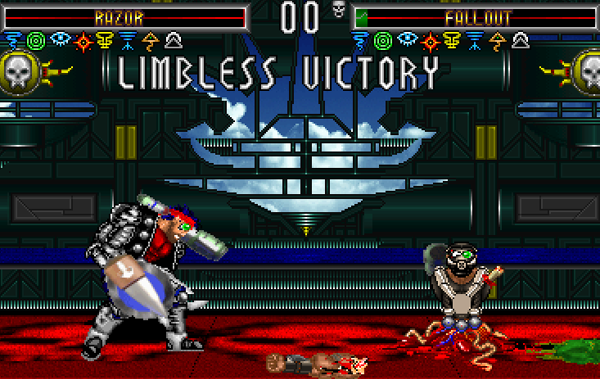
Yes, that BloodStorm. Strata’s 1994 arcade fighter that tried to outdo Mortal Kombat in the worst way. Staged in a post-apocalyptic hellscape, BloodStorm allows all of its hideously stereotyped characters to decapitate, dismember, and disembowel each other during combat. It remains the rare game where a halved warrior will scoot across the floor upon a pile of entrails, undeterred by the absence of legs or arms. You can still win a match like that. It's awful and hilarious.


I liked BloodStorm a lot. Part of it was indeed the relentless carnage, the willingness to get as gruesome and vicious as mid-1990s arcades would allow. Yet I also latched on to the game’s legitimate innovations. It had a remarkable amount of things to discover: hidden levels, secret characters, warps, and a series of “taunts” that showed up on-screen when you mashed buttons after a victory. BloodStorm also let players gain a new ability from each defeated opponent, and these powers could be stored in the arcade unit with a password system. Too bad BloodStorm wasn’t in arcades for all that long.

BloodStorm didn’t really stick around, and I was outraged at this. It led me to do something I’d never done before: I wrote a fan letter to a game company. In the years that followed, I would write several more (usually regarding some RPG that would never be released in the U.S.), but my BloodStorm gushery came first. And I got a better response than I ever expected.

SNK History: About a Blob

Our story begins with Athena, perhaps the most detested game that SNK released on the Nintendo Entertainment System. While most of SNK’s early 8-bit titles were terrible, Athena elicits a certain stab of hatred that Alpha Mission and Ikari Warriors just don’t generate. And it mostly deserves it.

Released in 1987, this misguided Athena awkwardly sculpts an arcade title into an NES game. The original arcade Athena was never particularly good, but the NES version suffers under truly baffling priorities. Instead of scaling back the game or turning it into an action-RPG (as Tecmo did with Rygar), the programmers of Athena tried to imitate its progenitor in ways that didn’t matter. So the NES game replicates the arcade game’s intro, level graphics, and box-wipe transitions. And it has nothing resembling coherent, enjoyable gameplay.


As you endure the unpredictable controls and grating soundtrack of Athena’s first level, you might notice the small blobs that emerge from trees. The Japanese version of the game dubs them “nuupah,” and the American manual calls them “goobers.” They’re easily dispatched, or rather they would be if the game’s hit detection weren’t so terrible.

Let's turn to Crystalis, which stands at the other end of SNK’s library. Unlike Athena and Ikari Warriors, Crystalis was built from scratch for the NES, and the effort produced one of the console's finest. An energetic action-RPG in the Zelda vein, Crystalis features a broad, Nausicaä-inspired world ushered in by an apocalypse. Its hero wields a variety of spells and swords, plus other abilities far ahead of the NES era: chargeable magic, shape-shifting, and jumping. Far too many action-RPGs still lack in the jumping department.

There’s also an Athena cameo or two in Crystalis. The goddess heroine was rapidly becoming SNK’s first mascot by 1990, so Athena (as “Asina”) and her Psycho Solider sidekick Kensou show up to advise the hero of Crystalis. And this isn’t the only link between SNK’s best and worst NES games.

Lupin III: A Dream of His Life

It’s unfairly hard to dislike Lupin III. He’s one of the most appealing staples of the anime industry, and perhaps that’s due to his inspirations. Manga author Monkey Punch stole the whole idea from Maurice LeBlanc’s Arsene Lupin novels, but the comic-book Lupin III is as much the creation of ‘60s spy noir and MAD Magazine doodles as he is the grandson of the original Lupin. And this gives him an undeniable edge throughout many movies and TV series. Even in the midst of a mediocre Lupin outing (and there are a lot of those), it’s fun just to watch the heroic thief slink around, grin like a moron, help some plucky heroine who he'll never meet again, and perhaps end up saving the world.

Tokyo Movie Shinsha realized Lupin III’s wide promise as he slipped out into North America’s anime market in the 1990s. Even though American anime releases were haphazard back then, many English-speaking fans were introduced to Lupin through his best films: Soji Yoshikawa's cynical, chaotic Mystery of Mamo and Hayao Miyazaki’s endearing Castle of Cagliostro. But there’s much more to the Lupin III franchise than two films, and TMS wanted everyone to know that.

The following is a pamphlet that TMS presumably put together for the Tokyo International Anime Fair and other such gatherings. I can’t be sure when it was printed, but I suspect it was drawn up before FUNimation and Geneon licensed large pieces of the Lupin III pie. It shills the first three Lupin III TV series, providing a good look at the character’s evolution. The text…well, it could’ve used some editing. Yet it captures the charm of a Lupin III caper in an odd little way.


The pitch begins with a nice collage that shows Jigen, Goemon, and Fujiko clustered under Lupin III, the “Greatest Thief of Century.” Of note is the comparatively reserved Fujiko. Most Lupin promos put her front and center in some revealing attire, but perhaps TMS didn’t want to scare off skittish foreign investors.

Little Things: Monster World IV

Westone’s Monster World IV is full of adorable details. There’s the smile that heroine Asha wears after filling a bucket with water. There’s the way her flying pet Pepelogoo shakes himself off after a swim. There’s the yawn that Asha gives if you don’t touch the controller for a certain length of time. There are so many little touches that I hesitate to give any more away. After all, you can (and should) buy the officially translated game on the PlayStation 3, Xbox 360, and Wii right now.


Yet I must mention what happens when Asha dies. It’s a tradition for Monster World protagonists to turn into angels and float off the screen, which may be part of a larger motif in old Sega games.

Lost Anime: Route 20

A wise observer once described Gainax as two diametrically opposed anime studios in one. Good Gainax takes chances and creates interesting stuff. Evil Gainax does its best to ruin everything. Good Gainax made FLCL and those cool Daicon shorts, but Evil Gainax made Mahoromatic and He is My Master. Good Gainax made most of Royal Space Force: The Wings of Honneamise, but Evil Gainax made that scene. Good Gainax upended the anime industry with Evangelion, and then Evil Gainax exploited it with remakes and uncomfortable merchandise.

Where does the never-made Route 20: Galactic Airport fit into this tangle of heroism and villainy? We’ll never have a complete answer, since Gainax canceled the project over twenty years ago and hasn’t mentioned it since. Yet all available evidence points toward Good Gainax.


Route 20 apparently began life shortly after The Wings of Honneamise hit theaters. It was the 1980s, Japan’s bubble economy was surging to the skies, and Gainax had scored an unprecedentedly huge budget for Honneamise. A second ambitious film seemed natural, and early magazine previews suggested that Yoshiyuki Sadamoto and Mahiro Maeda’s Route 20 would be that film.

GameFan Readers of 1996: Conspiracies and Confusion

Much can be written about Diehard GameFan. Originally a catalog for Dave Halverson’s Diehard Gamers’ Club, the magazine launched in 1993 and gradually became something of a professional fanzine. It was chaotic, it was hyperbolic, and it attracted the most loyal following of any gaming mag in the 1990s. That’s probably why Halverson’s fourth and latest adventure in print is also called GameFan.

Yes, much can be written, and not all of it is positive. But for now, let’s just stick to GameFan’s letters page.

GameFan had two major mascots: a TV-headed superhero named Monitaur and his scraggly, deranged, vaguely aviator-like sidekick, the Postmeister. The two originally appeared in the magazine's comic strip, and Posty, as he was often known, ran the letters page. It was never as replete with nonsense as, say, the editorial excesses of Ultra Game Players, but Postmeister columns always delivered strange rants, genuinely interesting news, and bursts of that wacky, waffles-and-shotguns humor that seems so darned hilarious when you’re a young nerd.

The Postmeister pages were also cross-sections of just what hardcore game geeks cared about, and the April 1996 issue did something that I really appreciate now. The Postmeister (who was likely Casey “Takuhi” Loe at this point) put together a pie chart covering the reader mail.


It shows just how things were after the great game-industry upheavals of 1995: the Jaguar was dead, the PC-FX was never coming to the U.S., the PlayStation was popular enough to make Saturn fans worry, the Nintendo 64 was looming large, and RPG fans were up in arms over all of those impressive games that they’d probably never play in English. RPGs also dominate the list of most-mentioned titles, though it’s a surprise to see Samurai Shodown III at the top. Today the game is considered an unbalanced fighter that started the franchise’s decline, but back in 1996 it was riding high on the reputation of Samurai Shodown II.

Little Things: Undercover Cops

Let's discuss Undercover Cops, Irem’s gem of an arcade brawler from 1992. It follows the rules of a Final Fight clone, but it adds all sorts of satisfying touches. For starters, the three playable characters have sturdy repertoires of attacks and improvised weapons. Instead of jabbing away with pitiful knives and broken bottles, they can toss steel girders, swing massive stone pillars, heft motorcycles and Humvees, or pelt enemies with particularly large fish. They can also throw the first level's boss into a trash compactor. And they do it all in the same grimy detail perfected by Irem staffers, the same staffers who later formed Nazca and started the Metal Slug series.


There’s another small sign that Undercover Cops was made with a bit more care than the typical Double Dragon imitation. In the first stage, the game’s violent peacekeeper heroes come across a pack of criminals squatting around a television. Whatever could they be watching?


Hey, they’re watching R-Type! That skeletal, Giger-ish embryo is the first boss from Irem’s classic arcade shooter, and perhaps the most recognizable monster in shooter-nerd history. It’s a great little touch in a game replete with impressive sprite work by the future members of Nazca. And I rather like the idea of the citizens of the Undercover Cops world all gathering every Sunday evening to watch the latest exciting episode of R-Type.


This detail was even included in Varie’s Super Famicom port of Undercover Cops (which almost came to North America). It’s yet another sign of Irem’s penchant for referencing its heritage, a tradition that continued right up to the R-Type cameos in Hammerin’ Hero for the PSP.

Unfortunately, that heritage lies in disrepair now that Irem’s halted most of its game development. They’re now dealing in Pachislot titles, though the most recent of these features the Game Boy versions of R-Type, Ninja Spirit, Hammerin’ Harry, and…Undercover Cops. Perhaps Pachipara 3D: Ocean Story 2 will keep Irem going, but no one would recognize it on a tiny television set.

The Consumer Guide to Nintendo's Space Dragon Baseball

Nintendo conquered the second half of the 1980s with video games, but the publishing industry certainly helped. While Nintendo Power stands as the company's most effectively crafted propaganda, there were countless other books and magazines that sliced off a piece of the Nintendo Empire and sold it to eager children over and over.

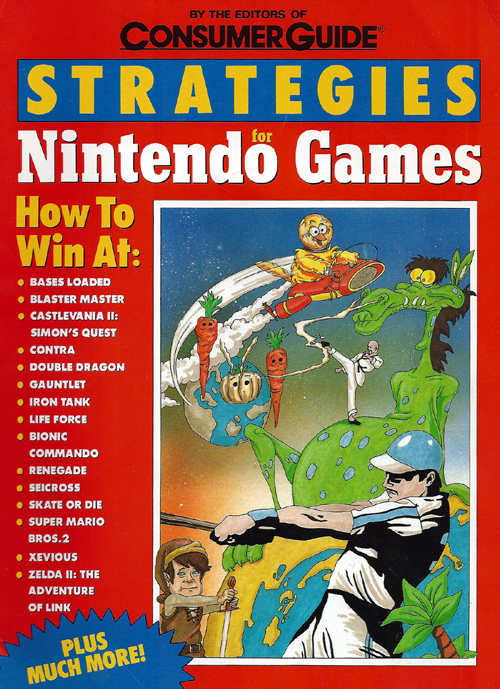
Consumer Guide's Strategies for Nintendo Games was both an early entry and a minor player in all of this. It never drew in as many kids as Nintendo Power, GamePro, or any other magazines. Yet the Consumer Guide collections were technically books, and that gave them an advantage. Like Jeff Rovin’s How to Win at Nintendo Games volumes, these Consumer Guide tomes crept in where magazines couldn’t, showing up in school book clubs and dodging the disdain that parents and teachers might have for the likes of Nintendo Power. A few children even found these guides to be their first good look at the whole Nintendo craze.


The guides were also a good look at how artists could distort popular Nintendo games. The cover of the first Consumer Guide Strategies for Nintendo Games is an abstract collage of game imagery, pairing a baseball player from Bases Loaded with vegetables from Super Mario Bros. 2 and a dragon, two planets, and an astronaut bird from I Don’t Know What. And then there’s a dwarfish, possessed Link squatting in the corner.


The book is far more mundane in its descriptions of notable first-generation NES games. Each writeup covers the basics of a particular title, with a big red suggestion that ranges from helpful (“SHOOT THE WALLS” for Gauntlet) to the confusing (“PRACTICE” for Skate or Die). Each screenshot is accompanied by some sort of tip, and one can easily tell when the writers were weary of penning one bluntly obvious caption after another and just wanted to finish up the page and move on to writing about printers or the new Honda. That’s how the Contra section stumbled across some very interesting advice.


Pictures of Toys and Toys of Pictures

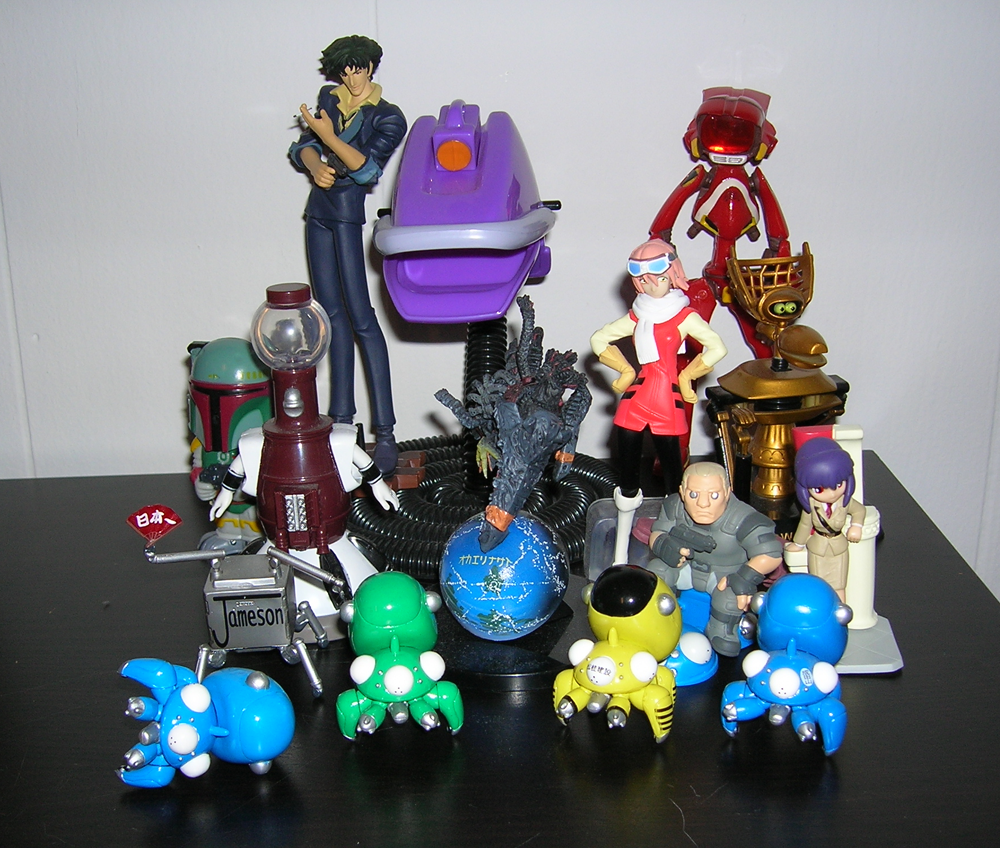
It’s time I talked about toys. I’ve acquired a number of them over the years: some bought, some received as gifts, and some offered as promotional trinkets by game companies. Nearly all of them are stored in my closet, well out of sight.

But I decided to gather them all for a picture. And a reminder. Whenever I want to get any sort of action figure or miniature statue based on a video game I happen to like, I can look at this image and remember that I already have a pile of plastic merchandise that I've stashed away in embarrassment.


As you can see, my collec…wait, what’s that?


Hey! That’s a Tachiko…Fuchi…one of those robots from Ghost in the Shell! And Ghost in the Shell isn’t a video game! Well, there are actually three Ghost in the Shell games, but the whole franchise wasn’t a game from the start and therefore doesn’t count.


Yes, purge the intruder. THROW IT TO THE WOLVES.


Or just throw it over there, with all of the toys based on things that aren’t video games. The sanctity of our cherished gamer culture must never be violated by inferior alien elements such as anime or Star Wars or even Mystery Science Theater 3000. That’s another thing I’ll have to remember.

Review: Redline

This summary is not available. Please click here to view the post.

Little Things: The Guardian Legend

It’s very hard to find an NES game with a very strong story—or any story at all, for that matter. Many of them have premises, introductions, motivations, conversations, and perhaps a theme or two, but rarely does an NES title assemble a fully coherent and vital narrative. The Guardian Legend, Compile’s amazing shooter/RPG hybrid from 1989, certainly doesn’t. Yet it has all the story it needs.

With only a screen's worth of expository text, The Guardian Legend hurls a transforming jet-android woman at a planet-size asteroid headed for the Earth. Once the heroine (in her spaceship form) breaches the big rock’s outer defenses, she’s greeted by a harsh message.


“If someone is reading this…I must have failed," confesses the narrator of The Guardian Legend’s meager backstory: the asteroid, Naju, housed a proud and civilized race before it was overtaken by some deep-space menace. The message’s author was the only survivor of this attack, and he or she mounted a last-ditch attempt at destroying Naju from within. After explaining just how this can be accomplished, the author closes with a haunting reminder: "I hope this message will not be read by anyone...It will mean that I have failed."

It’s a simple introduction, swiped from any number of films and novels where a final desperate message sets the stage for some horrific danger, but it’s particularly effective in The Guardian Legend. It’s a game without much background, and the heroine herself is never properly named during the adventure (she’s dubbed “Miria” only in the Japanese version’s manual). This brief missive accounts for most of the game’s dialogue, and in that minimalism lies power. Accompanied by the somber chirps of the soundtrack, the message lays out a bleak challenge and makes sure you know that your only real ally, someone who actually knew what to do, has been dead for a long time. You’re all alone in this.


Well, not quite. Venture into one of the adjoining rooms, and you’ll meet Compile’s mascot Randar, who sells you weapons and never stops smiling. He offers no further reassurance, but the big blue corporate icon makes Naju and The Guardian Legend just a little less forlorn.

Might Have Been: Nuts & Milk

[Might Have Been tracks the failures of promising games, characters, and companies. This installment looks at Nuts & Milk, released for the Famicom in 1983.]  

Nuts & Milk has a small place in the equally small history of video games. It made the rounds as a simple maze-based game on various Japanese computers without much fuss. Yet when Hudson remodeled it for the Famicom in 1984 Nuts & Milk became one of the console's first titles released by a third-party publisher, apparently sharing that release date with Hudson's own port of the more commonplace Lode Runner. Considering what else was fighting for space in the Famicom’s early years, Nuts & Milk wasn’t a bad game—it just had an unfortunate title for English speakers.


When one stops snickering and actually plays the game, Nuts & Milk reveals itself as an entirely harmless imitation of early ‘80s arcade culture. Players control Milk, a pink blob who traverses levels of planks, pipes, and brick in search of his girlfriend, Yogurt. To properly rescue her, Milk much collect all of the fruit in any given stage while avoiding his rival Nuts, whose blue skin apparently brings instant death to Milk and his kind. And Milk must do this in 50 different levels, harried by multiple clones of Nuts.

It’s all very simple, but it’s not quite as cleanly programmed as appearances suggest. Just like Donkey Kong and its legions of single-screen imitators, Nuts & Milk works against the player in many little ways. Milk has trouble jumping when he's on wooden floors or against a wall, and a lot of his fruit-gathering solutions involve properly calculated falls. Particularly frustrating are the springs that bounce Milk up to greater heights, but only if the jump button’s pressed at exactly the right nanosecond.


The game also looks very much its age, though there’s some appeal in the characters. Nuts and Milk are early examples of the blob-with-eyes design trend that would mold countless characters and corporate icons in the Japanese game industry of the 1980s. The finest little touch comes when Milk falls from a decent height and lies immobile for just a moment, with a look of perfect befuddlement on his barely extant face.

Tape Test: Twilight of the Cockroaches

[Tape Test covers notable anime available in North America only through old VHS releases. This installment looks at Twilight of the Cockroaches, released by Streamline Pictures in the 1990s.]

“Franz Kafka Meets Roger Rabbit,” proclaims the cover of Twilight of the Cockroaches. It almost fits. Like Who Framed Roger Rabbit? this odd half-anime film from 1987 has live actors next to cartoon characters. And like Kafka’s "The Metamorphosis," it’s…uh, it has roaches. Well, humanoid roaches. Even though Kafka’s story wasn’t necessarily about a roach. Oh well. I sympathize with whoever had to describe Twilight of the Cockroaches in a short tagline, and the Kafka one has a sharper ring than “Watership Down With Roaches” or “A Bleak Anime Version of Joe’s Apartment.”

Life is pleasant for the roaches in the bachelor pad of one Mr. Seito. They frolic amid dirty dishes, they swim in the toilet, and they fly where they please, all without Seito caring a whit. They have roach politicians, roach nightlife, roach class prejudices, and a roach holiday that commemorates a tragic loss of roach life. And if this isn’t an obvious enough allegory for the Japan of the 1980s, there’s even a meretricious morning-news show run by roaches. But the bugs aren't accurately insectile blattella asahinai. These roaches are largely humanized anime characters with antennae, an extra set of arms, and glovelike flippers where their hands should be. Fables about mice or rabbits get semi-realistic animal heroes, but biologically accurate roaches don't appeal to viewers so much.


All of this glorious roach opulence isn’t enough for Naomi, a 19-year-old (insect years, I assume) roach girl. She’s bored with her milquetoast fiancé Ichiro and generally discontented with the roach lifestyle. So she’s quite intrigued when a strange roach named Hans arrives at the Seito pad.

Hans brings the placid Seito roaches stories of his home, where roaches are systematically hunted and exterminated by humans. And no one’s more fascinated by it than Naomi, who likes Hans for his grim demeanor as much as his square-jawed German manliness. So when Hans departs for his native land like the dutiful soldier he is, Naomi follows. And she finds the adventure she so vaguely pined for. Hans and his fellow roaches live an apartment where a fastidious woman hauls out bug spray and shoes to rain death upon her unwanted tenants each night. She’s also lonely, and so, it seems, is Seito. And they’re neighbors. And so destruction is sown for the hedonistic roaches who in no way represent 1980s society.

Tape Test: The Awful Truth

I haven’t done much with Tape Test. With this week’s installment, I’ve put up only three entries in as many years. There’s a reason for that: everything is awful.

I should explain further. When I started Tape Test, I looked forward to writing about the various VHS anime that’s not yet available on DVD; I even had a stockpile of cheaply acquired tapes for starters. Of course, I knew that most of them would be mediocre, but I was convinced that I could find something interesting to say about each and every one of them.

I was wrong. There are indeed a few notable anime creations only released on VHS in the West, but the majority I’ve found are awful in the worst way: they’re hackneyed, boring, or otherwise just not anythjng I want to discuss at length. Unless I'm being paid, I don't need to write thousand-word excoriations of DNA Sights 999.9, Explorer Woman Ray, Ehrgeiz, Ogre Slayer, Genesis Surviver/Survivor Gaiarth, Dragon Century, Raven Tengu Kabuto, Blue Sonnet, Luna Varga, Akai Hayate, AWOL, Grey: Digital Target, The Legend of Kotetsu, Roots Search, or the 1996 remake of Hurricane Polymar. Many of these I remembered all too well from that unfortunate time in my life when I was willing to watch just about any remotely promising anime the local Blockbuster or comic store had up for rental. I sat through Dragoon ten years ago, and I’m not doing it again. Not for free, anyway.

And that's what happened to Tape Test. As any critic could tell you, it’s not the worst of it that gets you. It’s the banal and unremarkable.

Dreaming is Free, Games are Not

I haven't collected games in a while. I was into it thick and stupid for a few years when I lived in Ohio, because that's how your early twenties usually go. You want everything you didn't have when you were a teenager, and you finally have enough money and free time to enjoy it all. I gave up collecting upon realizing several things: most games weren't worth owning, I was just as content with emulating them, and amassing a huge library would turn me into the sort of person who regularly posts on forums like Digital Press and Atari Age without self-awareness or contempt. Yet I remember what it was like to visit flea markets and mom-and-pop stores, picking over crates of old NES games just in case there was a rare title or, better yet, a prototype of a canceled game.

Well, that's exactly what I dreamed of last night. I was at a flea market, in a game vendor's stall that had inexplicably sprung up in the ruins of a gas station. I was looking over a massive bin of NES cartridges. I was also telling myself that I was over this, that I didn't collect games any longer. But a small part of me still said "What if there's an unreleased game in all this? What if it's something no one's ever heard of before, like that Sunman thing? You can preserve it and put it online so everyone can play it! You'll be famous in a small niche of the Internet." So I kept looking, albeit with a slow, feigned casualness. Me? Oh no, I'm just glancing over these old Nintendo games out of passing interest. I'm not a huge nerd or anything. Not me, never.

Then another shopper, roughly my age, wandered up to a section of the bin I hadn't yet checked. He pulled out a cartridge and yelled in excitement, and I knew he'd found something amazing.

He held it up, and it was indeed rare: an NES game based on Operation Dumbo Drop.

I was left standing there, wondering just what lesson I'd been taught. Had I lost out because I hadn't been a good and devoted game-scavenging nerd? Had I let this previously undiscovered piece of history fall into the hands of someone who might never share it with the world? Did I even care that a game based on Operation Dumbo Drop was possibly lost forever? What if it was actually a good game, some unexpectedly decent piece by Natsume or Compile or Aicom?

But mostly I was left wondering if my dream was somehow rooted in fact. Was an Operation Dumbo Drop game ever announced for the NES?


No, it wasn't, but someone else asked about it. Perhaps this dream isn't mine alone.

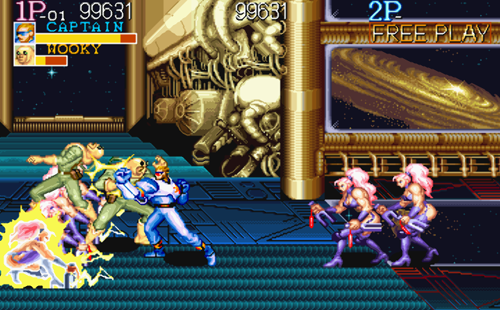
The Dark Side of Captain Commando

Captain Commando was a veritable chameleon among game mascots. As mentioned in a recent feature at 1up.com, the Capcom icon started off as a box-art pitchman and went through two different designs in the 1980s. It wasn’t until 1991 that Capcom finalized his look with an arcade beat-‘em-up.

Captain Commando is a typical enough outing in the Final Fight tradition. The eponymous Captain and his three Commando assistants pound street thugs and monsters, and it's dressed in a futuristic style inspired by manga superhero tales and old serial adventures like Captain Future and Lensman. It’s also pretty mild as the violence goes. Sword-wielding enemies can cut the Captain in half, and the mummy commando, a.k.a. “Mack the Knife,” causes foes to disintegrate into skeletons when he defeats them. That's about it. These scenes were removed in the Super NES version of Captain Commando, and there wasn’t much to take out.


There’s nothing in Captain Commando to suggest that Capcom’s underlying vision for the game was a bloody procession of sadism and gruesome deaths. For that, you’ll have to read a promotional comic that Capcom made.

It's a little graphic, so I'll hide it behind this cut.

Little Things: Wonder Boy in Monster Land

Wonder Boy in Monster Land may have a title both generic and silly, but it’s an important game in the history of Westone and their biggest series. The original Wonder Boy went through the motions of a rudimentary platformer (and spawned Adventure Island along the way), but 1987’s Wonder Boy in Monster Land slowed the pace while adding weapons, armor, shops, and other RPG-ish features. And so it started the franchise’s climb toward the fantastic Wonder Boy III: The Dragon’s Trap and Monster World IV.

Another thing about Wonder Boy in Monster Land: just about every foe has a death animation. Most side-scrollers of the NES and Sega Master System didn’t bother with this. Enemies exploded, flickered, or flipped off of the screen upon dying. Wonder Boy in Monster Land, on the other hand, gives each defeated creature a single-frame demise.


The most striking one comes from the mushrooms that amble toward Wonder Boy in the early stages of the game. At first, they look sedate and dutiful.


Then Wonder Boy stabs one, and its face changes to a look of pure agony. The creature’s final half-second on Earth is spent in tearful horror, gazing not toward Wonder Boy but out at the player. Or perhaps it’s looking at the vast spectrum of all it'll never be, at everything it longed to do with its brief fungal existence. A glimpse of a life unfulfilled torments this mushroom soldier, who couldn't even be a Goomba in Super Mario Bros., just before it vanishes from the world, leaving behind nothing but regret. And a shiny coin for Wonder Boy.

Many enemies in the game have their own death throes, but nothing so memorable as the mushroom underling. And Wonder Boy? He doesn’t react at all. As I pointed out years ago, Wonder Boy is a bit creepy.

The Really, Really Lost Street Fighter

One good thing about liking Street Fighter is the knowledge that you can ignore just about every movie and TV series it inspires. After all, the games themselves don’t acknowledge any of them; not the hysterically awful live-action Street Fighter: The Movie nor the hysterically awful USA Network cartoon it spawned. The only exception is 1994’s Street Fighter II: The Animated Movie. It’s quite stupid, but it was Capcom’s own project. They had money to spend on it, the experienced Gisaburo Sugi (Night on the Galactic Railroad, Touch) to direct it, and the advantage of video-game nonsense always going down easier as animation. And it paid off. Sort of. Street Fighter II: The Animated Movie is still the best anime inspired by a fighting game, even if that means next to nothing.

Street Fighter II: The Animated Movie was also close to Capcom’s vision for the games, and so pieces of it turned up in later Street Fighter titles, particularly the Alpha series. Ken, Ryu, Cammy, and several other characters had their looks tweaked in accordance with the movie, and Alpha 2 recreates some of the film’s battles. One character from the film even crossed over: Senoh, M. Bison’s bald scientist crony, pops up in one or two Alpha endings.

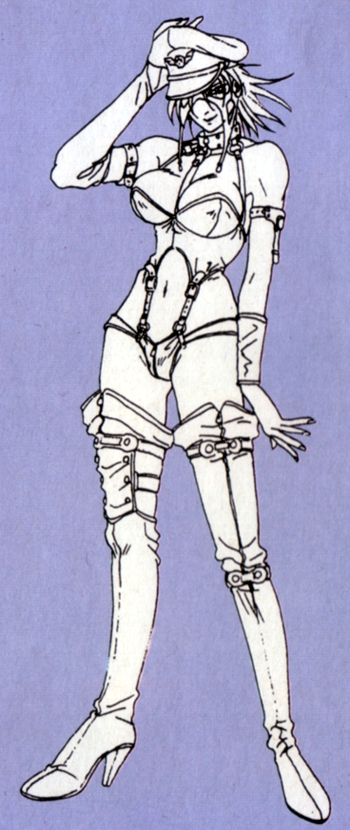
There’s another piece of obscurity attacked to Street Fighter II: The Animated Movie. One character, also an agent of Bison’s Shadaloo syndicate, was on the drawing boards but never made it into the film. Her absence was noted in an old issue of Anime UK, and the magazine ran a sketch of her with this description: “In the outline, she worked for SHADOWLAW [Shadaloo] and appeared on the stage in Las Vegas wearing what one Japanese source describes as ‘radical bondage gear.’” Presumably, she was inspired by the showgirls that mill about in the background of Balrog’s stage in the original Street Fighter II.


Had she actually made it into the film, the unnamed dancer might’ve also slipped into the Street Fighter games and their loosely structured canon, which Capcom makes up only when circumstances and lawsuits demand.

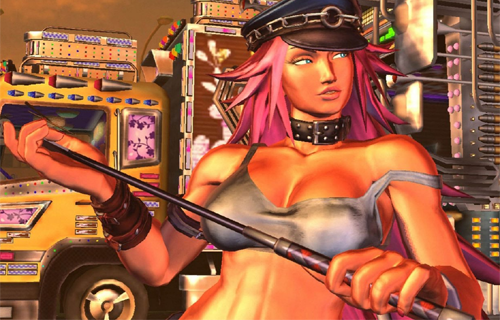
Or maybe the dancer and her radical bondage getup aren’t so lost. With her Bison-like hat, she bears a certain resemblance to Poison, the Final Fight regular who was changed into a guy for the Super NES version of the game. Poison’s backstory has described her as both a cross-dressing man and a fully transgendered character, and the inconsistency has started far more fan debate than it probably should have. And now Poison’s in Street Fighter X Tekken, which will stir up even more debate. Of course, Poison is a non-existent video-game character and is therefore without any gender, but pointing that out makes you a jerk.


Was the dancer a Poison cameo that Manga UK didn’t notice? Or was she just some background filler that the story didn’t want or need? Whatever the answer, she’s still the most obscure of all unused Street Fighter characters, even more so than those early drawings of Dhalsim with six arms and an elephant’s head.

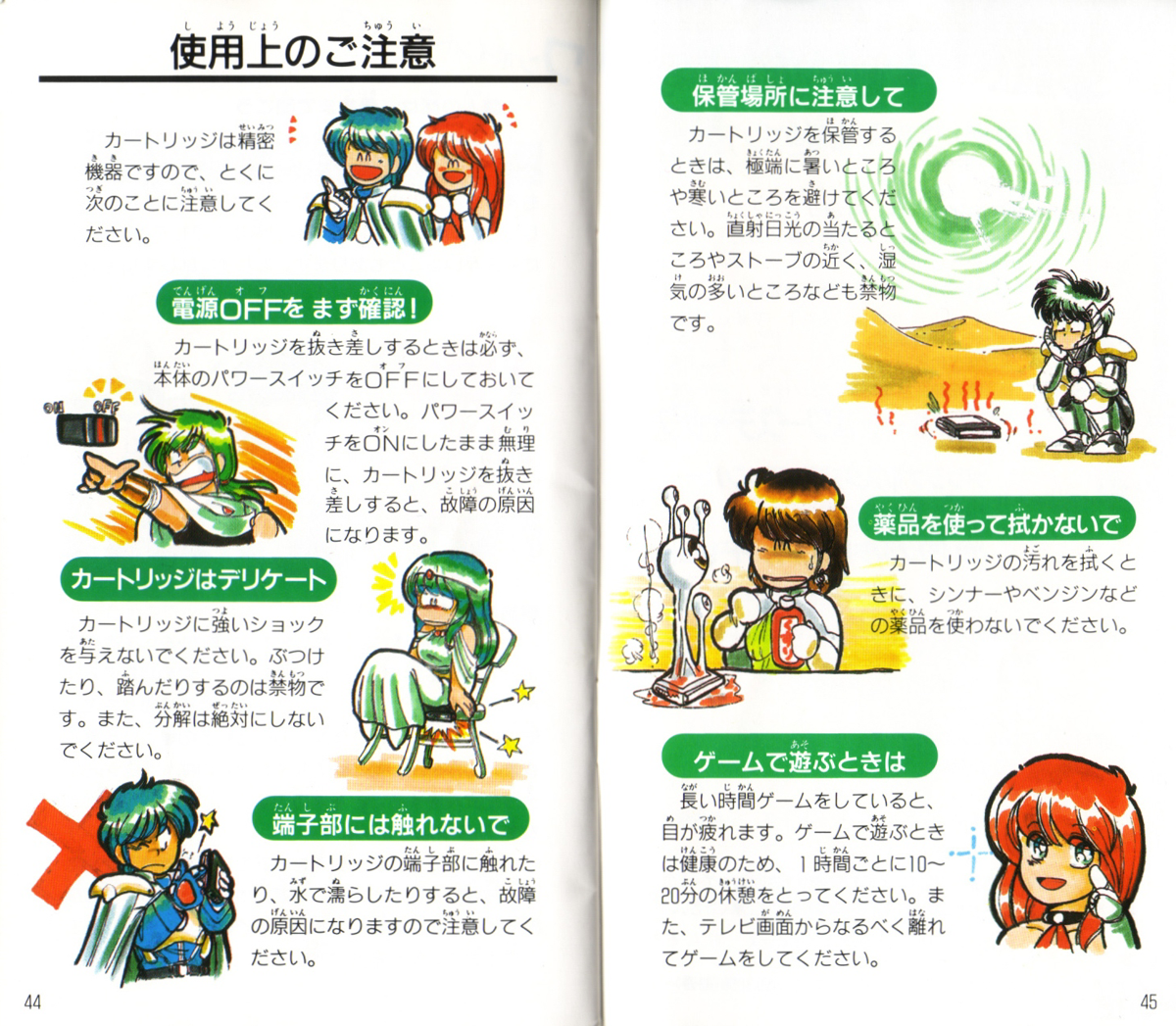
Phantasy Star III: Care and Feeding

Game manuals are a dying breed. As the industry shifts toward online distribution and cheap packaging, manuals grow thinner and less informative. In fact, some modern titles don’t even include them. And why should they? Most of today’s games have extensive, intrusive tutorials that make manuals unnecessary. Yet there’s one important thing that only manuals have: drawings of the game’s characters telling you not to set your new purchase on fire and throw it in the toilet.

The majority of games lack such warnings, of course. That sort of thing was seen mostly in Japanese releases during the late ‘80s and early ‘90s, when game companies felt the need to inform players of the best ways to care for the imposing technologies of CDs and game cartridges. My favorite little warning section comes from the manual for Phantasy Star III.


I don’t know Japanese well enough to fully translate this, but I’m not worried. I tried to do the same thing with a Demo Demo PlayStation cover, and someone dropped in to correct my largely wrong interpretation. So I’ll just translate this Phantasy Star III cartridge-care guide as best I can. It’ll all work out in the end.