Rental Stickers: An eBay Tour

I recently grew fascinated with those rental stickers often seen on old VHS tapes, DVDs, and video games. For many they're an annoyance, a sign that you're getting something that was digested and regurgitated by a hundred VCRs or Nintendo decks. But I like them.

This stems from my ongoing effort to buy fewer old games. Instead, I just look at them on eBay, where odd labels and faded warning tags only give cartridges and discs more personality. You’ll see hundreds of auctions for NES games at any given time, but only one might be from a long-gone Hastings Entertainment in Aurora, Colorado. A game assumes a greater place in history when it carries an old rental-store emblem. It’s not just a battered cartridge; it’s a memento from an age when Blockbuster Videos were as numerous as Burger Kings and renting a game was a blessed alternative to spending months of allowance on Brawl Brothers or Valis III.
 
I picked out a handful of intriguing (to me, anyway) ex-rental games from eBay, avoiding the more commonplace remnants of Blockbuster and Hollywood Video. There’s a little story in each one of these.


VIDEO EZY'S LAST BATTLE
Seller: 8bitlives (ended)

I love it when something wears its past in price tags. This Last Battle cartridge served its time at Video Ezy, an Australian chain that apparently survived the rental crash by embracing kiosks. Games were five bucks a week (which is about $3.50 in my native currency), and I’m sure a bunch of early Sega Genesis/Mega Drive owners got their fill of repetitively punching and kicking post-apocalyptic thugs. No, Last Battle isn’t a very good game. It was a Fist of the North Star title in Japan, but Sega excised the exploding heads, rampant blood, and manga-anime license for tender Western sensibilities, and what remained wasn’t very interesting.

No longer a hot renter, Last Battle ended up in the sales bin for about twenty bucks. And because that’s too much for a mediocre Mad Max knockoff, Video Ezy slashed the price below ten dollars. Someone nabbed it at that point, though I hope they held out for a buy-two-get-one-free offer and got, say, Forgotten Worlds and Truxton in the bargain.

Little Things: Legacy of the Wizard

In my last Little Things, I forgot to mention other small details that I like about Legacy of the Wizard. For example, I like the portrait that the family of playable heroes has on their wall.


There's a lot to enjoy on this screen, which presents the Worzen clan in their domestic forms and shows them transforming into fantasy archetypes once selected by the player. The best is Pochi, the dog who is really a grumpy dino-dragon creature.

However, my favorite piece of their home is that portrait on the wall. It supposedly depicts the bearded and bald ancestor who once sealed away the ancient dragon that the family must now defeat, but that picture also looks like a parrot.


Little Things: The Falcom Bounce

Video games diverge when it comes to falling. A harsh, semi-realistic adventure like Dark Souls shows no mercy to anyone who drops too far a distance. A cute side-scroller like Super Mario Bros. 3 or Dino City lets you plummet from great heights unharmed, provided there’s a place to land and you’re not just tumbling into a bottomless pit. There’s not much to it: if you fall, you either take damage or walk away cartoonishly unscathed.

Some games from Falcom put a little more thought into this. Characters don’t just fall. They bounce.

A good example appears in Legacy of the Wizard for the NES. It’s technically part of Falcom’s Dragon Slayer series, and it sends an adventurous family (and their pet) through a ludicrously complex maze. The gameplay resembles a side-scroller, so the members of the clan can jump, climb ladders, and, of course, fall from great heights.


Observe this example with Pochi, the family’s loyal monster pet. I’m using him because he's a dog in the family portrait and a dino-dragon in the game and therefore the best character.

Gravity Rush Now Even More of a Cartoon

Gravity Rush 2 is little under a month away, and I prefer to pretend it’s already here. I’m running a Gravity Rush contest for a few more days, and I’m busy playing the demo that went up on the PlayStation Network last week. And just today, Sony released the two-part Gravity Rush: The Animation – Overture. Sure, you can watch it for free on Sony’s YouTube Channel, but why do that when instead you can read my opinion of it?

Or maybe I'll just use a picture.


A bridge between the first game and the sequel, Overture answers at least one important question about Gravity Rush: what do the characters like to eat?

Yes, it goes all of two minutes before trotting out a harmless but tiresome cliché: the heroine flying into a violent fury when a precious, newly acquired snack is destroyed. Floating around a market, Kat buys a kabob, loses it, and trashes bug-eyed Nevi shadow creatures, whereupon Raven, her less cheerful rival, shows up and lends a hand. This occupies half of Overture’s running time.

The second half jumps back a short while and finds Kat and Raven eating snacks (of course) and discussing a recent spate of disappearances in their home city of Hekseville. They’re suddenly sent to a mysterious floating island where a HAL-like computer holds children hostage in little power cels. Two half-masked, mummy-like antagonists appear, and then everyone ends up warped to the strange new city we’ll see in Gravity Rush 2.

Overture is an enjoyable gap-filler, all things considered. I can't imagine it swaying those with no interest whatsoever in Gravity Rush, but it brings up the game's best points. The animation is vibrant and mostly fluid, capturing the details of the floating city and Kat’s bubbly personality—which fortunately develops beyond “I like to eat” in the second half. It also keeps the fictional language from the games, as the characters all use the same melodious semi-French, semi-Japanese tone (in which Kat and Raven’s names sound the same as they do in English). I’m a sucker for made-up languages. I’d watch Barb Wire if everyone talked like they were speaking Italian and Swahili backwards.

 Short as it is, Overture stokes my Gravity Rush 2 interest, which was, of course, crazily high already. I’m gonna go play the demo another dozen times.

The Best of Anime...Music

America’s anime fans were pretty busy in the late 1990s. We weren't satisfied just watching Robotech reruns on Toonami; we fervently devoured favorite series, wrote letters to keep Sailor Moon on the air, and went to conventions in numbers previously unseen. We also spent lots of money on anime and its ancillary merchandise. So great was our hunger that some of us thought it a momentous privilege to pay thirty bucks for the imported soundtrack to a movie or series we enjoyed.

In that light, The Best of Anime seemed like a great deal. Rhino Records released it in 1998 at the same price as a new album from Weezer or Neutral Milk Hotel, and it promised us anime's greatest music of all time. Within limits, of course.


The Best of Anime aimed itself as much at new fans as it did at old-timers, and it shows in the cover choices. The CD comes with an illustration of either Cutey Honey or Speed Racer, and the art itself is a thin cel-like sheet posed before the booklet’s cover image of a Silent Mobius cityscape. I was a teenage boy at the time, and despite Speed Racer’s ironic cred, I went with the Cutey Honey cover. And then I tucked the cel inside the booklet before anyone could see it on my shelf.

Despite the title, this isn't an authoritative collection of the finest music spawned in Japan’s animation circuit. If it were, it’d have the Orguss 02 opening.

No, this is less a Top-40 countdown and more an educational sampling from three decades of popular anime series, and it might be more accurate to call it The Best of Anime That We Could Afford to License. It’s helped by some nice liner notes from Fred Patten, who introduces each series and explains just how it fits into the broader vein of anime. He also provides a brief rundown of just how certain shows and the attendant fandom took off in America—starting with an anecdote about the heroine of Brave Raideen kicking an enemy soldier in the crotch.

And the songs themselves? The Best of Anime is a hodgepodge of corny opening tunes and disposable puffery surrounding a few genuinely good numbers. In other words, it’s a perfect encapsulation of anime music.

Notes on Gravity Rush 2

Gravity Rush 2 was delayed, and I needed to compensate somehow. Sony wasn’t diplomatic about their reasons, either. Both Final Fantasy XV and The Last Guardian are shipping in late November or early December, and those games would bury Gravity Rush 2 and bury it deep. The solution? It’s now coming January 17. That way Resident Evil 7 and Tales of Berseria can bury it.

Without any chance to buy Gravity Rush 2 this year, I decided to buy something related to Gravity Rush 2. I went to eBay and looked for the cheapest possible fix.


I found this, an apple-shaped Gravity Rush 2 notepad. Apparently given away at conventions, it’s pretty much the only promotional trinket I’ve seen for the game. It’s about the size of a standard Post-It pad, and it was only 99 cents. That wasn’t bad, even if buying it would mean that I spent money on blank pieces of paper somehow connected to Gravity Rush 2.

Good thing there’s a surprise within.

The Tale of a TurboGrafx

What was the first thing you bought on eBay?

It’s an inane question, but I expect it’ll come up more and more often as the decades lurch onward and turn us nostalgic about every microscopic detail we recall from our younger years, whether it’s the first Star Wars figure you got or the LeMenu microwave dinner plate that your family reused almost every night for fifteen years. It doesn’t matter what it is as long as you remember it.

In that light, it’s not hard to find some appeal for the early years of eBay. The website’s still around and will be as long as the Internet exists, but it was a different creature in the late 1990s, when just about everything online was more suspicious. Auctions didn’t need images, sellers and buyers were on even ground when it came to feedback, and PayPal was largely unknown. You might find yourself wondering if that Gundam model or old Arby’s kids-meal toy was really worth the trouble of getting a money order and mailing it off.


I first heard of eBay in 1998, but it was through a coworker who would interrupt conversations in the most awkward manner imaginable. He once accosted me in the store's video-game aisle just so he could point at Dead or Alive for the PlayStation and announce “this is the bounciest fighter.” When he mentioned eBay, I decided to stay away from it.

I didn’t stay away for long, and the next year I jumped into eBay. The first things I bought were not memorable: two Final Fantasy VII posters and an unopened Chun-Li figure from the G.I. Joe/Street Fighter cross-up of the early 1990s. The posters, which I now realize were bootlegs, stayed on my wall for only a month or so, and Chun-Li sat in a closet for a good decade until I sold her, still unopened, for about the same amount I’d paid.

My third purchase was the first important thing I bought on eBay: a TurboGrafx-16.


Fun with Mariner's Run and Loppy

Many canceled NES games exist only on paper, whether it’s a sheaf of old design documents, a press release, a magazine’s rumors section, or a bar napkin with DONKEY KONG FIGHTS GUNDAM scrawled on it. In some cases, having only a title makes a game all the more enticing, as we’re free to imagine what Vic Tokai’s Baby Gangster, LJN’s World War III, or Activision’s The Abyss might have been like had they shown up behind the glass at Kay-Bee. 

Yes, some unreleased NES games left behind only their titles and vague descriptions. Until last month, I thought Mariner’s Run was among them.

Mariner’s Run is the work of Vic Tokai, a company that’s fascinated me for a while—and not just because of my unabiding fondness for Trouble Shooter. Vic Tokai crafted intriguing games throughout the NES era, whether it was the early (and unreleased in the U.S.) action-RPG Chester Field, the complex adventure of Clash at Demonhead, the charming The Krion Conquest, or the Golgo 13 games, which might not be great but remain marvels of sneaking gruesome violence and bleak spy-pulp stories onto a game system where alcohol and crucifixes were verboten.

We find little information about Mariner’s Run, known as Sea Dog in Japan. It appeared in magazines early in 1991, and the manual for Magical Kids Doropie (aka The Krion Conquest) describes it as a "battle RPG" with a March 1991 release date. 

That was all I knew about the game, and it was all I needed to imagine the best possible NES treatment. I pictured a naval warfare epic in a post-apocalyptic or high-tech future, where you might roam the seas from an overhead perspective and fight intense battles from a first-person viewpoint. Kinda like SubRoc 3D crossed with a fun version of Silent Service.

I somehow neglected to notice that Mariner’s Run survived online in at least three screenshots, plus a Game Players blurb that describes it as “a game in the style of Ultima or Dragon Warrior” that “takes place in a land of seafaring towns.” And that’s enough to destroy my vision of the game.


Yet Mariner’s Run is more interesting now that I’ve seen it. The first screenshot shows the overhead RPG portion, and it's downright primitive for an NES game from 1991. Still, it’s enough to speculate as to which sprite is the main character (my bet is the blue-gray one) and what time period it wants to evoke.

The Cap'n Crunch Reef Raider

If your life and its myriad tiny embarrassments are anything like mine, you went through a time when you weren’t just too old for toys—you were too cool for toys. That was me in the early 1990s, neck-deep in posturing, oversensitive nascent-teenage nonsense. I was having a miserable time in middle school, and I knew it would be even more miserable if anyone thought I played with toys. It’d be worse than getting caught watching the Disney Afternoon without any younger siblings in the room.

What’s more, 1993 was a barren year for toys as far as I was concerned. Ninja Turtles had grown really desperate, Transformers went through an awkward and recycled second generation, and old favorites like Battle Beasts and Starriors were long gone. I had given up on toys, but they had given up on me first.

Yet I noticed something on a Cap’n Crunch box one morning: a mail-away promo for a toy vehicle playset called the Reef Raider. It made a convincing pitch by being free with several box tops and a few bucks for shipping. I didn’t care that the Reef Raider looked like a Fisher-Price submarine or that playing with it would be considerably more childish than messing with Pirates of Dark Water figures or spending a Saturday morning engrossed from Toxic Crusaders to Taz-Mania. I wanted that sub.

The Reef Raider arrived soon, and I had some fun with it for an evening or two, unfolding it in my room with all the awkward secrecy I’d show a dirty magazine. Then I set it aside so that it could disappear into whatever strange vortex swallows up toys that inspire small yet persistent jabs of shame.


The Reef Raider’s unique spot in my uncomfortable years and its subsequent vanishing might explain why I remembered it so readily, though it probably doesn’t excuse my buying it again. As with anything remotely collectible, eBay sellers want more for a Cap’n Crunch promotion than anyone in their right mind would pay, but I managed to find one, still new in the bag, for only a little more than its postage cost all those years ago.

Little Things: The King of Fighters XI

Picking a favorite game from The King of Fighters is a daunting task, considering how damn much there is of the series. It saw yearly iterations from 1994 through 2003, undeterred even by SNK’s collapse, and that’s not even counting the various spin-offs and odd experiments. Most devoted fighting-game fans lean toward The King of Fighters ’98 Ultimate Match and The King of Fighters 2002 Unlimited Match, as both are very polished and cover the broadest range of characters, but you could pick just about any piece of the series and find a convincing personal reason to praise it above the pack. Except for The King of Fighters ’94. Nobody seems to like that.

I don’t know if The King of Fighters XI is my favorite, but it has my favorite character-selection screen. That’s because almost everyone there is grinning like an idiot.


Most of the characters on the roster wear big, goofy smiles in their portraits. Some of them look a little off, especially when the headshots are flipped for the two-player side, but that only adds to the impact. They’re not happy despite looking stupid, they’re happy because they look stupid.

Collecting Dust-Up

Buying video games isn’t much fun these days. It’s not the games themselves; despite the modern industry’s gaudiness and the near-extinction of the middleweight publisher, it’s easier than ever to find something you like and ignore all the rest. No, I’m talking about the act of walking into a store, walking out with a game, and presumably paying for it somewhere in between, lest everyone call you "Thief" instead of "Link" for the rest of your adventure.

Driven by cost-cutting and digital distribution, today’s publishers do their best to emaciate physical copies of games. Most major releases are little more than a disc, a case, and an outer insert, with not even an anemic instruction manual to fill out the package and keep said disc from coming loose and getting scratched when Amazon ships it in a paper sleeve.

Publishers compensate for stripped-down retail games with overstuffed collector’s editions. Any major release now comes in a puny regular version as well as a deluxe collector’s set with a soundtrack, an artbook, a replica chainsaw, a spaceship model, a toy mech, a Master Chief helmet, a Kung Lao bobblehead, a Duke Nukem bust, a dismembered woman's torso in an American-flag bikini (really), or a small figure of Metallia, Nathan Drake, or some other character. That’d be Metallia from The Witch and the Hundred Knight, not Metalia from Thousand Arms. The sheer obscurity would impress me if anyone made a toy of the latter Metalia.


It’s all too much for the folks who just want a little more than half-empty cases with their video games. Sony’s upcoming The Last Guardian presents a good example. It’s a prestigious release, and Sony centered its $120 special edition around a small statue of the game’s boy protagonist and his giant griffin-puppy Trico. You’ll also get an artbook, a soundtrack, and an imitation wooden box to hold it all.


Oddly, that lineup is less impressive than an earlier collector’s edition that Sony briefly exhibited. The promo shot included a metal griffon-feather ring, some extra artwork, a different statue, and the game’s regular packaging for those who hate pulling discs out of those pinching steelbook things. It’s not a case of another region getting more material, either; some European news sites used this initial package, but all outlets and retailers have since shifted to the leaner bundle with the sleepier Trico.

Lost Order Finds Lost Director

CyGames announced several titles at their recent showing, and Lost Order is the most intriguing. That’s Lost Order, not to be confused with Last Order as in the Final Fantasy VII OVA that’s now forgotten or the Battle Angel Alita sequel that squandered itself on a directionless tournament story arc. Lost Order is a smartphone strategy-RPG directed by the long-absent Yasumi Matsuno.

It’s rare for game creators to do well at both writing and directing, but I’ll always praise Matsuno as a success on those counts. His Vagrant Story, Final Fantasy Tactics, and Tactics Ogre are superb in both design and story, and I will defend Final Fantasy XII, which he helmed about halfway through, no matter the slights and barbs you might toss its way. Go ahead. Toss 'em.

Yet Matsuno went missing for a good while. He dropped out of sight after leaving Final Fantasy XII mid-production, and he only emerged for brief supportive stints. He scripted Platinum's MadWorld, though you wouldn't guess it from a plot with irony as its sole defense, and he served as an advisor for the PSP remake of Tactics Ogre.

Matsuno then joined Level-5 just long enough to make Crimson Shroud, a small-scale tabletop RPG simulation for the 3DS, and he left the company before they could put him on an Inazuma Eleven game. His most recent work came with Playdek and a Kickstarter-fed strategy game called Unsung Story, but he wasn’t involved far beyond the basic world-building. The whole project is now troubled and lurching through funding issues, but I’m sure it’ll emerge by the end of the decade.


Lost Order is the biggest project granted Matsuno since his Square Enix days, and it shows promise. Platinum Games is aboard as developer, illustrator Akihiko Yoshida (himself a frequent Matsuno collaborator) provides art director and character designs, and the story takes place in the demolished Gold Heaven capital, an ornate, smog-encrusted city that narrowly evaded obliteration.


That stage suits a Matsuno game well enough, but Lost Order’s earliest screenshots fall in line with the usual smartphone strategy diversion. Characters walk around a loosely mapped battlefield with a network of colored rings, and nothing looks that different from the usual pastel anime-echoing RPG unleashed on smartphones and handhelds these days.

The same goes for what little we see of the world in the first screens; it’s altogether too bright for a city of shadowy backgrounds and apocalyptic grime. Matsuno's older games have brilliantly rendered and subtly detailed environments, and the first glimpses of Lost Order gameplay leave me wondering if someone mixed up the screenshots in the press releases.

Cute Kills

My mother often complained about the video games I played as a kid. Sometimes she engaged in the usual parental griping about my dodging homework or wasting an afternoon on Power Blade instead of going outdoors, but most of her objections took on a rarer subject. When my mother spied me wrapped up in some NES or Super NES diversion, she’d accuse me of murdering cute little creatures.

I understood why. Old video games use simplified and cartoonish foes, and some look wide-eyed and precious even when they're deadly. I could see how my mother might sympathize with the little Boos in Super Mario World or the capering viruses in Dr. Mario.


Yet her mercies went far beyond conventional cuteness. She felt sorry for the giant-octopus boss in StarTropics, the ferocious lizards in Final Fantasy, and even some Castlevania horrors. One evening I showed her how easily I could defeat Mega Man 3's Hard Man, a robot master who repeatedly rams his head into the ground.

"The poor thing," she said after Hard Man exploded into light particles. "It didn't look very smart."

This was nothing new for my mother, who often made my sister and I feel bad for villains across movies, books, and television. She’d point out that the bully humiliated at the end of an Arthur story was clearly friendless and poor, or perhaps she’d wonder aloud what the mothers of all the German soldiers in a World War II movie would say when they learned that Richard Burton and Clint Eastwood had killed their sons. Video games were just another sharpening block for her cilice spikes of pure Catholic guilt.


Little Things: Adventures of Dino-Riki

I’d say that Adventures of Dino-Riki hates us all, but that's a harsh accusation to level at a goofy NES shooter where a smiling caveman belts prehistoric creatures with fireballs. It’s a side project from Hudson Soft, so much so that Riki's axes look straight out of Adventure Island, and it’s from an age when NES games had to be fierce and uncomplicated.

That’s where Dino-Riki’s unabiding cruelty comes into frame. Monsters and projectiles and instantly lethal hazards swarm Riki at every turn, and his limited methods of counterattack involve jumping, tossing things, and yelping comically when he’s struck. The game has only three actual stage themes, but they repeat several times before reaching a final, buglike boss. Then it all starts over again from the first stage.


Adventures of Dino-Riki has no ending. It doesn’t even grant the player, who’s surely spent hours upon hours memorizing the behavior of caroming pterodactyls and sinking lily pads, some concluding graphic of Dino-Riki triumphant. The North America version of Karnov and its “Congratulations” screen often go down as the biggest disgrace in NES endings, but at least Karnov cared enough to acknowledge you.


Hudson crafted Adventures of Dino-Riki in 1987, when the NES had plenty of arcade-like offerings that didn’t need endings. Yet Dino-Riki has just enough cartoonish aplomb to invite denouement, even if it were just some seven-second finale with Riki and the cover illustration's apparently nameless red-haired cavewoman (or the Japanese wrestler who occasionally takes Riki's place). This was an oversight in 1987, but it became out-and-out fraud when Dino-Riki came to North America in 1989. By then, even simple shooters like Thundercade and Captain Skyhawk rewarded you.

Pin-zer Dragoon

A short time ago I said to myself, “I don’t have enough Panzer Dragoon junk,” and that bugged me more than it should have. Panzer Dragoon, Sega’s line of mostly excellent 3-D dragonback rail shooters, is on the short list of game series over which I will make a complete fool of myself, so felt the need to do just that.

Of course, there’s a limit to my fool-making, and I hit it rapidly when checking out the various Panzer Dragoon merchandise on eBay. A limited-edition Panzer Dragoon Orta Xbox? Too expensive, too big, and I’d never use it. An even more limited resin statue of heroine Orta? Not bad, but even more expensive. A VHS copy of the dreadful Panzer Dragoon anime OVA? Even that unendurable panorama of garbage is overpriced.

Yet I spied something cheap, small, and novel: a Panzer Dragoon Orta pin for about three bucks.


I assume these were given away at conventions, perhaps E3, before the game’s early 2003 debut on the Xbox. They’re neat for what they are. The design is true to Panze Dragoon's ornate future-byzantine motif, and they’re hard rubber instead of cheap promo-pin plastic.


One thing strikes me: instead of Sega’s logo on the front, we see that of Smilebit, the developer. Smilebit was part of Sega’s expansion in 2000, when the company, hubristic as ever, established nine different subsidiaries. All of them still answered to Sega, naturally, and Sega reformed the various groups into six larger entities in 2003 before folding them back into Sega proper in 2004. Sega is strange like that.


So why does Smilebit get billing on the front of the promotional pin when Sega’s copyright is on the back—and on the cover of the game, for that matter? Perhaps Sega wanted to push Smilebit as a new brand. By 2002, Sega was out of the console market that they had nearly dominated in the early 1990s, and their name no longer stood for anti-Nintendo coolness or screaming television commercials. Sega was shameful and tired, but Smilebit? Hey, that sounds fun!

Well, that’s my backward theory, at any rate, and it’s the most notable thing about the pin. That said, I’m glad I picked it up. Even the crappiest Panzer Dragoon debris is rapidly turning collectible, so perhaps even this little rubber square will pay for a trip to New Zealand in a few years.

Valkyrie Anatomia: In Profile

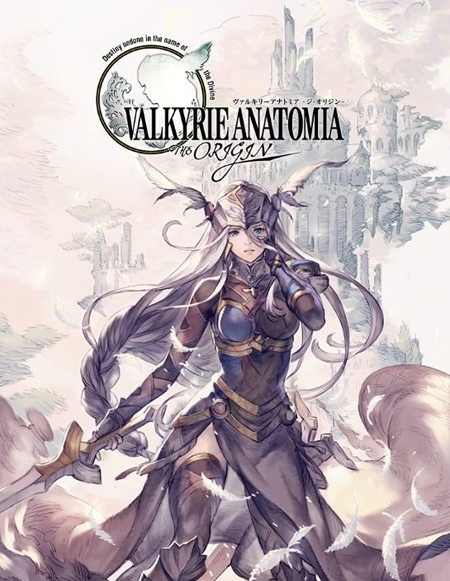
Valkyrie Anatomia: The Origin makes me doubt myself. I enjoy it, but I wonder if that’s because I’m hardwired to enjoy any Valkyrie Profile creation on some level. Am I having fun with Valkyrie Anatomia just as I did Star Wars: The Force Awakens, which lost me in the second half but still made me feel like a little kid awed by Return of the Jedi? Is it like a mediocre Lupin III movie that I watch only because it has Lupin slinking around while Jigen makes caustic remarks and never takes off his hat? Or is it more like ABC’s recently canceled The Muppets, a standard-issue mockumentary sitcom that I stuck with just to see Gonzo and Fozzie and Uncle Deadly going about their Muppet routines?

Should you trust my opinion of Valkyrie Anatomia? Can I even trust it? Probably not.


Well, here’s what I think anyway: Valkyrie Anatomia, as a mobile-game prequel to the rest of Valkyrie Profile, doesn’t form as well as its predecessors. Yet it has enough of Valkyrie Profile’s finest elements to draw me into whatever it’s trying to do to my spare time and money. For all of its failings, It knows what sets Valkyrie Profile games apart. I have irksomely sectionalized proof.

BLEAK AND MORBID VIGNETTES: Yes, mostly
The three Valkyrie Profile games tell of struggles between Norse gods and mere mortals: the first is about a valkyrie slowly reclaiming her humanity, the second about a rebellious valkyrie locked in mortal form, and the third about a bitter warrior seeking revenge on the valkyrie who spirited away his father. Yet their best moments are often found in the smaller tales about the warriors the valkyries gather, the valiant and doomed souls who earn a place in Odin’s army one way or another. The original game excelled at this while Valkyrie Profile 2 had weak side stories, but the third, Covenant of the Plume, remembered the importance of a strong supporting cast. And I will defend it everywhere I can.


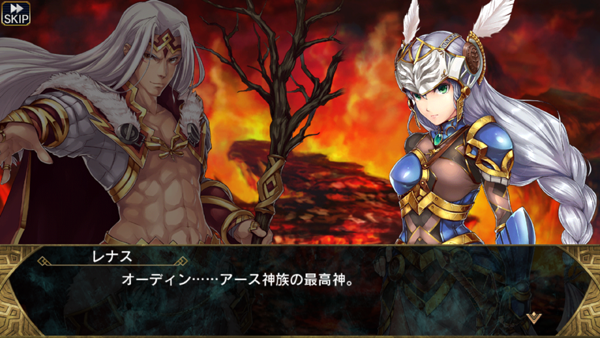
Valkyrie Anatomia remembers as well. It's just not as adept. The overarching story finds a younger (and possibly alternate-reality) version of Lenneth Valkyrie sealed in darkness, summoned out of it only by an equally younger version of Odin. He desperately needs warriors for the Aesir ranks, so Lenneth travels to the mortal realm with two raven familiars at her side. She recruits humans for Einherjar he same way the original Valkyrie Profile presented things: watching them in the days before their untimely demises, and inviting them to accompany her to the afterworld.

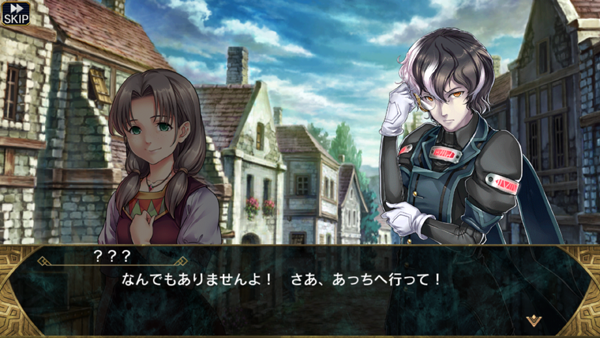
My limited knowledge of Japanese leaves me unable to comment on the nuances of Valkyrie Anatomia’s storyline, but I can grasp the tenor of it. It’s fragmented in quality, switching from a generic story about an all-too-perfect warrior to an intriguing chronicle of a homunculus mage’s final days. Most of the time, though, Anatomia strikes the right tone: morose, fatalistic, and yet hopeful for a life beyond. It’s easy enough to sympathize with Chloe, a dragon-hunter forced to watch her sister cursed, or Senna, a chipper swordfighter who dies in a tavern brawl.


That’s where Valkyrie Anatomia lays down the same rhythm that made Valkyrie Profile so compelling. Each little vignette isn’t just about a pathetic mortal; it’s an introduction to a new archer or magician or broadsword-wielder for you to recruit and develop. Anatomia even goes beyond the introductions. Once drafted, an Einherjar unlocks extra dungeons that explore the characters’ lives after they’re turned into foot soldiers for Ragnarok. It’s an excellent flourish on the original’s formula, which tended to forget about most human allies after they enlisted.

NFL Huddles: Rushers' Revenge

A while back I wrote about the NFL Huddles, a line of little figures representing various football teams. I openly wondered why the NFL didn’t revive the idea and market the Rams and Cardinals and Jets as cute characters for children. As it turns out, the NFL brought back the Huddles in concept, if not in name or spirit. And I learned about it through McNuggets.

I went to at a McDonald’s and realized that it’d been about twelve years since I’d bought a Happy Meal. So I asked what kind of toys they had. This particular McDonald’s didn’t have the Hot Wheels sets as advertised; as a substitute they offered NFL Rush Zone Rushers, a promotion apparently from 2012. This piqued my interest, and I bought one. Then I bought another.


The Rushers have the same underlying principle as the Huddles, embodying some NFL mascot in squat form. Design-wise, they’re different. Each of them is a huge helmeted head with arms and legs attached, plus whatever decorations evoke a team. It’s a physique that works well for creatures like Boglins or robots like Gurren Lagann (or the gun-headed things from Keith Courage/Wataru), but it’s a little strange when applied to human characters and humanoid animals.


Little Things: Tail 'Gator

Tail ‘Gator is one of those early Game Boy titles that stood all by itself. It has no tie-ins, no sequels, and no subsequent cameos for its reptile hero. It doesn’t even have the odd connections of Trip World (which is a spiritual successor to Mr. Gimmick) or Chalvo 55 (which stars the robot from the canceled Virtual Boy game Bound High). Nope, Tail ‘Gator is just a side-scrolling action game that Natsume released back in 1991.


Yet Tail ‘Gator is great fun. Its protagonist is an alligator named Charly, and he counters the menace of a dragon overlord by jumping around and whacking things with his tail—or launching a fiery tail-shaped corona across the screen, if he’s grabbed enough power-ups. The game runs through different realms that follow such standard templates as sky and water levels, and most of the stages are nicely designed despite their find-the-key simplicity and Charly’s sluggish movement. In fact, Tail ‘Gator is one of the best action games the Game Boy saw in its first few years on the market, and it has an appropriately small and devoted fan contigent.

Natsume also crammed Tail ‘Gator with a lot of entertaining details, all the more impressive considering the Game Boy’s small screen and the primitive graphics of many of its titles. My favorite little touch can be seen when Charly leaps into a waterfall.

Trouble Shooter Trivia

I admit that I’m lazy when it comes to investigating games. I'm willing to poke through old magazines in search of screenshots that differ from the actual released titles, but I rarely notice any changes unless it’s a game I really like. For example, I found something irrelevant about Trouble Shooter, which I enjoy and write about more than it probably merits.

Trouble Shooter, known as Battle Mania in Japan, is a charming Sega Genesis side-scrolling shooter, stitched together from two obvious sources. One is Capcom’s macho arcade fantasy-blaster Forgotten Worlds, and the other is Haruka Takachiho’s Dirty Pair line of novels and anime about bikini-clad interplanetary operatives Kei and Yuri blowing up a good chunk of space-faring civilization. Many people imitated both of these things to drab effect, but Trouble Shooter found its own identity. It’s colorful and competently made even if the gameplay is simple, and its sequel, Battle Mania Daiginjoh, is downright amazing. At the risk of perturbing Capcom diehards and the fansub kingpins of Reagan-era college anime clubs, I like Trouble Shooter more than Forgotten Worlds or any Dirty Pair adventure.


Most importantly, Trouble Shooter and Battle Mania Daiginjoh have genuine affection at their cores. It’s common for fans to declare their favorite games earnest labors of love regardless of how bland they may be, but the Trouble Shooter series truly seems to exist just because some staffers at Vic Tokai and Seibu Lease really, really wanted to make them. Rather than Xerox Kei and Yuri, they established heroine Madison (Mania in Japan) as a cranky, genre-wise mercenary and, in the American version, a slumming debutante with feminist quips. Along with her more placid and fun-loving roommate Crystal (a.k.a. Maria), she rescues a kidnapped prince who says things like “Coolness,” defeats a supervillain who turns into a giant buglike demon, and goes to even stranger places in the sequel.

California Crisis: Do a Lot of Coke and Vote for Ronald Reagan

We’ll remember the 1980s as a time of fanciful excess in North America and Japan, no matter how meretricious that may be. Never mind the Cold War or the AIDS crisis or the rampant sleaziness peddled as noble success. Textbooks will document an era of Thompson Twins singles, Schwarzenegger films, feathered hair, mecha anime, suspiciously avuncular presidents, and video games where you had to rescue suspiciously avuncular presidents from ninjas. Not ninja. Ninjas. It was the 1980s, and we didn’t care about faithfully pluralizing loanwords.

The indulgences of the 1980s fed Japan’s direct-to-video anime market in the decade’s latter half, ensuring that the acronym OVA would remain part of the nerd lexicon. Companies turned just about any idea into at least 45 minutes of animation, even if that idea consisted of nothing more than a giant mecha, a big-eyed heroine, or some combination of the two. Ideally, the OVA boom would’ve spurred a wealth of creative animation from rising talents, but it also brought a deluge of vapid trinkets with occasionally nice animation and all the enduring quality of a Sci-Fi Channel Original Movie. The typical 1980s OVA is not Angel’s Egg. It is Ladius, Good Morning Althea, Roots Search, Explorer Woman Ray, Relic Armor Legaciam, or anything else so generic that it’s hard to remember the title. I think one of them was called Steel Guarder Lyzerial.


California Crisis: Gun Salvo, a 1986 radar blip from Studio Unicorn, is smack-dab in the middle of this nonsense. It lasts under an hour, and its story pitch could be summed up in restroom graffiti. It’s a ridiculous joyride that imitates the shallowest parts of shallow action films.

Yet California Crisis stands above the dross. 

For one thing, it looks different. It’s animated with linework and shadows much heavier than the typical ‘80s cartoon from Japan or anywhere else. And instead of servicing a story about toy-ready mecha, Tokyo teenagers, or robot-demon warfare in the dead of space, California Crisis is all about the glorious sun-baked façade of America.

Major Miclus Moments

I just don't think that kids today know enough about Miclus. I'm sure they're familiar with video-game mascots like Mario, Sonic, Pac-Man, Jack Frost, Wonder Boy, Randar, G-Mantle, Disk-Kun, and the internationally famous duo of Rei Misazaki and Chris [LAST NAME NOT TRANSLATED YET], but Miclus remains obscure. That's understandable, though there was a time when you could find Miclus in just about every arcade worth visiting.

Miclus is a mostly blue dragon devised by Seibu Kaihatsu. Apparently without an official gender, the creature first appeared as the final boss in Wiz, a 1985 side-scrolling arcade game with a pointy-hatted protagonist and an unbearably repetitive soundtrack.


Miclus had more exposure in Raiden, Seibu Kaihatsu's landmark vertical shooter. By the early 1990s, Raiden was everywhere: full-blown arcades, mini-golf centers, bowling alleys, Chuck E. Cheeses, knock-off Chuck E. Cheeses, laundromats, 7-Elevens, and anyplace else that needed a decent coin-eating attraction wherein a lone jet dodged and blasted several hi-tech armies. Miclus appears briefly as a bonus icon; the player usually grabs medals (which always looked like stubby bombs to me) for points, but Miclus shows up for an extra score boost at times. You'll usually see it by the second level, but it'll appear on the first if you explode too often.

Later Raiden games give Miclus bigger roles. Raiden Fighters 2 and Raiden Fighters Jet make it a playable character that sweeps the screen with fiery breath. There are other ships to choose, but Miclus is clearly the best.

That aside, my favorite Miclus appearance comes in the Japanese manual for The Raiden Project.

While it's not a highlight of the PlayStation's first year, The Raiden Project was comforting at the time. Many early PlayStation games showed us fancy 3-D effects that would age rapidly, but The Raiden Project revealed a more enduring advantage of Sony's new system: letting us play nearly perfect renditions of older arcade games. The Raiden Project offers the original game and Raiden II in arcade-faithful style, aside from some loading times. Its default presentation puts big borders on the screen to show all of the vertical playfield, but you can turn your TV on its side to get a more accurate full-set look. That's where Miclus comes in.


The manual's last pages find the fat little dragon delivering a warning about flipping your TV for  arcade mode. On the left, Miclus turns away in disgust from an anthropomorphized and improperly rotated television. On the right, Miclus looks on in approval. Or maybe it's inspecting that humanoid TV for genitalia and other Videodrome-like abnormalities.

This Miclus comic wasn't necessary for the North American version of The Raiden Project. Sony technically left in the full-screen mode, but with only side-scrolling controls. They didn't want customers damaging their TVs. And yet I think Miclus could've given Sony airtight legal exoneration. If a tiny dragon cautions you about rotating your set, it's your own fault if you don't listen.

Monster Wrecks

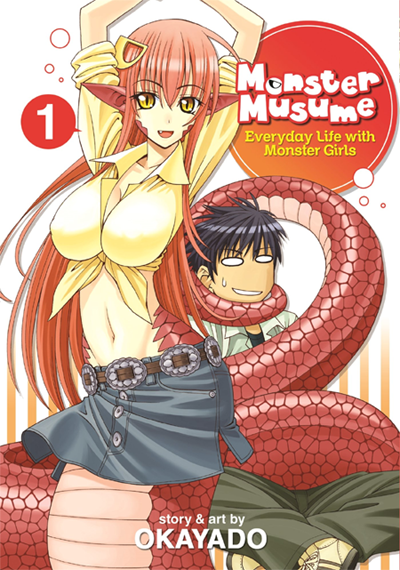
What’s the anime-manga industry up to these days? Monster girls, from the look of it. Mike Toole recently wrote an Anime News Network article about this trend, which seizes the base elements of sex comedies or domestic dramas and adds centaurs, lamia, harpies, mermaids, ogres, spider-people, slimes, and other creatures, most of them female.

I find this fascinating in concept. I always like it when people appropriate legends and creatures in new and ridiculous ways, so I see nothing wrong with a sitcom about a guy forced to share a house with a snake-person or a pile of sentient protean goo. I’m sure the storytellers of ancient Greece and general antiquity came up with things like this. They just didn’t write them down.


The problem with most of these monster-girl series is that they’re typical stories beneath the new paint. The leader of the whole movement is Monster Musume, a manga and anime about an average guy with various roommates from the monster realm: first a lamia who can’t keep her coils off him, then a juvenile harpy, then a noble centaur, and so on. It adheres to the same bland template as countless other risque comedies, as nearly all of the mythical beast-women want the protagonist in one way or another. That's why I gave up on the series. Well, that and I started feeling sorry for the lamia, who met the protagonist first and clearly liked him best.

Monster Musume doesn’t hesitate to overload on titillation, and rarely does it take its premise to imaginative heights. For example, we’re told that lamia are all female and thus require human males to breed (gosh, how convenient), even though many brands of fiction have male snake-men. What about Michael Swanwick’s The Dragons of Babel, where a male lamia is called a lamius? What about the G.I. Joe movie, which features a serpent-emperor voiced by Burgess Meredith? What about those Piers Anthony novels that a lot of people warned me against reading? I’m sure at least one of them has a male lamia.

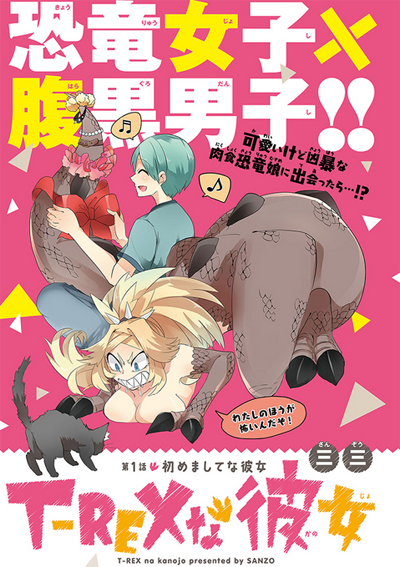
There’s another section of the monster-girl trend that I enjoy much more, if only for selfish, nerdy reasons. It’s a manga called T-Rex na Kanojo, or My Girlfriend is a T-Rex.


It’s ostensibly a parody of the whole monster-girl thing, and it envisions a world where dinosaurs didn’t go extinct so much as they evolved over untold epochs to live and work alongside humans. Of course, this evolution means that dinosaur girls look human as far as their heads and torsos are concerned—everywhere else they have scales, claws, horns, or armor plating.


Depressing Game Endings: El Viento

El Viento is among my favorite weird games, perhaps because it isn't all that weird. Compared to Katamari Damacy or Cho-Aniki or even the culturally ratified oddities of Super Mario Bros., El Viento is ordinary. It’s a side-scrolling action game with jumping and boomerang-tossing, and its base effect isn't so different from the many other Sega Genesis titles where a fetching heroine saves the world from some eldritch menace.

Look closer, and you'll see invention. Like the two other (lesser) parts of the Earnest Evans trilogy, El Viento is steeped in 1920s adventure and interdimensional horrors, as it sends lithe Peruvian explorer Annet from Chicago streets to hellish caverns and an Empire State Building designed to summon demons. Like Indiana Jones with gangsters and Lovecraft beasts instead of Nazis and chilled monkey brains, El Viento brims with lower-key strangeness, and it's more fascinating for that.

So much of El Viento mixes typical action with fabulously bizarre details. Annet starts off by fighting Al Capone's thugs, but then she leaps across a Mount Rushmore full of smiling gun turrets and a floating cactus chain. Then she raids a blind-tiger club full of tiny imp mobsters and sluglike bartenders who explode when struck by her boomerangs and magic spells. Then she hops on a dolphin and rides straight into giant pixel jellyfish-octopuses. They explode as well. Most of the enemies come in weird and flammable varieties, and there’s never a reason why. Even the rats that pester Annet in a sewer look like they're wearing little sunglasses.


See? They're cool rats.


Annet does all of this to keep cultists and criminals from summoning the ancient deity Hastur, but she's also out to rescue her apparent sister Restiana. Despite rampant evidence that the cult's planning to sacrifice her, Restiana is convinced that she'll become a veritable goddess with Hastur's powers, and she openly asks why Annet opposes them. Annet's response?

Arcade of My Youth: Landstuhl

A lot of us had childhood arcades, and most of us saw them change. If you’re my age, you might’ve watched a gallery of varied offerings, Final Fight and Ghosts ‘N Goblins and Raiden and all, shift into a throng of Street Fighter II, Mortal Kombat, and every fighting game aping their success. If you’re older than I am, you might’ve seen an arcade trade pop-culture staples like Pac-Man and Space Invaders for things with vaguer goals and smaller crowds. If you’re younger than I am, you might’ve had time only to observe a neighborhood fixture waste down to a few prize-grabber machines and an Area 51 cabinet with only one plastic pistol working. Then it finally closed and signaled that the modern world has little space for childhood arcades.

I say all of this in envy, because I never had much of a childhood arcade. I spent five years of that childhood in Germany, as my father was in the Air Force. Instead of living on an American military base, we lived in a German village, and if that warren of half-timbered homes and dangerously sharp turns had an arcade, I never found it.

The closest I had was the small arcade at Landstuhl Regional Medical Center. It was a mere nook in the base cafeteria, but it was my best vision of quarter-devouring culture in the late 1980s and early 1990s. The selection was the video-game equivalent of the Armed Forces Network, where you’d see current TV shows like ALF and In Living Color aired in tandem with black-and-white movies. Older Kung-Fu and Tiger-Heli cabinets would sit alongside Cabal and Golden Axe, and I couldn’t be sure if a game would stick around for the next time my family dropped by the BX.

In this arcade the size of a small moving van, I remember three games most vividly.

WARDNER 
Arcades intimidated me, and I doubt I was alone. A game on the computer or NES could be practiced in your own home, but arcade titles were merciless and impatient. You put in a quarter and tried to grasp the gameplay through a joystick and buttons, and heaven help the slow learners.

My mother always admonished me against playing arcade games. I once thought she merely disdained them as unproductive wastes, but I now think she had a more insightful motive. She didn’t want me spending money on arcade games because I was terrible at them.

That’s why Wardner got my attention. Arcade games tended to kill you off in barrages of enemy bullets or throngs of street punks, but Wardner was less threatening at first. It was a side-scrolling game where a pudgy hobbit bounced across forest floors and threw fireballs. It was a lot like Super Mario Bros., and I already knew how to play that! This Wardner thing should be easy!


Well, it wasn’t. Wardner is an action-platform game from Toaplan, a company better known for crafting impressive shooters like Batsugun and Outzone. Those shooters are tough, and so is Wardner. It sees its rotund hero waddling through a fantasy realm in search of his girlfriend, who’s encased in crystal and offered to the local tyrant, Mr. Wardner. Our protagonist can boost his fire magic and don a protective cloak, but at the game’s start he tosses only one limp flame at a time, and a single hit does him in. I’d later learn that his name is Dover, but after losing a few quarters to the game, I was more inclined to call him Fatsy Bumbledick.

As frustrating as Wardner was, it fascinated me with the loose, unexplained logic arcade games often put forth. The second level is a dilapidated factory where Fatsy faces whirling blades, conveyor belts, spiked drones, and other challenges required by any game where someone can jump. Yet I was intrigued to see all of this pop up after a stage full of forests and castles and dragons. Was Mr. Wardner trying to industrialize this peaceful land, like something out of that unnecessary chapter at the end of The Lord of the Rings? Or did Wardner actually occur in the future, when gnomes and fairies live among the ruins of humankind and an entire factory still treads on in ignorance, slowly devolving into one massive death trap?


I also liked what awaits at the end of the factory. You’ll see a woman pacing in a locked room, but once the level-boss dragon is defeated and the door is opened, she turns into a generic ghoul. If that occurred only on the second level, I just knew that the game held stranger twists later on. Perhaps the real villain would be Fatsy’s crystalized sweetheart or some mutated, long-lived survivor of whatever catastrophe had ended human civilization!

Wardner wasn’t worth my speculation. As I found out years later, it grows wearisomely hard by the last stage, and there are no shockers apart from Mr. Wardner transforming from an aged sorcerer to a hirsute demon. That's really a standard disappearing-handkerchief trick among the dark sorcerers of video games. Wardner is just an average action title with a few neat ideas and solid Toaplan execution. It’s Ghosts ‘N Goblins after a big meal, but for a little while it opened up a post-apocalyptic fantasyland for me. In several ways.

Nintendo Power's Greatest Gossip Gremlins

Nintendo Power had a fascinating look in its early years. It was, of course, a promotional sheaf for all things Nintendo, but the magazine’s staff enjoyed an unprecedented relationship with Japanese publishers. With that came artwork and layouts rarely spotted in America.

Within Nintendo Power you’d see spindly Clash at Demonhead heroes, plastic Blaster Master and Metal Storm models, Mega Man robots somewhere between an American cartoon and a Japanese comic, and lavish art for the lesser-known likes of Astyanax, Code Name: Viper, and Legacy of the Wizard. And you’d see the detailed illustrations of the now-respected Katsuya Terada adorning features for Final Fantasy, Dragon Warrior, and Ultima. Even the comic-strip adventures of Howard and Nester, the former based on Howard Phillips and the latter a bratty little mascot, had distinct manga styling courtesy of artist Shuji Imai. Nintendo Power wasn’t just a bundle of previews and tips and news about video games that would define an embarrassing volume of childhoods. It was a kaleidoscope gaze into another realm.


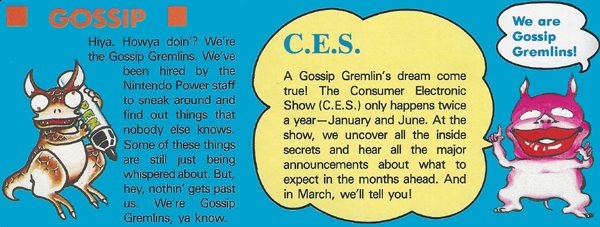
The Gossip Gremlins had a small but memorable role in this. No doubt borrowed from Japanese publications, the Gremlins were fanciful critters who popped up at the bottom of Nintendo Power’s Pak Watch previews section. They spouted tidbits about games too early to have plentiful screenshots or solid details, giving the magazine a cute package for random information.

The Gremlins also offered some of the most creative art in Nintendo Power, as they weren't based on actual games. Unburdened by commercial demands, the artists cut loose and drew marvelously odd creatures from the heart of Japan’s late-1980 pop culture. And I picked out my favorites.
 
THE EYE KNIGHT 
January/February 1989 
If the Gossip Gremlins rarely came from real NES games, many were cut from the same aesthetics. The Eye Knight is a perfect example, familiar enough to make young readers wonder if they'd encountered such a creature in The Legend of Zelda, Dr. Chaos, or the inner reaches of Deadly Towers that few had the patience to reach.


An armored warrior with a huge Technodrome iris where his face should be? That’s almost too good of a design to waste on a blurb about Defender of the Crown—a blurb that’s half inaccurate, since the game isn't really about Robin Hood.


In fact, Nintendo Power liked the Eye Knight enough to use him (her?) twice. The creature shows up again in the March/April issue to mention some news about Hi-Tech. Too bad, Eye Knight. You deserved to be skewered by Link in Zelda II, not reduced to bandying Chessmaster rumors.

Mega Man's Legacy

The Mega Man Legacy Collection is not the first time Capcom reissued and repackaged the initial six Mega Man titles, but it might be the most precise. Capcom and Digital Eclipse intend to preserve Mega Man’s initial outings just as they were on the NES, complete with slowdown and flicker and various filters. It’s an important step in game archiving and presentation, and the press releases and interviews liken it to the Criterion Collection and its artful packaging of notable movies. And Michael Bay’s Armageddon.

That’s a close comparison, but the Mega Man Legacy Collection lacks one essential piece of a Criterion set: a long and possibly misguided explanation of a film’s cultural importance. Capcom plans to release a physical version of the Legacy Collection next year, so there’s still time to outfit its instruction manual with an essay about Mega Man’s inner meanings.

And I have just the essay.

A Leap Ahead

I reviewed Lost Dimension earlier this month, and it was a tough game to judge. It has novel ideas and flows pretty well, but it just doesn’t make an impact. Hunting a traitor in your midst is intriguing. The battles are fast-paced and fun. On the whole, however, Lost Dimension can't summon the memorable characters or intricate approach that an interesting game really needs. It passes through like a cereal commercial.

Yet I’ll say this for Lost Dimension: it lets you stand on someone's head.


Technically, only one character in the game can do this. Lost Dimension puts you in command of an elite squad of psychic soldiers infiltrating the fortress of a world-dominating villain, and one of the special agents is Nagi Shishiouka. She’s a laconic and efficient woman who’s spent perhaps too much time as a military operative, and she glides around the battlefield in her impractically long combat dress. Position her just right, and Nagi can perch on a teammate’s head. Sadly, she can’t attack from that position. Nor can the other characters move with Nagi atop.

Standing on another character’s head is a feature too often ignored in video games. Plenty of action cavalcades let players leap momentarily upon an enemy, but it’s usually just a means of attacking. Seldom is it merely a neat trick to be enjoyed. And I think that’s a shame.

Rygarfield: The Third Impact

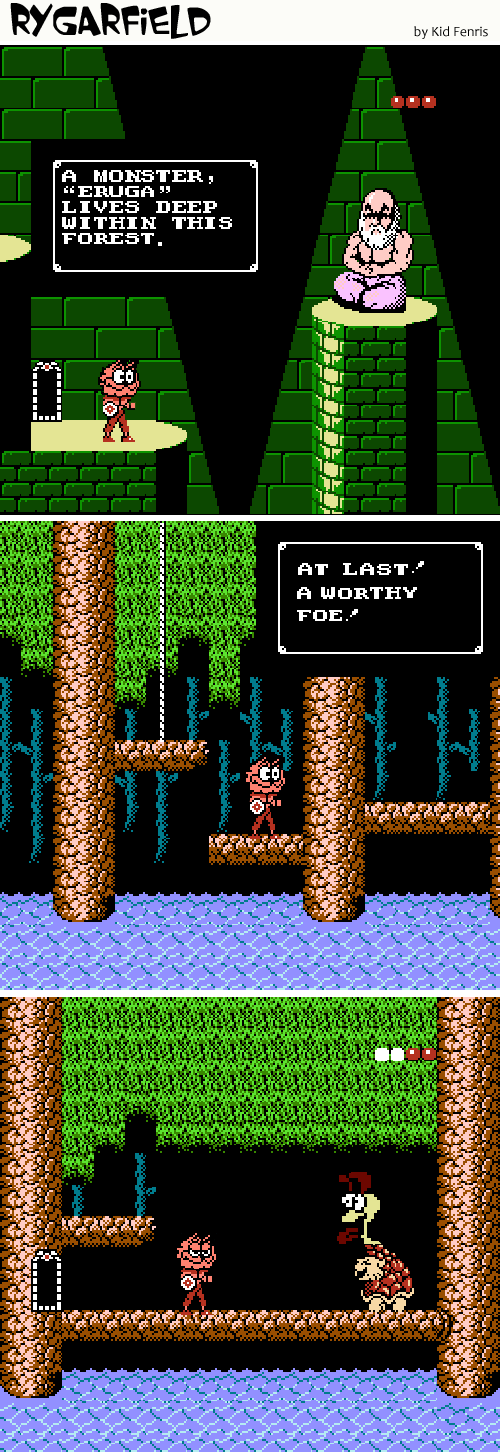
I realize that I let Rygarfield fall behind schedule, as I've made only two strips in fifteen months. I’m not worried, though. All of the best webcomics and many of the terrible ones go on long, largely unexcused hiatuses, so it’s only natural that Rygarfield reflect its medium. And I think the third strip is the best yet!


Abysmal webcomics aside, making Rygarfield led me to appreciate the NES version of Rygar more and more. It already occupied a special place in my nostalgia, since it was the first NES game I saw nearly in its entirety. A neighbor kid had mastered most of it, and he spent one afternoon showing me the whole game up to the final boss. I was so fascinated by the sprawling scenery, the cool monsters, and the little secrets that I didn’t realize I never actually got to play the game. Rygar may as well have been a crude pixel movie for me.

More to the point, Rygar is highly impressive for a 1987 NES offering. Most of that period’s worthwhile games came straight from Nintendo themselves; the majority of third-party titles were simple arcade derivatives or crude side-scrollers. Yet Tecmo recast the boring arcade Rygar as a spacious NES quest that mixes overhead stages with horizontal stuff, offering the player RPG-ish leveling and an arsenal of neat accessories (well, the grappling hook is neat; the rest are rarely used). The creatures encountered are remarkably varied, and there’s a lot to explore as each new item opens up previously impassible areas, like some fantasy-themed Metroid. It even has one of the earliest floating castles in an NES game!

I’m surprised that Rygar didn’t become a series-launching cult classic along the lines of Castlevania or Mega Man. Tecmo tried a PlayStation 2 remake, but it doesn’t count.

No matter. I’m sure that Rygar will see a parasitic resurgence once Rygarfield lands itself a movie deal, a low-budget CG cartoon, and fields of merchandise. Maybe someone will make bootleg T-shirts that show Rygarfield peeing on, say, a Sega Master System.

A Lack of Lunar, Elucidated

The first two Lunar games remain cases of RPG clichés done unimpeachably right. They button up every little part of the genre that grew old during the early 1990s, but they do it all with exceptional artwork, grand music, likeable characters, and cinematic aplomb (oh, and goofball Working Designs localizations that I still find irresistible). That’s especially true of the second game, Lunar II: Eternal Blue. In fact, in the whole skein of RPGs where plucky young heroes meet mysterious, blue-haired women, Lunar II is the best damn RPG where a plucky young hero meets a mysterious, blue-haired woman. And you can quote me on the box.

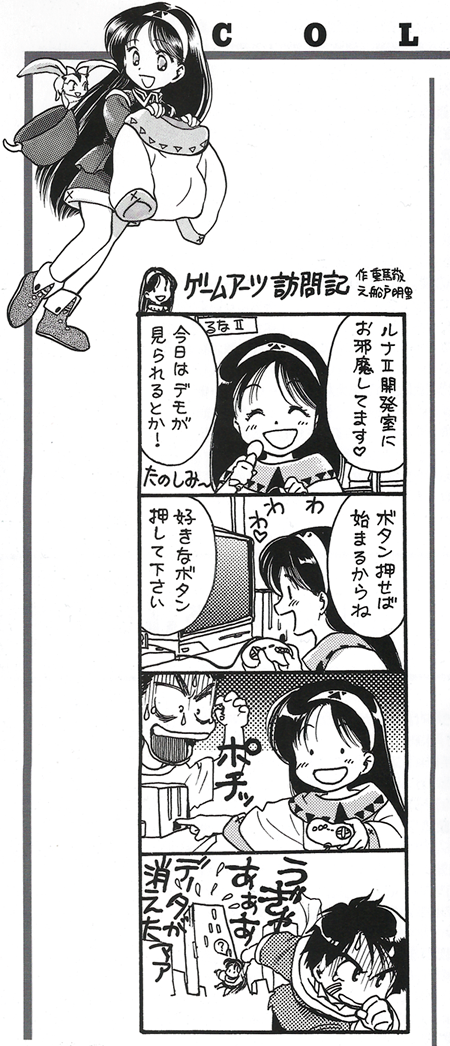
The original Lunar: The Silver Star gets most of the attention when it comes to remakes, but you’ll find that Softbank’s Lunar artbook, source of early production art and other things, grants a touch more space to Lunar II. For example, the second game gets this comic strip by artist Akari Funato. In it we see Eternal Blue protagonists Hiro and Lucia visiting their makers at the Game Arts offices.


It’s easy to follow if you have even a minor understanding of Japanese and game-development gags, but here’s a rough translation anyway.

Five Amiibo I Would Buy

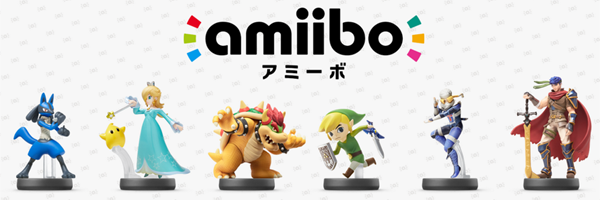
Nintendo’s Amiibo figures drive people mad. You might not suspect that from a glance at the Amiibo displays in Target or Toys R Us, where plastic effigies of Mario and Link and other popular Nintendo marketing tools are in good supply. It’s the rarer figures, often based on less prominent characters, that send collectors into fits. Otherwise honest adults camp outside of Wal-Marts, refresh pre-order webpages like lab rats, rip open shipping boxes before store employees can touch them, and forge pre-sell tickets so they can trick some unsuspecting Toys R Us cashier into reserving them an exclusive piece of plastic and microchips.

The Amiibo craze isn’t quite as insane as the Star Wars frenzies of the late 1990s, but it’s approaching that critical mass. And, as with all waves of consumer hysteria, it’s fun to sit back and watch.


Have I bought any Amiibo figures? Nope. I don’t have any Wii U games that interact with them, and none of the character selections compels me. I like Bowser and Luigi and Kirby just as much as any kid who grew an overactive video-game fixation like a brain tumor twenty years ago, but I don’t like them quite enough to buy a twelve-dollar figure that I can’t put to its intended use. Yet there are indeed some Nintendo characters that I’d buy in Amiibo form, interactivity be damned. I doubt I’ll see any of them, but they’re all under Nintendo’s aegis in some way. That makes them extreme longshots instead of mere ridiculous fantasies.

5. MAVDA FROM PANDORA’S TOWER 
Pandora’s Tower is the darkest thing to come out of Nintendo since the finale of Mother 3. True, Nintendo only funded and co-produced Pandora’s Tower while Ganbarion, an outfit known mostly for One Piece games, did most of the work. Yet Nintendo had to approve the idea of a priestess named Elena suffering a curse that gradually mutates her, which sends her boyfriend Aeron into a ring of towers suspended above some hellish fissure. He slays beasts and brings their organs back to Elena, who must devour them (reluctantly at first, then rapaciously) lest she turn into some misshapen horror. All with the Nintendo seal of quality, of course.


Aeron and Elena are good kids, but the most interesting character from Pandora’s Tower is Mavda…or rather, Mavda and her husband. Mavda is a mysterious peddler who knows way more than she lets on, and that giant skeletal nightmare on her back is her spouse, rendered monstrous and gibbering by some alchemic misadventure long ago. He’s a nice fellow, though! And he and Mavda would make the most delightfully unorthodox Amiibo.

That won’t happen, of course. Pandora’s Tower is pretty obscure already, as Nintendo didn’t even publish it here. And Mavda and Mr. Mavda are far too elaborate a pair to capture in Amiibo plastic. But I’d like to see Nintendo try.

My Super Famicom Vacation

Not so long ago, I thought about visiting Japan once more. That idea fizzled due to a lack of time and money, but in the aftermath I decided to list all the things I want to do on such a trip. There was a problem with every pursuit I devised, whether it involved seeing Hokkaido in the winter or trying out weird arcade prize-grabbers in their native habitats. It required me to be within the actual borders of Japan.

Yet the list had one feasible, low-priority entry: buy some cheap old video games. It’s very easy to find imported games on eBay these days, and many of them aren’t even expensive. Sellers frequently put up lots of potentially decaying cartridges and start the bidding low, counting on their exorbitant shipping fees to turn a profit. I watched for a few weeks before deciding on my inexpensive and possibly damaged vicarious Japan-trip shopping spree: a bundle of four Super Famicom games.


Were these games that I’d buy on a trip to Japan? Well, one of them is. The others are just a sampling, the Super Famicom version of a cheese-and-sausage platter you get at Christmas. Let's unwrap it.

F-ZERO 
Condition: Decent front, faded back
Working: Yes

F-Zero was very important to the Super Famicom’s Japanese launch in 1990. It was slightly less important on the Super NES a year later. The Super NES had a wider array of games when it arrived in North America, but on that November 1990 morning at Japan’s toy and electronics shops, the world's first Super Famicom owners had F-Zero, Super Mario World, and nothing else.

Both were necessary. Super Mario World was the better game, and yet it looked and played like a prettier version of Mario’s older, regular-NES outings. F-Zero was something new, a dizzying futuristic racer that did things Nintendo’s old hardware never could. You played Super Mario World much more, but you showed F-Zero to parents and friends who scoffed that this “Super” Nintendo was the same old circus.


Today, F-Zero wants for impact. It’s a solidly designed game, but so much has happened since its debut. It doesn’t have weapons or a split-screen multiplayer mode, and the player gets only four different hovercraft to control. The designers make the most of what was brand-new hardware, though you'll note that later courses are just tighter, meaner versions of previous tracks. It’s a show-off game.

The Japanese version of F-Zero is the same as the U.S. version, aside from a slightly different ending. The cartridge label, however, sports an elaborate tagline entirely in English: “THIS IS THE FIRST ADVENTURE OF OUR NEW HERO ‘CAPTAIN FALCON’. LITTLE IS KNOWN ABOUT HIM, EXCEPT THAT HE WAS BORN IN THE CITY OF ‘PORT TOWN’ AND HAS BECOME THE GALAXY’S GREATEST PRIZE HUNTER.”

It’s odd to see Captain Falcon built up as an enigmatic Samus Aran, since F-Zero has no story mode. The hovership-selecting screen doesn’t even list the craft’s pilots. And why’s it so important that our hero was born in “Port Town”? Did Nintendo hope that Captain Falcon would be their next breakout star? Well, he’s in Super Smash Bros., so that counts for something.

Will I keep it? Ehhh. It’s straightforward fun, but I’m not attached to F-Zero. I don’t really need to prove the technical prowess of my Super NES to anyone now.

Mega Man Legends Untold

Sony’s Greatest Hits line is straightforward and mostly beneficial: publishers shamelessly reissue their games, and any interested holdouts or impulse buyers get to nab previously full-priced titles for about twenty bucks. These Greatest Hits revivals show slightly new packaging, however. Original PlayStation re-releases have a neon green border, while PlayStation 2 and 3 titles bear red standards. This doesn’t sit right with some collectors, who resent those colors glaring at them from a shelf otherwise filledwith traditional Sony-brand black labels.

I suppose that’s important, but I’d like to tell you about one Greatest Hits game superior to its original release.


That game is Mega Man Legends, the first in a series that reimagines Mega Man as a 3-D action game in a world of floating isles and mechanized treasure hunting. It’s a wonderful line carried by capable designs and adventurous charms (for which Capcom looked more to Yatterman than Astro Boy), and I recommend all three titles.

I’d like to say that Capcom will put them on the PlayStation Network in North America just as they’ve done in Japan, but that’s unlikely. The most prevalent rumor is that Capcom doesn’t want to re-license the English voice acting. Using those performances might be controversial, anyway, since Teisel Bonne’s voice actor was convicted of child porn possession in 2008. Recording new voices or otherwise editing the game would be expensive and contrary to Sony’s PSN standards. And Mega Man Legends never was a huge seller in the first place.

If you want the Legends games legitimately and in English, it’s the second-hand market for you right now. Mega Man Legends 2 and The Misadventures of Tron Bonne already climb to exorbitant prices, but the original Legends is more common and thus costs less than it did brand-new back in 1998 (and by the recently ballooning standards of retrogame collecting, that’s a bargain). If you go for it, don’t be ashamed of getting the Greatest Hits version and its day-glo cover. Here's why.


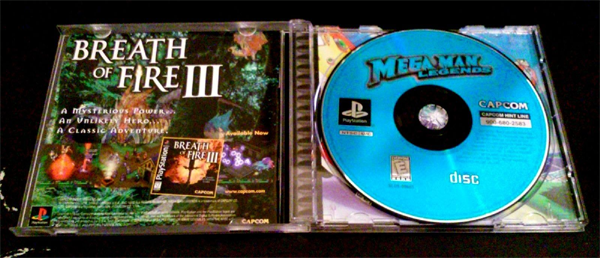
This is what you’ll find if you open the original black-label version of Mega Man Legends. The manual’s back cover promotes Breath of Fire III. Lacking the impressive artwork that accompanies even mediocre Breath of Fire games, the ad isn’t all that interesting. By the way, I stole the photo from this auction, so let’s be nice and visit it for the next few days.
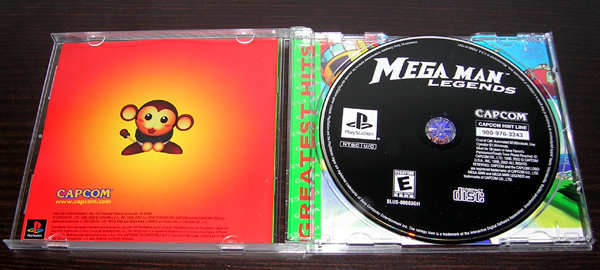
And what about the Greatest Hits edition? It may be the color of a radioactive party favor, but within lies a nice surprise.


Yes, the back of the manual shows Data, Mega Man’s loyal Save Monkey! Fans of the series seem to adore the Lego-esque Servbots, but Data is every bit as cute. He saves your game, provides upgrades, and even does a little dance if you stand there and watch him. He’s much better than some pitch for a middle-ground Capcom RPG.

You’ll note that the Greatest Hits disc itself is a stodgier black instead of the original release's authentic Mega Man blue. Yet that's a cavil easily pushed aside. The Greatest Hits version of Mega Man Legends has a precious little monkey-robot welcoming you every time the case pops open, and so it emerges as the better choice.


Even so, those persnickety collectors may have a point about the Greatest Hits label. It looks a little strange in my game library.

Unexplained Readings: Flying Saucers and the Scriptures

No grade school class is complete without one kid fascinated by the paranormal. I did my best to fill that role.

I read books on UFOs, the Loch Ness Monster, ghosts, Bigfoot, assorted lesser cryptids, and anything that fell under the label of “the Unexplained.” I watched Unsolved Mysteries faithfully, hoping each time for a UFO case or a haunting instead of those tedious “Fraud” stories. And of course I spent bedtimes and evenings in the fearful hope that a UFO would zag across the sky or, better yet, an alien would phase into my living room.

I read fewer and fewer of those books as I got older, and I was far more skeptical when I returned to the ideas as a teenager and a warped adult. I realized that there’s little credible evidence for extraterrestrials, that Bigfoot would’ve been captured by now if it existed, and that, heartbreakingly enough, Nessie is a fish, a fake, or a swimming deer. Oh, and the Flatwoods Monster, Mothman, and the Hopkinsville Goblins all were just owls.

Of course, that doesn’t shake my fascination for the Unexplained, even when it’s easily explained. I love weird creatures and crazy theories and anything that lurks just outside of the plausible world. So when a friend of mine mentioned a book called Flying Saucers and the Scriptures, I knew I’d have to read it one day. This was due in part to a minor mystery. My friend had borrowed it from the library of a Christian college in Ohio, but it had disappeared from the shelves when he sought it out years later. Someone or something wanted this book to be forgotten. That, or they wanted to sell it to me for twenty bucks on Amazon.


Books that combine UFOs and the Bible generally take one of two paths. Devoted UFO nuts maintain that scriptural accounts of Ezekiel’s fiery flying wheel or the Book of Enoch’s fallen angels are veiled descriptions of alien visitations, refracted through a culture that had no concept of such things. Many Christian interpretations take the opposite track: UFOs, including those of the modern age, are either heavenly or demonic messengers, and today’s secular science interprets them as alien in origin. Flying Saucers and the Scriptures leans toward the latter school of thought…but it’s not what I expected.