Important Bounty Arms Update

What's this?


Fuck yes. More soon.

Bounty Arms: Visual Conversation

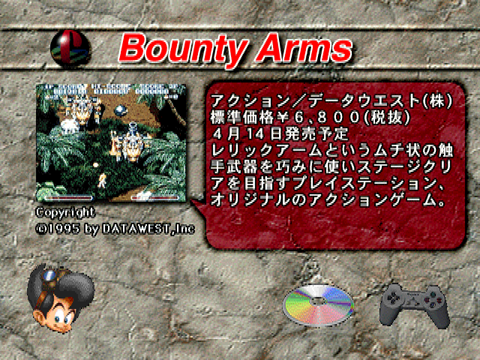
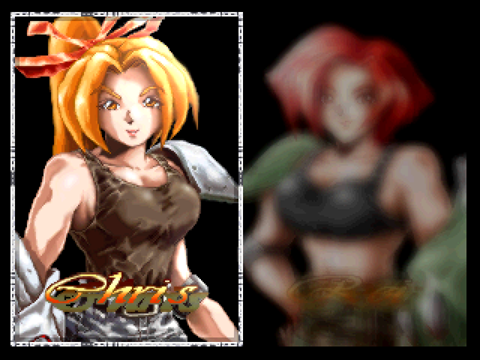
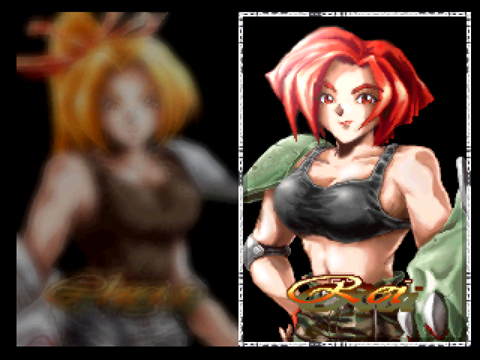
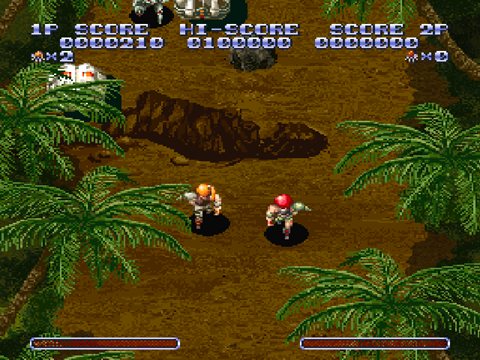
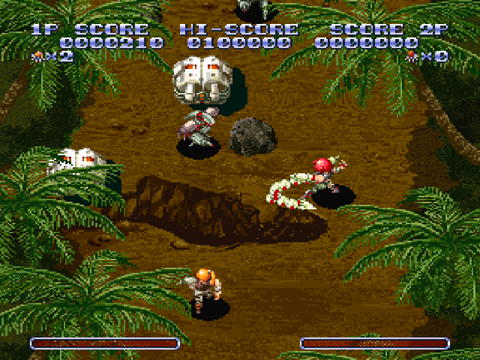
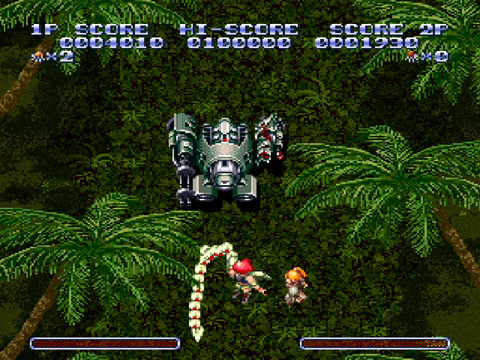
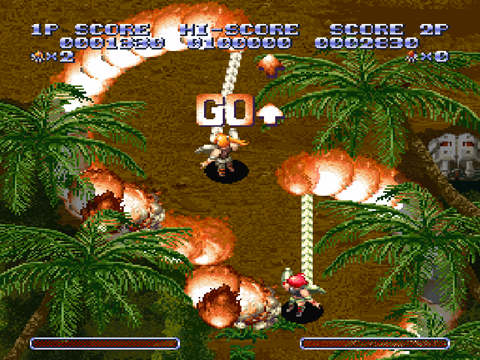
I recently rewrote my Bounty Arms article, partly to clear up errors and partly because I can’t forget about the game. There are scores of unreleased titles to obsess over, but Data West’s Bounty Arms draws my interest like nothing else. After all, I can’t think of another game that combines overhead perspectives, cybernetic grappling arms, flamethrowers, manga-eyed heroines, and strangely substandard production art.


For years my article meandered under the mistaken impression that Bounty Arms is a shooter like Ikari Warriors when the game’s really more like an overhead Bionic Commando with huge explosions. The new article is functional and curt, but it gets the point across. The point being that I want to find Bounty Arms. I’ve posted about it at Lost Levels, I edited Giant Bomb’s entry, and I even worked the game into a list of amazing unreleased things.

Perhaps a contest is the best way to drum up interest in Bounty Arms. See, I can’t translate the last name of Chris, one of the two Bounty Arms characters. Here’s the katakana for it.


The first word is, of course, “Chris,” but I’m mystified by the second one, separated from the first by a dot. The katakana comes out as “Purenakaruto,” which could turn into all sorts of bizarre phrases. None of them seems to be a typical surname, and someone suggested that the word is, in fact, just a bunch of gibberish that wasn’t supposed to be any familiar name.

So that’s the contest: come up with some interpretations of Chris’ last name and post it below. I’ll pick the one that makes the most sense (or, alternatively, amuses me the most). The winner gets a box full of crap, including games, anime DVDs, game-and-anime trinkets, and maybe some magazines. Here's a katakana chart for reference.

Dreamcast Day: Low-Effort Edition

It’s Dreamcast Day, when Sega fans everywhere look back fondly on the last time their favorite company had the remotest chance for widespread success. In truth, the Dreamcast was doomed from the get-go, but it was a fun little system. And I still have the box for mine!


That’s a smaller library than most Dreamcast owners could claim, but I was not a fan of some of the console’s biggest titles, including Shenmue, Skies of Arcadia, and Space Channel 5. Even Resident Evil: Code Veronica and Sonic Adventure didn't stick with me after I finished them. In fact, my collection could be smaller still. Ikaruga, Soul Calibur, and Fatal Fury: Mark of the Wolves are all out on Xbox Arcade, and there’s no reason to keep Guilty Gear X when you’ve got Guilty Gear XX #Reload. Perhaps I’m just fascinated by the cover’s juxtaposition of Ky’s head and Sol’s crotch.

The real oddity here is Evolution 2, which I’ve played for no more than twenty minutes. Yet I won it in a contest at the Gaming Intelligence Agency years ago, and I always find it hard to sell things I’ve won.

Speaking of the GIA, this is excellent. Edit: Or at least it was.

Policenauts: Bizarre Love Triangle

Last week saw a proud moment: a group of fans released a translation patch for the PlayStation version of Policenauts. Many thought that the game, a 1994 digital comic from Metal Gear Solid creator/destroyer Hideo Kojima, was too thick with detailed text for fans to render in English. Well, many were wrong.

I’m very glad to have Policenauts in a language I can understand, as I’ve wanted to play this ever since GameFan first described its sci-fi blend of near-future space colonization, drug-industry conspiracies, shooting interludes, and attempts at an anime version of Lethal Weapon.


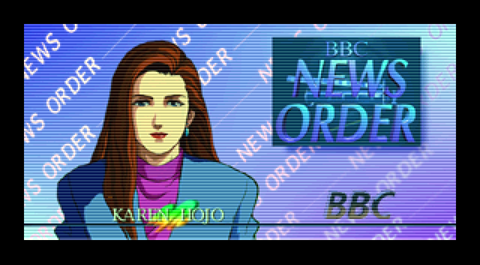
Oh, and the New Order references. Kojima can't forget those.


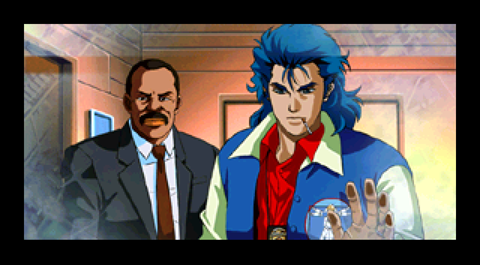
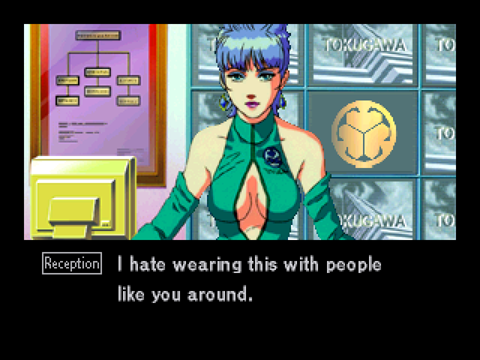
The only troubling part of the game is the way Jonathan Ingram, the blue-haired Mel Gibson stand-in and main character, can grope a lot of the women he questions in his investigations. It’s played off as comedy, and that makes it all the more unnerving when women clearly don’t like Jonathan’s attentions.


Of course, the Policenauts fan’s knee-jerk defense is that the “touch” options don’t show up unless you actually move the cursor over boobs, meaning that you, the player, are the disgusting swine in all this. Not Kojima and his team. It’s not as though they actually made the game and credited a staffer with “breast bouncing supervision.” Oh no no no.

However, there’s something to be said for a game that leaves its worst moments optional and slightly obscured, making it possible to enjoy Policenauts without flicking a secretary’s cleavage. And Policenauts is otherwise enjoyable, as it has both Kojima’s characteristically thorough research and his willingness to continue stacking up plot twists well after everything’s toppled over and caught fire. That’s the good side of Kojima’s insanity, and Policenauts shows plenty of it.

The Wings of Honneamise: Royal Rape Force

[This was originally intended as a review of The Wings of Honneamise, but it turned into a diatribe about the film’s most controversial scene and how anyone who defends it is intellectually dishonest or just human filth. The following article discusses the movie's depiction of sexual assault. Please take precautions if you find that disturbing.]

Royal Space Force: The Wings of Honneamise is often praised as one of the most compelling creations of Japan’s animation industry. In 1987, it stunned many with its gorgeous visions of another world’s first steps into outer space, and it's praised as a monument to the creative heights that animation can reach when freed from commercialism and pandering.


It’s also one of the biggest screw-ups in the history of animated cinema. I’m not talking about the film’s finances; it did well enough at the box office and only failed to break even because it was so incredibly expensive in the first place. No, I’m talking about the film’s drastic, ill-advised, and misogynistic detour off a cliff.

Honneamise is an amazing film at first. Set in a world that’s Not Quite Our Own and looks it, the movie follows a would-be astronaut named Shirotsugh Lhadatt. Shiro’s introduced as a goofball slacker in his nation’s ineffectual Space Force, which hasn’t gone into space and, at best, only manages to get its test astronauts electrocuted by their own urine bags. One night, Shiro meets a religious young woman named Riquinni when she’s handing out alterna-world Chick tracts in the street. Her piously supportive attitude inspires Shiro to volunteer as the Space Force’s next astronaut.


What follows is a film that initially seems far from the usual anime nonsense or mainstream family-oriented schlock. For one thing, Honneamise has some of the most amazing visual world-building I’ve ever seen in a movie. The entire setting is comparable to industrialized nations of the 1950s, but it’s re-imagined in stunning completion, from the cityscapes and vehicles down to the coins, the spoons, the clothing, the TV weather broadcasts, and the origin myths. It’s the sort of movie that reveals new things each time you watch, because there’s too much well-animated detail to take in at once.

Honneamise is also a refreshingly sedate story. Instead of pointless or gaudy imagery, it opens with Shiro reflecting on how he just drifted into the Space Force, and it follows with a fascinating montage of this alternate world’s journey toward powered flight, set to the staccato overtures of a Ryuichi Sakamoto soundtrack. From there, the movie roams through Shiro’s humdrum life. He’s no action-film centerpiece, and his days are spent clowning around with the other Space Force goons and trying to circumvent Riquinni’s strict views on romantic abstinence.


But a problem arises for our main character. In the midst of the Space Force’s efforts to put him up in orbit, Shiro loses his confidence in the program, realizing that it’ll do little to ultimately improve life in his country. He turns to Riquinni, whose house has been bulldozed by creditors, and her passive attitude frustrates him. Clearly, he is a troubled individual, carrying an inner conflict that represents the existential turmoil every member of this sad human race must confront in some way. And Riquinni, with her perpetually self-humbling views of the world, can’t really help him.

So how does Shiro deal with this? He tries to rape her.


Southern Cross Don't Need Men Around Anyhow

I watched a bit of Super Dimension Cavalry Southern Cross the other day. In the heyday of 1980s space-opera anime, it became the middle act of Robotech’s three-show splicing job, and that’s how most kids of the ’80s recall it. I, however, do not. I watched Robotech back when the Armed Forces Network aired it in Germany, but I only remember seeing the Macross part of the series, the one with Rick Hunter and Minmay and the jets that turned into robots and jet-robots. While that’s the most popular third of the show, you’d think I’d at least have some memory of the other two. But I don't, and so Southern Cross is pretty much new territory for me. At most, I recognize some of the more ridiculous sights from Robotech's intro, like the woman in the evening gown floating through laser fire.

Southern Cross is also part of my ongoing exploration of robot-filled anime from the 1980s. Over the past few years, I’ve checked out various well-regarded shows from the era: Ideon, Votoms, Layzner, Dunbine, L-Gaim, and a bunch of Gundams. Some are okay, if dated, but some of them are...well, terrible. They're poorly animated, awkwardly written, sexistly cast, badly paced, and just plain boring. Even Zeta Gundam. Wait, especially Zeta Gundam, which convinced me that Yoshiyuki Tomino, the esteemed co-creator of Gundam, cannot tell a remotely coherent story or grasp how actual human beings behave.

Mediocre shows are hardly unique to any anime era, and yet so many of these older mecha series are considered great beyond their historical context. While I could understand if anime fans liked them with loads of irony, I’ve seen them praised as legitimate classics far too often. 

There are several possible explanations for this. Perhaps fans watched these tepid mecha slogs back in the 1980s and early 1990s, when they lacked anything better in the way of semi-realistic space opera with big robots (which I find plausible, since we’ve all been entranced by dumb cartoons just because they dared to kill off characters). Perhaps fans just like them because they’re not as freakish and pedo-oriented as some modern anime shows (which I find hard to believe, since good is more than the absence of bad or, in this case, the absence of fetishy horrors). Or perhaps it’s proof that too many anime fans will watch, buy, and defend just about anything.


Anyway, Southern Cross has the same cheap look and jumbled storytelling as numerous other series of its era. It also backs some surprisingly dull robots and spaceships, considering it was partly designed to sell toys and models. Yet I find it interesting that Southern Cross is one of the few 1980s mecha anime where the three major characters are women. Our lead is the impulsive, self-spoiled, unjustly promoted pilot Jeanne Francaix, who’s constantly butting heads with her efficient rival Marie Angel and the exasperated, by-the-book officer Lana Isavia.

Surprisingly, there’s no male protagonist for them to surround during a war between aliens and an isolated human colony, and I wonder how hard it was for Southern Cross to avoid putting in a heroic, audience-identification leading man (Tomino, to his credit, tried to build mecha series around women, but he was apparently shot down by Sunrise). The show’s primarily about Jeanne, as she's usually pissing off her commanders, tracking a skilled (and handsome) enemy pilot, and driving her equally laid-back brigade into whatever battles she feels like fighting. Like Macross, Southern Cross is halfway to a comedy, a precursor to Nadesico, Captain Tylor, and other anime satires of the 1990s.

Unfortunately, Southern Cross is still a mecha show for toy-buying boys and geeks, so its three leads act the way that lazy ’80s anime writers thought women acted. When not piloting robots and flipping through fashion magazines, Jeanne takes baths and showers constantly, thus showing herself naked and proving that these Japanese cartoons are NOT KID STUFF. She also bickers with Lana and Marie over dresses and relationships, and all three of them are shoved toward love interests, often unrealistically, over the course of the story. That, however, wasn’t enough to save the show in the eyes of male viewers. It was canceled early, leaving the writers to hurriedly finish up a plot that was supposed to span almost twice as many episodes. Oh well.


And that’s Southern Cross. It doesn’t change my rapidly declining opinion of 1980s mecha anime, but at least it did something different.

Little Things: Duck Tales

You know what I like about Duck Tales for the NES?


When Uncle Scrooge ducks, his hat stays in the air for a split second before descending perfectly to his head. That's what I like about Duck Tales for the NES.

Angel Cop: The Manga

Angel Cop is rightly considered a classic of terrible anime. Released in six parts from 1989 to 1994, it perfectly embodies the violent ethos of much of that era’s direct-to-video animation. It’s even offensive in ways that most anime series never ponder. Resembling a brainless and anti-Semitic Ghost in the Shell, Angel Cop favors a near future where the thuggish members of Japan’s Special Security Force take down Commie terrorists as bloodily as possible. Then they learn, in a last-act Big Reveal, that it’s all part of a Jewish-American conspiracy to take over Japan.

It’s a horrible series, but it’s never a boring one. Directed by Ichiro Itano well after he animated those amazing Macross dogfights and written by Sho Aikawa well before he scripted Fullmetal Alchemist, Angel Cop is fast-paced pulp with a delightfully profane dub from Manga UK. Consequently, the series never goes three minutes without someone shooting, swearing, exploding, roasting alive, tripping a landmine, torturing a suspect, delivering some bizarre phrase in a masked British-Brooklyn accent, or ranting about how the Vietnam War was just a weapons test for Uncle Sam’s military contractors. It’s best summed up by this helpful compilation.


However, there is another version of Angel Cop. A shorter, lighter, and shockingly cuter version.


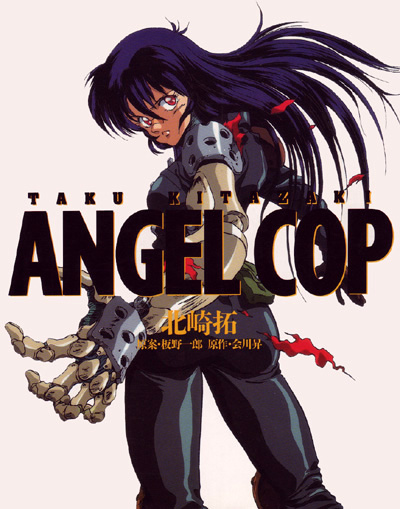
Not long after Angel Cop started production, it was accompanied by a manga adaptation in Newtype, Japan’s biggest anime magazine. Itano and Aikawa are credited with the original story, but the comic was drawn by Taku Kitazaki, now better known for gentle, introspective fare. Kitazaki was just starting out in 1990, and his one-volume adaptation of the Angel Cop saga is a strange assembly of soft-looking characters and grimy, Akira-style punk violence.


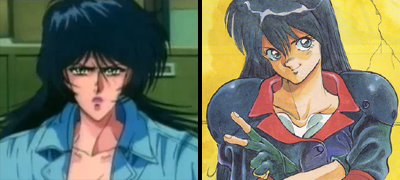
It’s weirdly upbeat for something connected to an exploitive bloodbath like the Angel Cop anime, with Angel herself providing a good gauge of the changes. In the OVA series, she’s a brusque, uncaring, profanity-spewing hardcase. She thinks nothing of leaving her partner Raiden bleeding in the street or of pumping a few extra rounds into a terrorist who’s already splattered across a wall. In the manga, she’s a chipper young Special Security Force recruit, throwing peace signs and not really hiding a rather obvious crush on Raiden.


Then again, the first few pages show her shooting off a suspect’s hand and beating him insensate, so in some ways she’s still the Angel that anime viewers grew to loathe.


Final Fantasy IV: The After Years SHOCKING CENSORSHIP/IMPROVEMENT

Final Fantasy IV: The After Years arrived on Wiiware last week. Some have praised it, and others have complained about paying roughly a dollar for every hour of playtime. Such are the wages of download-only titles that have overly faithful fan bases.

The After Years is a conflicted little sequel. It’s unnecessary in concept and quite mercenary in building itself from the original game’s graphics and music, yet it evokes the mood of the original Final Fantasy IV so well that I can’t help but enjoy it. It’s comparable to getting a pet that looks and acts just enough like one you had when you were twelve. You’re not the same and neither is this new creature, but the connection is there somehow.

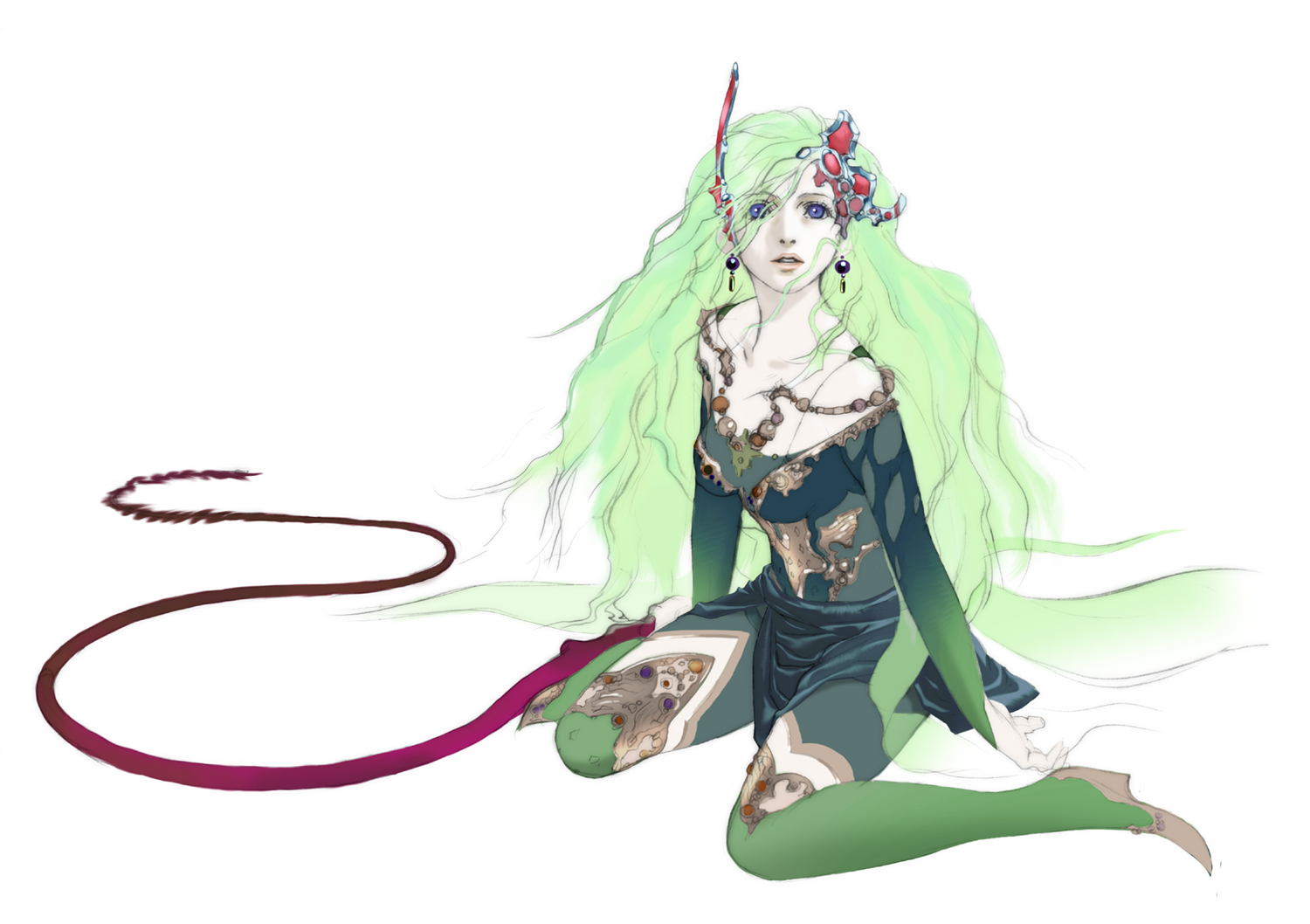
One interesting point of The After Years concerns Rydia, the summoner who started off Final Fantasy IV as an orphaned little girl and finished it as a grown woman, all thanks to the sievelike logic of video games. Rydia didn’t wear much in the original game or its DS remake, and she wore even less in the illustrations for the Japanese cell-phone version of The After Years. Square decided to change that for Western audiences.

This is how Rydia appears on the official Japanese website for The After Years.


And this is how she appears in the official art for the game’s North American release.


I refuse to pretend that the changes aren’t for the better, as Rydia’s frilled metal bikini now resembles actual clothing. It’s not the sort of thing you’d wear into caves packed with slavering beasts, but I learned not to demand adroit realism from Final Fantasy a long time ago.

Of course, we could always go back to Katsuya Terada's Rydia art from Nintendo Power’s first Final Fantasy IV feature in 1991.


We probably shouldn’t.

Little Things: The Legendary Axe II

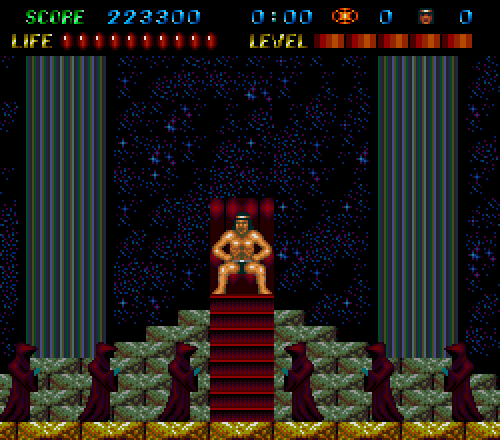
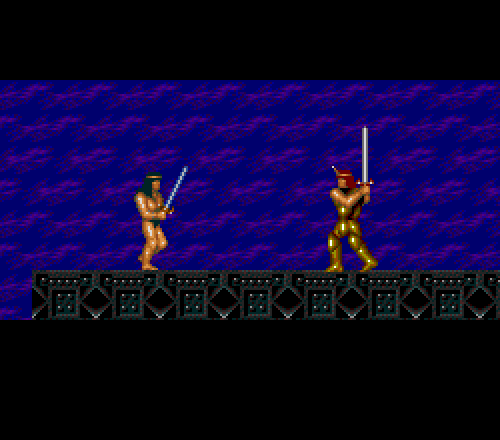
The Legendary Axe II is strange among action-game sequels. While the first The Legendary Axe is a brightly colored exercise in dull clichés, the second one is a grim creation, full of shadowy castle halls, foreboding music, and bizarre, quasi-Gigerian imagery. For a side-scroller that stars a generic warrior in a speedo, it’s a rather eerie game. Nowhere is that more apparent than in the ending.


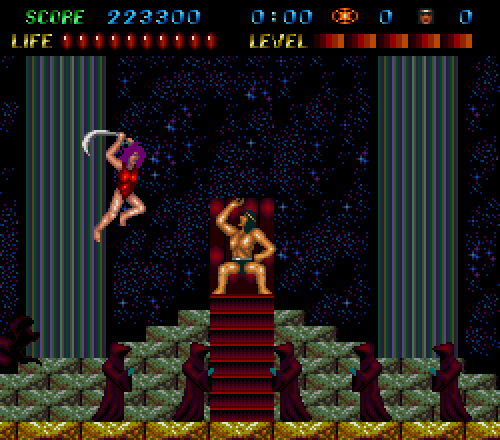
After finding his way through a stage of unexpectedly futuristic paths and buglike robots, the sparsely clothed Prince Sirius faces down his evil, throne-stealing brother and the monstrous creature that lurks within the usurper. Overjoyed, Sirius climbs up to his throne, laughing as a haunting staccato plays and robed figures emerge, presumably to welcome their new king. Suddenly, one of them throws off her cloak to reveal a scimitar-wielding woman, and she leaps toward a horrified Sirius. The game pauses with her in mid-jump, the scene fades, and the credits roll.

It’s an appropriate way to cap off a bleak game, though it surely made players wonder just who this assassin was. The only female character mentioned in the manual is the princes’ mother, Queen Grace, and she’s not a likely candidate. Is this interloper some disowned relative of the royal family, an ally of the fallen Prince Zack, or just some hired killer whose appearance speaks to the unending struggles waged among the corrupt and powerful? Or is this a cameo by Flare, the damsel-in-distress from the original The Legendary Axe? She had purple hair, after all.

No one really knew, and we all moved on to other games and other hobbies. Upon returning to The Legendary Axe II years down the road, I figured that the ending was just a quick and simple twist on the developers’ part. There was no answer.

Yet everything fell into place once I saw this entry at Hardcore Gaming 101. It reveals something very important: in the Japanese version of The Legendary Axe II, the assassin is completely naked. For the sake of easily offended readers, I have chosen to pixelate the image.


It all makes sense. The player-controlled prince goes through the entire game in nothing but a thong, while the evil prince wears a suit of gold armor. By shedding his inhibitions and taking pride in his nearly uncovered body, our hero is able to wrest the throne away from his fully garmented rival, whose sartorial airs speak of repression and vain opulence. However, the new king is not willing to strip completely upon his victory, leaving him vulnerable to an enemy who is.

Both nudist propaganda and a clever turn on the fable of the naked emperor, this finale was hidden from American children by a bit of old-fashioned game censorship, as the assassin received a swimsuit that’s far too bright for a dimly colored game like The Legendary Axe II. Now the truth can be known: those who wish to rule must be willing to bare themselves to their kingdom. Purple hair is optional.

A Norse God’s Own Prototype

Prototypes might be my favorite video game subculture. In this edifying realm, fans with too much free time root through early builds and pore over advance screenshots in search of things that were changed before games were released. Most of this archeology focuses on older titles, but I’m not going to wait when it comes to Valkyrie Profile: Covenant of the Plume, a game I absolutely love. I’m going to turn up speculative trivia while it’s still fresh and pointless.


This screen made the rounds when Covenant of the Plume was announced, and Wikipedia still has it on the game’s page. The curious part of it lies with the characters. The shadowed figure at the center is Wylfred, the one in orange-red armor is Ancel, the mage in the gray hood is Lockswell, the purple-clad girl is Cheripha, and the blue-haired soldier is a generic warrior. The portrait shows Ailyth, Wylfred’s infernally supplied assistant, chattering about the Norse underworld or feathers.

I’ve played through all three branches of Covenant of the Plume’s main quest, and there’s no point where all of these characters appear on the same map. At the risk of spoiling a plot twist, Ancel leaves Wylfred’s company before Ailyth, Cheripha, and Lockswell come along. I’m also fairly certain that the scenery here is from a courtyard that isn’t shown until the third or fourth chapter, when Ancel’s not around. The Seraphic Gate brings together all of the game’s major characters in a frivolous bonus dungeon, but its architecture looks nothing like that paved garden area.

So there’s one entry for the records of divergent early screenshots. And one for proving that I think too much about Valkyrie Profile.

Memories of Anime Insider: ME AND GOKU

It's time for me to talk about Anime Insider, a little magazine that shut down this past Thursday.

I was an associate editor at Anime Insider from August 2005 to May 2008, spanning issues 25 through 58. I previously wrote some dull Livejournal entry about my time at the magazine, but I can summarize all of it by saying this: I enjoyed working there, no matter how dumb it was. And here's what I remember most about my time spent on an anime mag at the height of the manga/anime/Japan-crazy bubble.

Best Cover: Issue 50, far and away.


For our 50th issue, the company higher-ups surprised us all by paying for an exclusive illustration from Gainax. Rei, Asuka, and the cake were drawn by Fumio Iida, an artist who’s worked on a staggering variety of animation, from the original Macross movie to that Little Nemo film to Gurren Lagann (plus Fox’s Peter Pan and the Pirates). I also like how Rei’s head obscures just enough of the magazine’s name to possibly make it “Anime Insidious.”

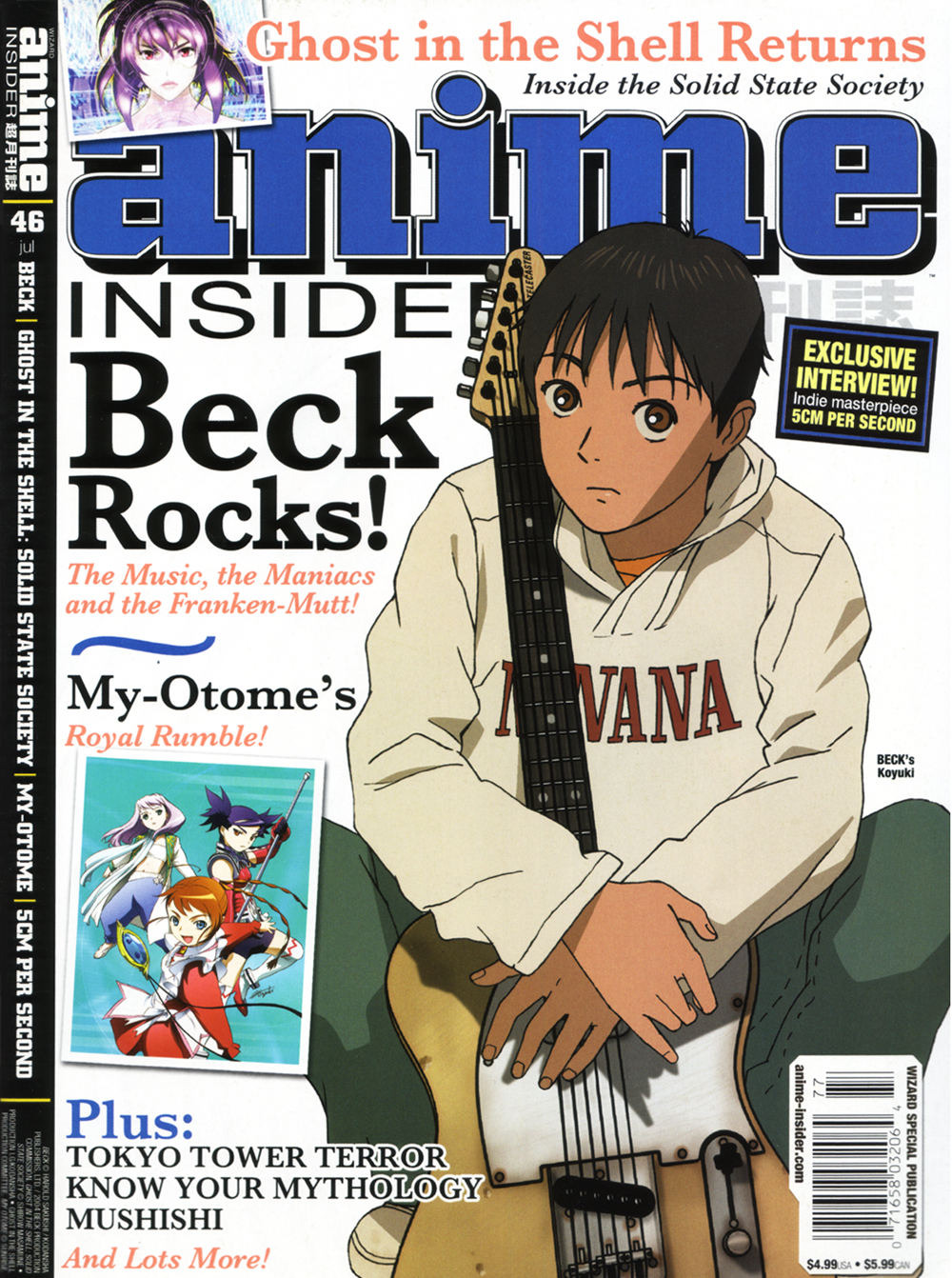
My second favorite? I liked the front of issue 46. Most of the magazine’s covers used backgrounds of subtle patterns and bold colors, but this one slapped on the white space to imitate Rolling Stone.


Seldom did we use concept covers, and I think our imitation music mag came together nicely, even if the Beck kid’s eyes are strangely off.

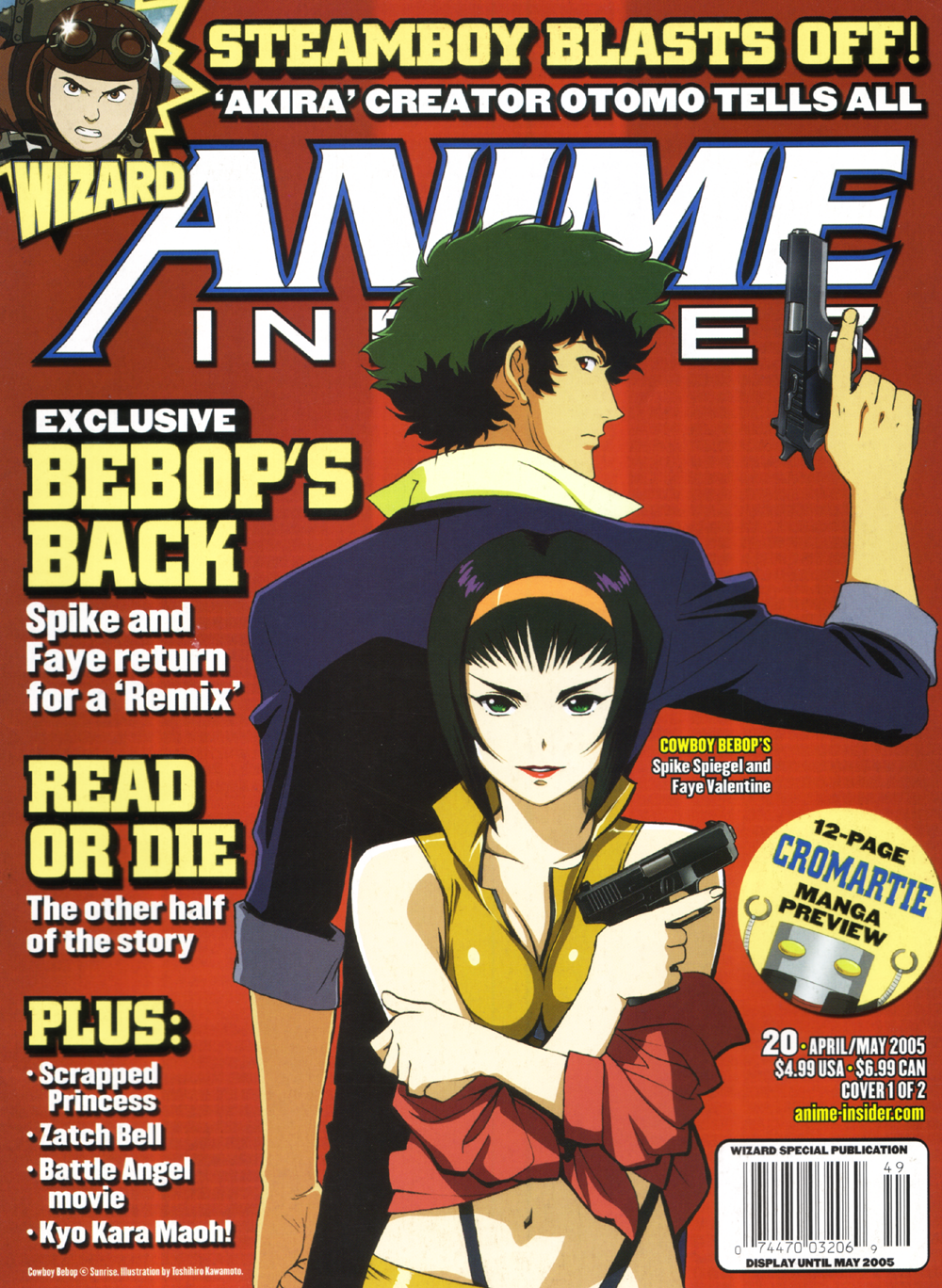
My favorite cover artwork would be this Cowboy Bebop piece from issue 20. It was another illustration made especially for Anime Insider, though you'll also see it preserved in a recent book of Toshihiro Kawamoto’s art.


The overall cover isn’t as striking as the openers that the magazine had in its later years, but I’ve always been a fan of Kawamoto’s style. Besides, Faye and Spike are observing proper trigger discipline with their firearms, and we were all about setting good examples for the republic's impressionable youth.

Miyazaki's Travels Beyond Gulliver

It’s easy to overlook Gulliver’s Travels Beyond the Moon. Toei really tried to make this 1966 film, known in Japan as Gulliver’s Space Journey, an international hit, but it fared poorly in American theaters and stayed quite obscure throughout the age of VHS tapes. A cheap DVD release crept out in 2003 from Catcom, which bundled the film with the Fleischer brothers’ better-known 1939 Gulliver’s Travels movie and shipped the result to a handful of Half-Price Books outlets around the country. Once again, few people noticed it.


The cover hardly suggests an unappreciated landmark in animated cinema, yet Gulliver’s Travels Beyond the Moon is an intriguing study. On one hand, it’s a routine, unchallenging kids’ movie about a boy named Ricky who joins an elderly Gulliver and some animal friends (and a pompous toy soldier) for a trip to a far-off planet called the Star of Hope. There they meet a race of bizarre semi-humans and save a princess from robots gone mad. On the other hand, it’s a visually remarkable film. Toei was clearly aiming to establish their children’s fare as a success outside of Japan, and Gulliver’s Travels Beyond the Moon takes more inspiration from bleaker, stranger European animation than the Tezuka-derived imagery of its Japanese contemporaries. From its alien landscapes to the jagged, windup-toy inhabitants of the Star of Hope, the movie often has a haunting, surreal quality that clashes with the somewhat cartoonish heroes. Perhaps that’s why it didn’t win over too many kids.


The DVD release of Gulliver’s Travels Beyond the Moon slipped by many, but Let’s Anime took a detailed look at it, while one kind soul uploaded a few clips from the movie. Among them is the memorable montage of "Rise, Robots, Rise," which makes a sudden, nightmarish switch from smiling little Rocky and Bullwinkle automatons to an army of stovepipe-legged robot fascists stomping on human faces forever.


There’s another reason to check out Gulliver’s Travels Beyond the Moon: it was supposedly the first film truly influenced by a young Hayao Miyazaki, who’d go on to co-found Studio Ghibli and polish up anime’s public image worldwide (he’d also borrow the floating island of Laputa from Gulliver’s Travelers for his own Castle in the Sky). A possibly apocryphal story has it that Miyazaki, despite being a lowly and uncredited animator who'd worked on only one other Toei film, changed a climactic scene in Gulliver’s Travels Beyond the Moon. The original script painted the people of the Star of Hope as doll-like creatures cast out by their own mechanical creations, but Miyazaki wanted to take the idea further, and director Yoshio Kuroda let him animate a new ending.

Nobody's Fantasy V

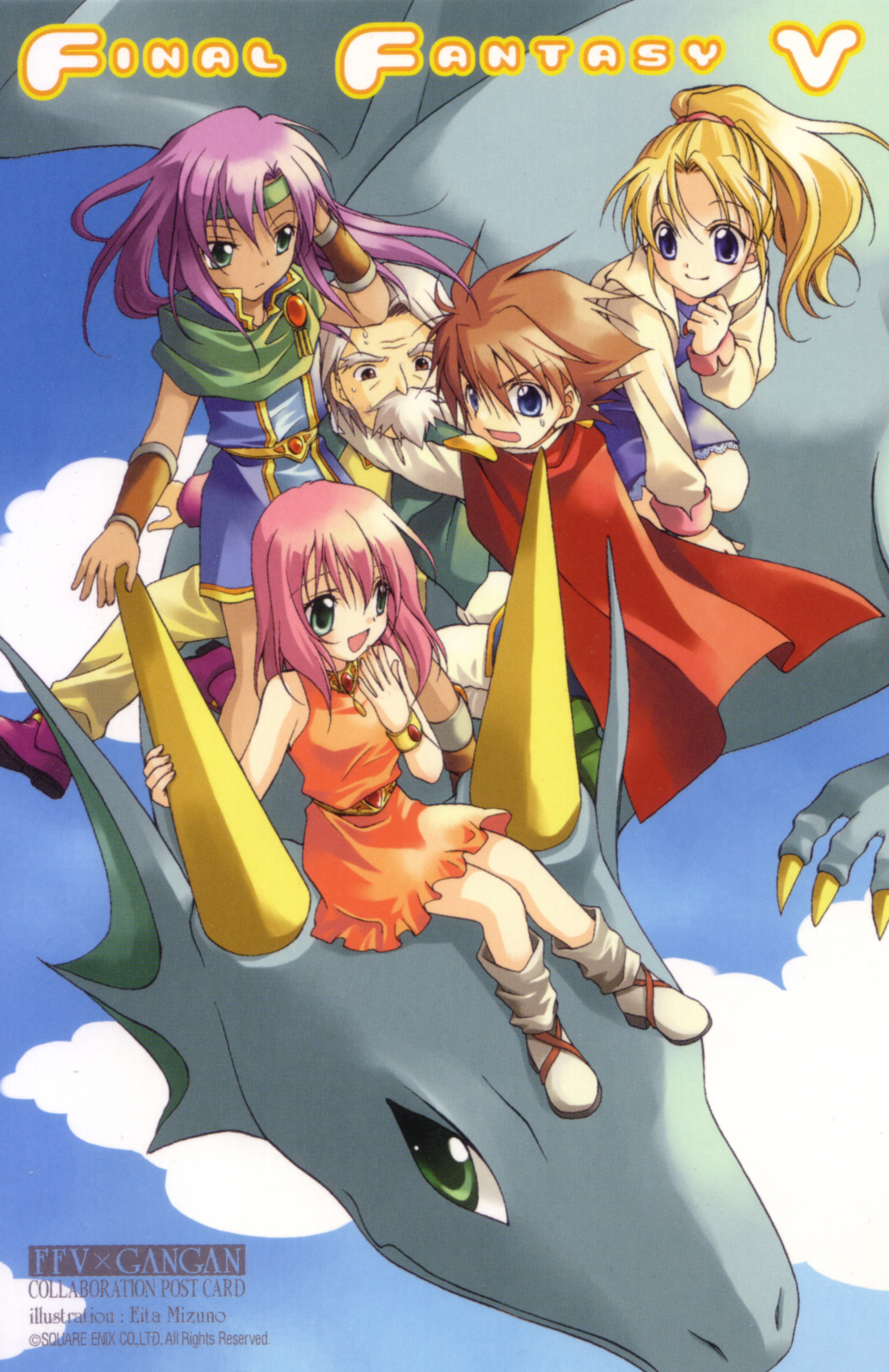
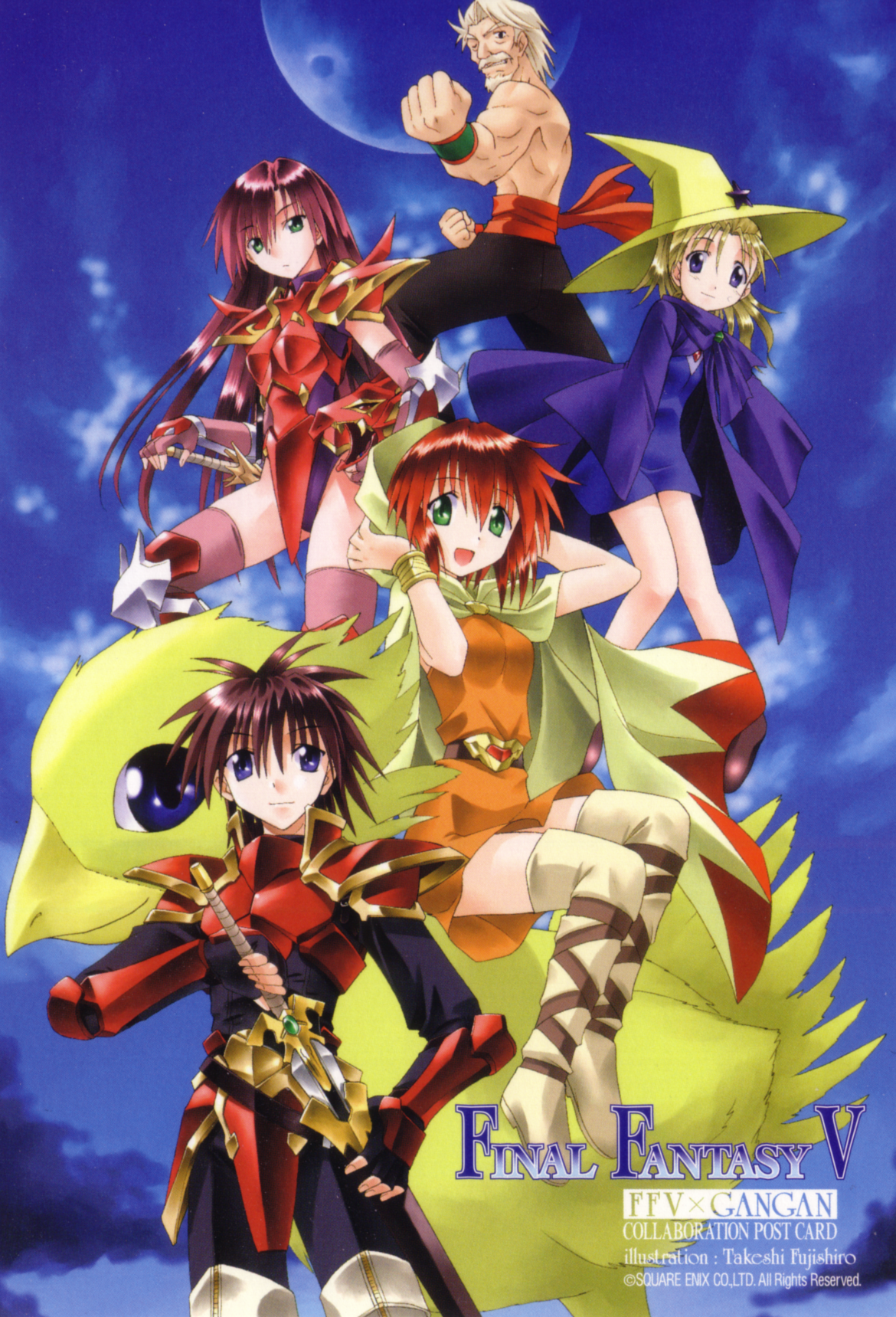
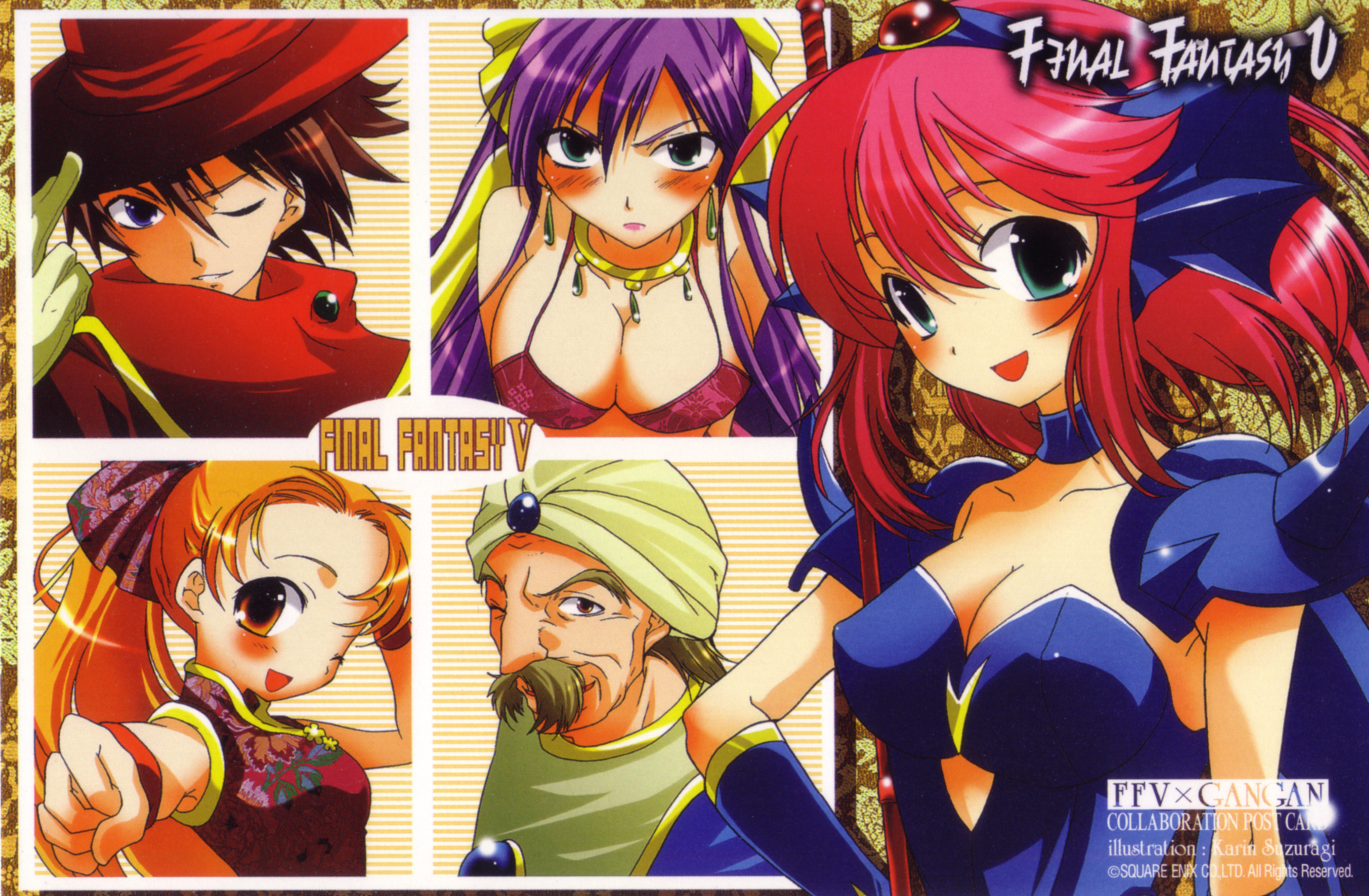
I recently started playing the Game Boy Advance version of Final Fantasy V. Since I’m not in the mood for writing long pieces about the game’s creatively structured ending or its backhandedly sexist treatment of pirate leader Faris, I’ll just put up some Final Fantasy V postcards I stumbled across a while ago.

I’ve never been a fan of that extremely big-eyed look found in some anime and manga. Even before it became a tool of the unwholesome creepy-cute "moe" revolution, I preferred slightly more realistic characters in any cartoon that wasn’t a comedy. Yet I’m not about to shun Final Fantasy artwork, not when Square Enix had some artists from their Gangan comic collections draw the Final Fantasy V cast dressed in the game’s various job-related outfits.


The first postcard comes from Eita Mizuno, artist for the moderately successful Spiral manga series, and I think it shows all of the characters in their default “freelancer” outfits. It’s a bit of a cop-out for a game that revolves around turning the party members into knights and summoners and mimes. Still, Mizuno clearly played the game enough to known that Bartz, the brown-haired hero, is afraid of flying. He’s clinging to Galuf while Lenna happily sits atop her dragon, Krile looks on cheerfully, and Faris stares with mild disdain at Bartz’s aviatophobic tantrum.


Takeshi Fujishiro writes and draws Nagasarete Airantou, a dreadful manga series about a boy marooned on an island where clingy, fetish-coded girls fight over him. Yet his take on the Final Fantasy V cast is the least saccharine of these three postcards. Galuf’s a monk, Krile’s a black mage, Lenna’s a white mage, and Faris is clearly wondering why her knight regalia doesn’t include quite as much armor as Bartz’s does.


And now we come to Karin Suzuragi’s postcard. Suzuragi is best known for drawing manga in the Higurashi series, which mix squeaky-cute characters with blood-soaked murder. Unsurprisingly, Suzuragi's version of Final Fantasy V is also disturbing. Lenna and Faris are the very picture of modern moe: huge eyes, rampant blushing, and jarringly sexualized imagery, as we see in Lenna’s skin-tight dragoon bustier and otherwise childish appearance. The reddest cheeks are given to Faris, who’s clearly not pleased with her skimpy dancer’s outfit. Yes, Faris, you’re a pirate captain who spent decades posing as a man, and now you have to make up for it by being thoroughly shamed.


It brings to mind a telling quote from Akari Uchida, director of Rumble Roses: “You Westerners, listen. Eroticism is not only about nudity. That is part of it. You know, there's this character Anesthesia. She's like this Latina nurse character. Imagine that she's forced to wear a schoolgirl uniform and has to do the limbo dance. And she's so embarrassed that she's blushing. That is Japanese eroticism.”

Yes, women are sexy when they’re humiliated. You disappoint me, Suzuragi, and that disappointment is not mitigated by passable drawings of Krile as a monk, Galuf as a summoner, and Bartz as a red mage. I’ll see you and Uchida in detention.
This Is Not My Beautiful Wife

We cannot help but notice that many older anime fans have grown cynical about the industry that once so enchanted them. “Anime sucks now,” they will say, apparently speaking with the wisdom that comes from forging one’s anime geekery in an age of plenty and profit. These people are charlatans to a one, and they can be unmasked by a simple question: was anime any better ten years ago?


Answer: No.

That said, perhaps we simply aren’t going back far enough. Let’s ask another question. Was anime better twenty years ago?


Answer: Still no. And don’t try to argue that Dog Soldier is an unfairly terrible representative of 1989. We know better. Back then, money was spewing from the perpetually engorged Japanese housing bubble, and all the anime industry made with that money was a bunch of Dog Soldiers.

But maybe we’re still short-sighted. Let’s head back to 1979, when, as we hear from people who were alive and functionally self-aware then, anime was a wondrous cavalcade that didn’t make its fans embarrassed to be seen watching it. Was anime better thirty years ago?


Answer: Oh God, we’re just making it worse. Ever wonder how something like Mobile Suit Gundam became popular? It was by competing with stuff like this.


Then again, that dance number is awesome, especially when that guy sticks his head into the frame.

So there’s the real answer. We have only to wait another three decades, and then all of today’s shitty anime will seem kitschy and charming through the fog of ironic nostalgia. So long, anime industry. We’ll see you in 2039.

Thanks For Whomp 'Em, Too


So long, Seta. And may flights of Bio Force Apes roar thee to thy rest.


You too, Jaleco. Thanks for all the box art.

Tactics Ogre: Let Us Swear Together

I’m still enjoying Tactics Ogre. By all standards of logic, I shouldn’t. It’s a tremendously dated game compared to its modern strategy-RPG descendants, and it shows in the fixed-view maps, the un-cancelable moves, and the fact that the Tactics Ogre version of level-building involves staging practice battles where your troops just whack each other for twenty minutes. I still like it.

In fact, Tactics Ogre has led me to understand why I enjoy Yasumi Matsuno’s games in general. The storylines play some part, as they’re freshly harsh and depressing, sometimes to the point of breast-pounding bathos (here I’m thinking of the scene where a dying pirate leader cries out that she’s going to see her dead husband and bringing their unborn child with her). More than that, though, is Matsuno’s habit of capturing something that RPGs rarely strive for: a constant reminder that you, the player, are an insignificant speck.

Most RPGs, regardless of origin, give the player an entire world to explore, usually as a dramatically simplified globe with about a dozen cities or so. Even in smaller games that span only a few fantasy kingdoms, the story will confine itself to those borders, rarely hinting that there’s a planet beyond them. Yet Matsuno games, from Ogre Battle to Vagrant Story, always paint a broad picture, making it clear that there’s a vast and complicated world going on out there, with churning political struggles and brutal warfare, and that the main character’s tale, however compelling, is just a scrap of it. Even Final Fantasy XII, part of a series that traditionally lets the player map out several continents, stuck to a small stage of a few warring nations.

It’s not just the realistically confined setting, either. Like other Matsuno games, Tactics Ogre builds up an elaborate background of cultures, nations, and reasons for all of them to hate each other. There’s an in-game encyclopedia entry on every faction and major character, and their histories often stretch past Tactics Ogre and into the eight-part Ogre Battle franchise that will never be properly finished. Some RPGs, the Suikodens among them, play in deliberately limited scenery just as Matsuno’s games do, but they don’t flesh out their surroundings nearly as well.

So that’s part of why I like Tactics Ogre. Another part lies in the dialogue. It’s bland and filled with errors, but the translators, much like the Final Fantasy VII localization team, went batshit insane with power once they realized that Sony allowed actual profanity in PlayStation games. It's especially common in exchanges between the heroic Denim's touchy sister, Kachua, and his murderous friend, Vice.


I’ve yet to see them invoke “fuck” for Tactics Ogre’s blend of medieval insults, but Kachua gets called a bitch about 87,000 times by the end of the second chapter.

The Not-Really-Lost Ghost in the Shell Scene

A lot of kids discovered anime in the 1990s, but I was an unusual case. I wasn’t introduced to it by Sailor Moon or Ronin Warriors or the discovery that those Robotech episodes I’d caught years ago were pulled from three different and unrelated shows. I knew anime existed and I’d seen Akira on the Sci-Fi Channel, yet it wasn’t until I picked up a magazine called GameFan that I realized Japanese animation was a wide and frequently perplexing subculture.

One could run an entire website about GameFan’s idiosyncrasies, but it gave me an excellent introduction to anime. The magazine’s Anime Fan section was initially written by one Casey “Takuhi” Loe, who was both articulate and reasonably critical about things. Most anime reviewers of the day were either ossified crabs from the previous decade or apologists who loved anything up to and including Violence Jack, but Casey knew enough to describe anime thoughtfully while upbraiding the terrible releases (which came fairly often) and recognizing the guilty pleasures.


It was through Anime Fan that I first learned of Ghost in the Shell. In the March 1996 issue of GameFan, Casey ran the above image alongside a list of the U.S. theaters carrying the movie. That’s where the mystery arises. I’ve seen Ghost in the Shell many times over the years, and this shot of heroine Motoko Kusanagi, naked and underwater, appears nowhere in the film itself. Motoko is shown submerged in two scenes: one in which her bare android frame is assembled, and another in which she’s wearing a full diving outfit. Neither has her regarding a glowing, unseen object in her clutches.

The easiest explanation would classify this shot as promotional artwork cooked up by Production I.G before the film’s completion. Still, the imagery is strange for a simple promo shot; the overlapping bubbles and unclear background make it rather messy, and Motoko’s proportions look like something captured from a quickly glimpsed frame of animation. What’s more, every other piece of Ghost in the Shell promo art was either a direct grab from the film or some obvious illustration.
I doubt the image comes from a deleted scene. Animation is more expensive to finish than basic live-action footage, and studios usually don’t color and complete animated scenes that aren’t guaranteed to make it into the final product (the exceptions being rare and high-budget cases like Disney’s The Black Cauldron or Don Bluth’s The Land Before Time). Even if it were from an earlier cut of the film, a yanked clip would likely be included as an extra on the DVD or re-inserted in the new 2.0 version of Ghost in the Shell.

In conclusion, I have no real answer, and I have only Casey Loe’s old Anime Fan column to thank. Years distant, it’s still making me care too much about Japanese cartoons.

Why, Yes, I Do Like MST3K

I recently decided to play through Tactics Ogre, that 16-bit strategy-RPG full of grids and medieval-fantasy politics and chipper little character sprites gasping in horror at the sight of their own entrails. I didn’t do this because it’s the second game directed by Yasumi Matsuno, whose work I’ve never found disappointing. Nor did I do it because I’ve had the PlayStation version for eight years or because it’s worth sixty bucks on eBay, meaning that I should either sell it or use it for something. And I didn’t even decide to play it because it’s crammed with Queen references. No, I’m going through Tactics Ogre because it has a mage named Donald Presance.


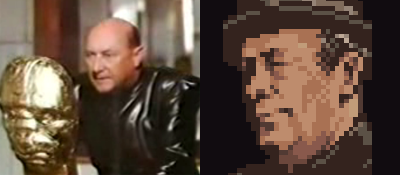
Yes, Donald Pleasence, the talented actor known for his roles in You Only Live Twice and The Pumaman, phonetically inspired a useful exorcist who joins the player’s group two hours into Tactics Ogre. I’m sure that, if he were alive today, Mr. Pleasence would find this rather amusing and would not sue anyone. Especially not Mr. Matsuno, who’s had an apparently difficult time since he quit directing Final Fantasy XII two-thirds of the way through.

The Sky Crawlers: Coffee? I Like Coffee! And Smoking!


Here’s the important thing about The Sky Crawlers: among Mamoru Oshii’s movies, it sets a new record for going from zero to basset hound. Oshii puts his favorite dog in just about every film for which he holds the reins, and he makes sure that a basset hound shows up around the five-minute mark in The Sky Crawlers.

As for the rest of the movie, it’s Oshii being Oshii. There are many, many staring contests and lengthy silences endured by the cast of glum, perpetually teenage pilots in some vague alternate version of World War II’s European air war, with enough coffee and cigarette references to invite comparisons to Coleman Francis' classic The Skydivers. The pace eventually quickens and leads to some impressive CG dogfights, but it’s still an Oshii movie through and through, and anyone who wants their alterna-WWII story without frequent pauses (and sub-pauses) can safely head for the door.

But I'll stay. I like Oshii’s style, and I liked The Sky Crawlers. In fact, I like it more each time I think about it. There’s a refreshingly emotional edge to Oshii’s usual stilted tone this time around, and it ties in well to every broader theme in the story. Oshii doesn’t wimp out when it comes to the finale, either, and that’s always a plus for me. I’ll give it a proper review, with stolen screenshots and a pointless rating and everything, once I sort out my opinion.

However, I was surprised to learn that Oshii intended it as a crowd-pleaser. He reportedly vowed to quit directing if The Sky Crawlers wasn’t a success, and yet I can’t imagine anyone making a movie like this with the intent of winning over the typical movie-goer. It may lack Ghost in the Shell 2’s ridiculous quote competitions, yet it’s still slow, depressing, and a lot of other things that a lot of people won’t like. While I hope I’m wrong about that, the audience around me seemed less than enthused. Someone in the theater was snoring twenty minutes into The Sky Crawlers, and as I walked out after the ending (stay through the credits), a knot of kids in front of me spoke loudly of how the film was heavy-handed, how it had no point, and how Oshii “used to be good.” All this at the movie’s New York premiere.

I’d like to see The Sky Crawlers do well, not least of all because Oshii always looks like the unhappiest man on Earth whenever he’s on camera. I doubt he’ll really quit, and he should know better by now. Countless live-action directors learn to accept that their most honest creations will never be mainstream hits, as they have the luxury of a market that makes off-the-radar movies profitable and rewarding. Yes, non-biographical animated films have it tough in the indie sector, but it’s where Oshii’s future most likely rests, basset hounds and all.

Valkyrie Profile Per Hour

I don’t plan on regularly extolling my column at Anime News Network, but last week’s edition may be of greater interest than usual, as it features my lengthy impressions of Valkyrie Profile: Covenant of the Plume. The short version: I digs it. It’s the first RPG in years that I’ve played through in its native Japanese, and only the promise of a North American release in March keeps me from starting up the import version again.

There is, however, one major problem with the game, and I mentioned it only casually in the column. That problem is Wylfred’s double ponytail. Koh and Yoh Yoshinari do amazing characters designs, so I’m at a loss to explain why they made an otherwise respectable hero look like the Valkyrie Profile version of Tails from Sonic the Hedgehog. No one likes Tails.


Wylfred’s hairstyle can only be redeemed if he has some secret attack that involves him whirling his ponytails around like a helicopter, lifting into the air, and dive-bombing an enemy. Perhaps that shows up if you beat the game’s bonus Seraphic Gate twelve times without dying and use items only when the game’s timer shows a multiple of three in the minutes column. That would be less annoying than what the game already requires of you in order to recruit certain characters.

I Accuse Everyone

When Valkyrie Profile: The Accused One was first announced for the DS, I took issue with the official illustration that showed Lenneth, heroine and best-adjusted of the franchise’s three valkyries, with her dress blowing up in the air. I was joking. Mostly.


Little did I realize that an uproar was exactly what tri-Ace wanted, as proven by a Sofmap store in Akihabara becoming the scene of self-created advertising controversy last week. Clerks pointed out that the game’s official art seems to show Lenneth without due undergarments, as Tiny Cartridge reported from Akiblog, a site that sometimes conjures up an amusing story amid headlines like “Highlights of Kannagi Vol. 6: Armpit! Small Boobs! Thighs!” Apparently this is in line with "Not Wearing," the Japanese anime-nerd scene's collective terminology for fictional women who appear to be going commando but maintain a lingering sense of mystery about their lower regions. Yes, they're that specific about the practice. There can be no hope for these people.
Congratulations, tri-Ace. You’ve taken a game heroine who was once a bastion of dignity and reduced her to the same level as any other hand-drawn schoolgirl hiking up a skirt as she turns flat, viscous eyes on a socially backward expanse of Akihabara regulars. Fortunately, there will be far less of this when Valkyrie Profile: The Accused One comes out in North America next March, even if they’re calling the English version “Covenant of the Plume."
And in case you're wondering: Yes. She does. Don't ask how I know.

Dignity: Death and Rebirth

Square Enix's The Last Remnant arrives this week, and the anticipation for it is guarded at best. It's an ambitious game in design and marketing, as it fashions elaborate open-field battles thronged by humans (wait, they're called mithra), newtlike mages (qsiti), four-armed cat-people (sovani), and other creatures whose species I can't pronounce, all while trying to sell itself to unconvinced Americans just as much as the RPG buyers of Japan. Previews have been kind, at least, and it received two 10s from Famitsu, the Japanese magazine so esteemed that no one would have paid attention if it had given The Last Remnant only one 10. Two 10s, however, are the Famitsu equivalent of a B+ from a genuinely critical publication.

There are cracks in this acclaimed façade, of course. The game's use of the Unreal Engine 3 has sown lag and other visible shortcomings, and the gameplay is the creation of Akitoshi Kawazu and other designers from the SaGa series, which is highly experienced at pissing potential down its collective leg. The story carries a stale aroma, too, though it's not so much the tale of a determined hero out to uncover secrets as it is dialogue like “There's something about that guy.” In this case “that guy” is the Conqueror, a grumpy old man who wears robes dyed red with the blood of his slain enemies. It's the stuff of anime parodies, not the company that once brought us Final Fantasy XII's uncommonly elegant localization.

Yet there's one reason to look forward to The Last Remnant, and her deceptively silly name is Emma Honeywell.


Emma's the leader of an influential clan in The Last Remnant's world, and she serves as a maternal companion to another supporting character, the British-sounding David Nassau. More importantly, Emma looks exactly like you'd expect a 41-year-old warrior to look in a stylized medieval realm. No chainmail bra, no bared midriff, no unrealistic nonsense (that's all for the antagonists). And, as early clips reveal, she's not some sweetly deferential matriarch. Yes, the efficiently dressed older woman of battle is a cliché in fantasy circles, but it's a cliché that video games should jump on a little more often.

It may be that Emma's the sacrificial mom of the piece; her quote mentions protecting her liege city with her life, so perhaps she's here just to throw herself on the blood-red villain's sword and motivate the rest of the heroes. I only hope she'll raise the bar on her way down.

Valkyrie Profile Update: People Draw Things

As Valkyrie Profile: The Accused One's slightly delayed October release approaches, let's all take a look at the work of Yoh (a.k.a You) Yoshinari. He's not just the co-designer of the characters in the original Valkyrie Profile and The Accused One (and some of Valkyrie Profile 2's cast). He's also active in the anime industry, where he's designed monsters for This Ugly Yet Beautiful World and mecha for Melody of Oblivion, both of which are C-list Gainax series. Fortunately, he entered more prestigious circles by crafting the robots in Gainax's recent and generally awesome Gurren Lagann.


Yet Yoshinari does some of his best work as an animator, as shown by this clip collection (or a MAD, as they call it in Japan). Yes, I know that fan-made music videos of any source are typically the filth of YouTube and proof that no one under 20 should be permitted online, but this particular video shows off one of Yoshinari's key talents: he blows shit up real good. Even a terrible show like Mahoromatic looks fun when you've got Yoh Yoshinari handling explosions.

Koh Yoshinari, Yoh's sibling and his collaborator on the Valkyrie Profile art, is an animator as well. I'm all but convinced that Koh is Yoh's older brother, but some sources seem to think that Koh is Yoh's twin sister, even though the Valkyrie Profile artbook shows that they were born three years apart. Until I get some direct, official word on this, I will choose pronouns carefully. Anyway, Koh also animates stuff, including creepy big-eyed girls and a possibly creepier rooster-thing.

On the subject of Valkyrie Profile: The Accused One, the official staff journal gives us a harrowing glimpse of how Ailyth would look when catering to the lowest form of anime fan.


This is not an emissary of the underworld, Mr. Director. This is everything Valkyrie Profile should never be.

The Lunar II That Wasn't

Ah, the Lunar games. Perhaps they're now archaic, but the first and best two introduced many a sheltered American kid to the ways of Japanese RPGs, including that honored convention of setting a sequel hundreds of years after the first game. Lunar II did exactly that, and it abandoned most of the original Lunar's characters in the process.


That wasn't always the plan. GameArts' original ideas for Lunar II: Eternal Blue called for the main cast from Lunar: The Silver Star to return, older and perhaps as supporting characters. That's what some early concept illustrations from Softbank's Lunar I and II artbook show, anyway. I've never seen these online anywhere, so I decided to scan them and finally get some use out of the book. I bought it in Japan during the height of my RPG obsession, after giving up on finding the Xenogears art collection.


Alex, the hero, was a kid with a harp and a fur hat in the first game. For the second, he became a lumberjack and grew one hell of a mullet, while his passive love interest, Luna, started wearing makeup.


Eve no Premature Indie Fawning

Last year, I held up Yasuhiro Yoshiura's Pale Cocoon as an example of what Japan's animation industry should aspire to create. That now seems quite pretentious and downright stupid of me, but I find myself standing by every single shakily reasoned thing I wrote, either because Pale Cocoon is simply that good or because Japan's animation industry has frustratingly low standards.

The important thing here is that Yoshiura's next project, Eve no Jikan, is finally coming to light. A trailer showed up at the official website, introducing what appears to be the first of several stories about a world where androids are commonplace and distinguished from humans only by hi-tech halos and bovine gazes.


It seems to be a remake of Yoshiura's nine-minute Aquatic Language short, right down to the coffee shop peopled by friendly robots. Less promising are all the ingredients you'd need for some terrible farce aimed at otaku shut-ins: a glasses-wearing kid is shown prominently, and there's a ready selection of android girls for him to get embarrassed over.


But this is Yoshiura, and I expect something closer to a detailed character study about just how cheap sentience could be in a world of humanoid machines (a real study; not that fetishy Chobits horseshit). I've yet to see a release date for Eve no Jikan, though, so it might be a while before I find out just how many doomed hopes I can throw its way.


Trojan Trials

I hate Trojan. I apparently hate it so much that I forgot to mention the NES edition's two-player versus mode, which is limited and boring, but still interesting for an 8-bit game from 1986.


I also forgot to mention the Trojan arcade flyer. It’s actually not that bad of an illustration on the whole, but there’s one thing about it that cracks me up: Trojan Guy’s face.


The flyer doubled as the NES game’s cover art, though it was boxed in by the same hi-tech, neon-is-the-future grid than Capcom used for all of its early NES releases. And that’s a shame, because it made Trojan Guy way too small for us to appreciate his baleful, huge-chinned visage. He’s going to destroy the fuck out of those evil ones.

Happy 1925, Earnest Evans

I realize it's far too late to make some post recapping everything that happened to me in 2007, and that's just as well, because I decided not to write about it and ended up playing El Viento instead. I didn't like 2007 anyway.

But man, do I like El Viento. It's hardly the best action-platform game for the old Sega Genesis, but I can't get enough of all the thoroughly insane crap that Wolf Team threw into it with no regard for logic or cohesion. This delicate theme runs through the game itself, what with Al Capone driving a hi-tech tank (in the 1920s, no less) on the first level, Annet surfing on a dolphin in the fourth stage, and the second level being a Mount Rushmore maze full of trampolines and smiley-faced gun turrets.

Yet it's even more nuts in the story sequences, which are nonsensical mash-ups of Indiana Jones movies, Prohibition gangster stuff, and vaguely Lovecraftian conspiracies about burbling preternatural gibbous squamous eldritch horrors from unknowable realms beyond the veils of space and time. It's also hard to tell just who's saying what, since almost every cutscene consists of a single bizarrely framed image.


This one's my favorite. It's like that picture-making minigame in Super Mario Bros. 3, but someone screwed up by landing on anime Al Capone's face instead of Annet's authentic native Peruvian belly shirt.


And that's El Viento, probably the twenty-fourth or twenty-fifth best game I played last year. Happy 2008, everyone.