Old Games and New Questions

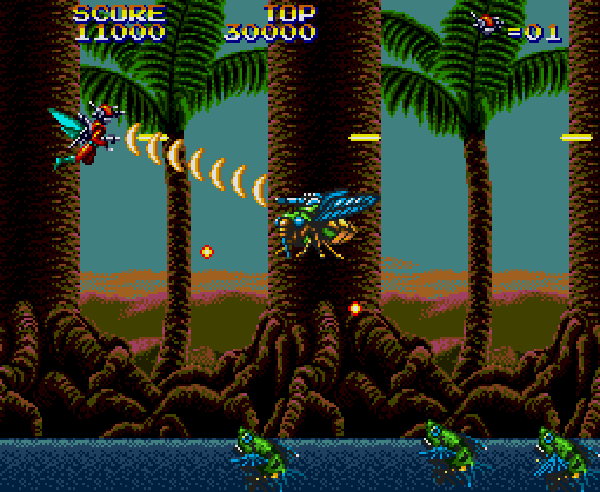
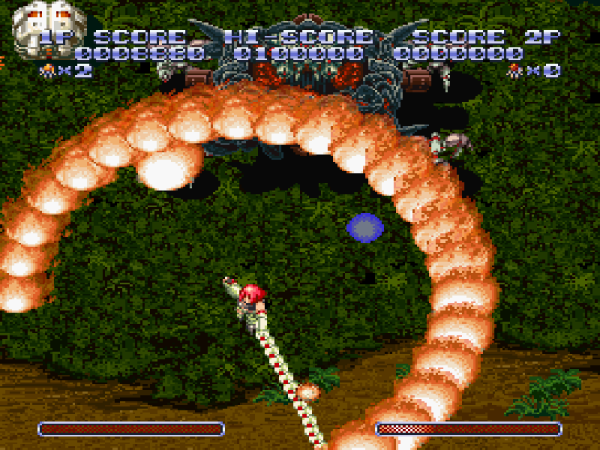
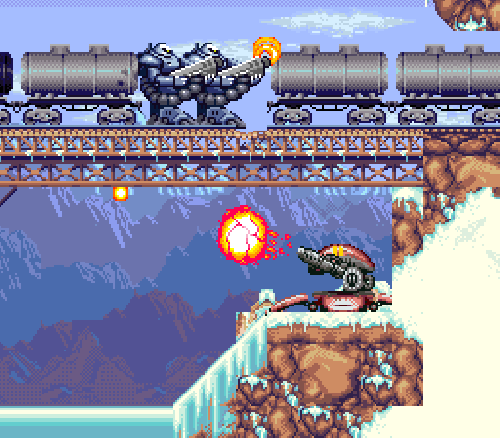
There I was the other night, playing Eco Fighters on the new Capcom Arcade 2nd Stadium collection. Eco Fighters is a creative and unfairly overlooked 2-D shooter, and the Capcom Arcade Stadium presents it well. Yet as I wove through flurries of enemy fire and blasted construction vehicles into scrap in some dubious effort to save the environment, one thought consumed me: how will future generations appreciate these old games?
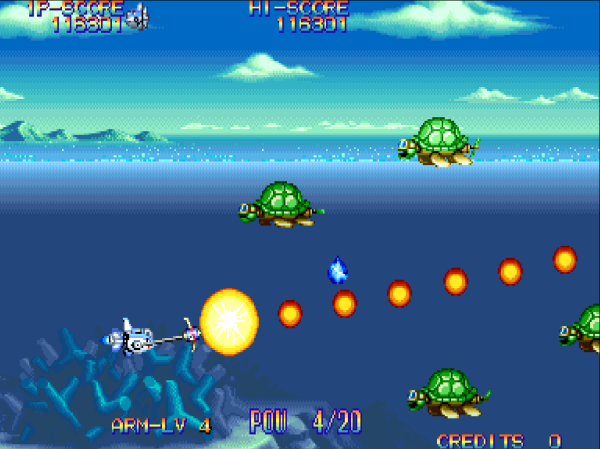
It's perhaps not a pressing matter or even a serious one. There’s no lack of repackaged older games these days, whether they’re cheap digital reissues or lavish physical copies meant to sit on the shelf beside those decades-old original games without complicating the effect. Yet there’s a haunting reminder that a lot of these re-releases trade heavily on nostalgia—and that when this nostalgia runs dry there’ll be no appetite among the new generations for Gaiares or Dragon View or the original NES Duck Tales

Nostalgia is an unreliable thing, after all. It can be the catalyst for personal reflection and historical analysis, and it can be an unchallenging refuge that lets us wallow in the past. Whatever the incarnation, nostalgia is an undeniable part of anything “retro,” to the point where the actual quality of the work might not matter so much as the memories it evokes. 

How, then, does one make these games relevant and palatable for modern audiences with no compelling recollections of, say, unwrapping Teenage Mutant Ninja Turtles II: The Arcade Game on some distant birthday?
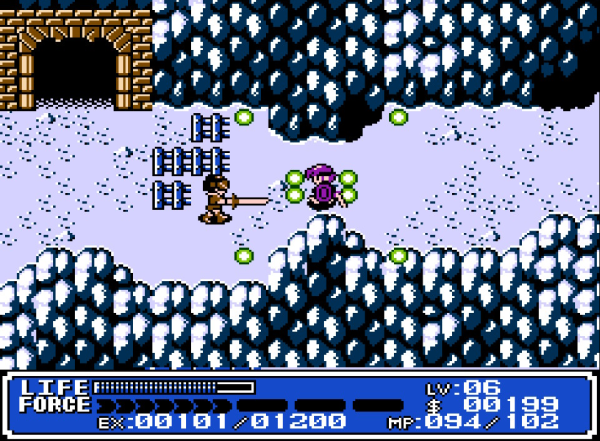
One possible solution is to grant the player unprecedented freedom in playing the game. The SNK 40th Anniversary Collection introduced a feature that let players skip to any point in a pre-established playthrough, just as easily as they might advance to a certain scene in a film. Most of the games in the collection weren’t all that interesting regardless of where one might skip to, yet it was an inventive new way to experience them—particularly in the collection’s standout, the phenomenal action/RPG Crystalis

Other re-issues dig into the games themselves, altering a few things to make them smoother or more interesting. Developer M2 seems to delight in rooting through the nuts and bolts of older games, especially those in the cruelly short-lived Sega Ages series, and adding a new feature or two that opens things up in new ways. Phantasy Star gets adjusted battle rates and experience levels that greatly improve its pacing. Lightening Force and Gunstar Heroes offer easier access to their arrays of weapons. It’s a great way to bring out a game’s best features and give those older fans a reason to pick up something they might've thoroughly explored already.
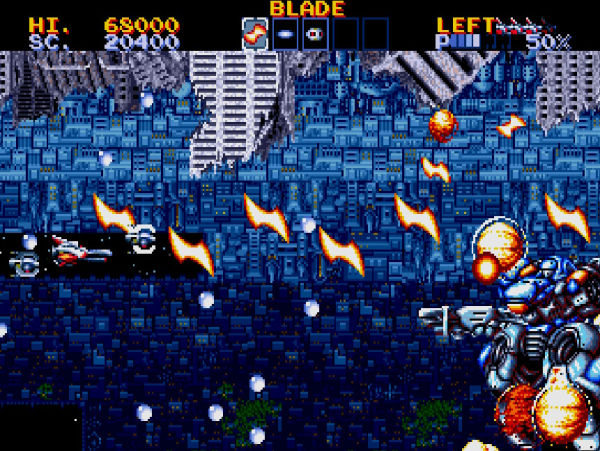
And what of the historical context of these games? Some retro-game reissues pattern themselves after the Criterion editions of movies, offering art galleries, interviews, and other extras that simultaneously entice hardcore fans and frame things for newcomers. 

Even so, such enhancements are preaching to a very devout High Seas Havoc choir. If nostalgia-free players, spoiled for choice with modern games that often imitate and even exceed the older ones, don’t care about Gunstar Heroes in the first place, they're not likely to care about new options or an interview with its designers.

It’s best to accept that these games will be forgotten by most. That’s the way of all entertainment or art: movies, television, books, theater, radio, postcards, billboards, backs of cereal boxes. The majority of it won’t be remembered at all by the majority of its audience. Why should video games dodge the inevitable?
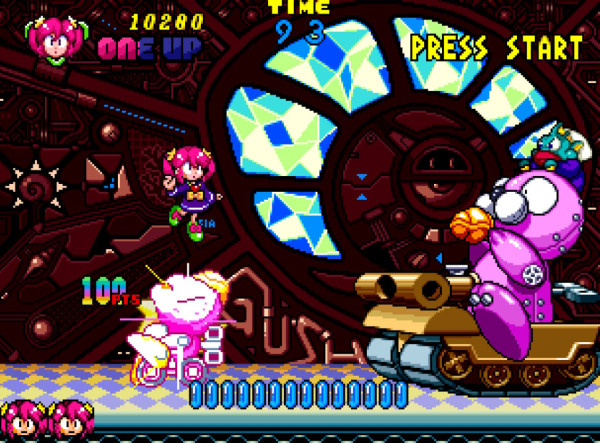
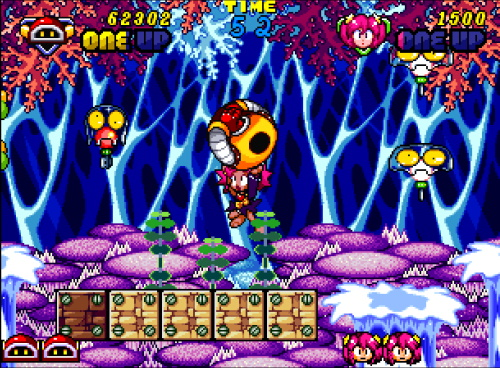
Westone’s Clockwork Aquario arrived on modern consoles last year, nearly three decades after the game’s original arcade release was canceled. Some people ignored it. Some played through it once and forgot about it. Some enjoyed it thoroughly. And a few adored it enough that they’re still playing it regularly even though it’s only 28 minutes long and I have dozens of other games howling for my attention. 

Things would have been much the same had Clockwork Aquario actually come out in 1993: it would have been dismissed by some, briefly enjoyed by others, and dissected and venerated by an exacting few. Such is the life cycle of most video games. 

And there’s the best answer we have: let these old games decide. Enhance them and remaster them and surround them with extras, but don’t be afraid to throw them on the mercy of new eyes without a hint of nostalgia. Let them be judged on their own merits. If they were ever good games in the first place, there’ll be some kind of audience for them. 

I have no doubt that modern reappearances of the Battle Mania/Trouble Shooter games, as much as I adore them, would meet with little success beyond the Sega Genesis faithful and fans of hyperdestructive ‘80s anime heroines, but I’d also hope that at least one person with no great overriding affection for the 16-bit era still would find them charming and memorable. 

That’s why it’s sometimes enough just to see an older game bundled in a collection, translated for new audience, emulated perfectly, or even rescued from the lost dimension of cancelled things. It has a chance, just as it would have had ten or twenty or thirty years ago, and even if great hordes of modern audiences fail to mass around it, don’t worry. Someone will care.

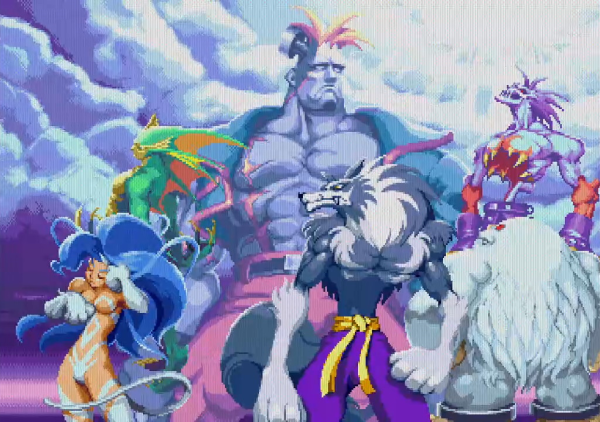
Voyage Into Darkstalkers

I usually can tell right away when I’ll like a game. It may take a little while to fully seep into place, but even then there's something that grabs my reptilian synapses right away: a striking title screen, a memorable piece of music, a first-stage appearance by a skeletal villain who calls himself the chief of governors. It's also rare for me to initially dislike a game and then come around to utterly adoring it. 

Well, I didn’t like Darkstalkers at first glance. It was the winter of 1994, and I was still very much enamored with a hyperviolent arcade fighting game called BloodStorm. That’s a strange tale in itself, but the short of it is that I really liked BloodStorm and couldn’t understand why it had disappeared from every arcade in Ohio. I held out hope during a Christmas visit to my grandparents in New Orleans, where the arcades were better supplied and surely would maintain a BloodStorm cabinet for me and the fifteen other fans it had across the nation.

They didn't, of course. The New Orleans arcades had a plethora of new and interesting sights, but BloodStorm was long gone. One of the games that had taken its place was Darkstalkers, Capcom’s head-to-head fighter starring various classic monsters culled from myths and movies (it started off as a Universal monsters pitch, in fact). Its fluid animation and ornate designs were amusing and impressively detailed beyond any game of the era.

I hated it. What was this weird new thing with a grotesque assortment of creatures? Who were these warped and cartoonish versions of boring old movie monsters? Where was the conventional and comprehensible gore of BloodStorm or Mortal Kombat II? And is that cat-woman naked? Can they actually show that?

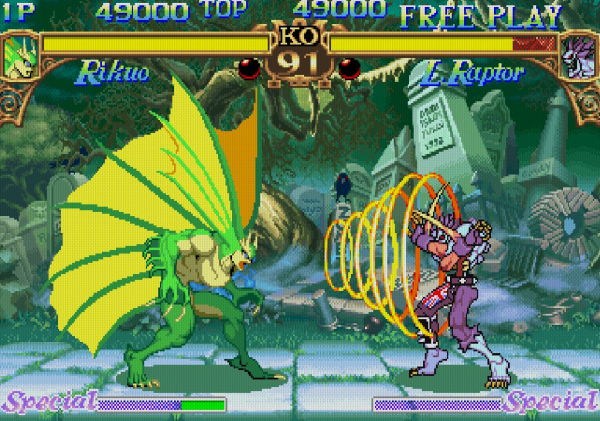
Darkstalkers earned only one try from me. I picked the spindly fish-man Rikuo, made it a few matches in, and then walked away. I couldn’t wrap my head around the bizarre sights and the bright backgrounds and the animation that was somehow a hybrid of Disney-style smoothness and anime expressions. And though I was accustomed to just about every fighting game dressing its female characters in impractical attire, I wasn’t going to be seen playing something with a character like Felicia, who indeed wore nothing but suspiciously sparse fur. 

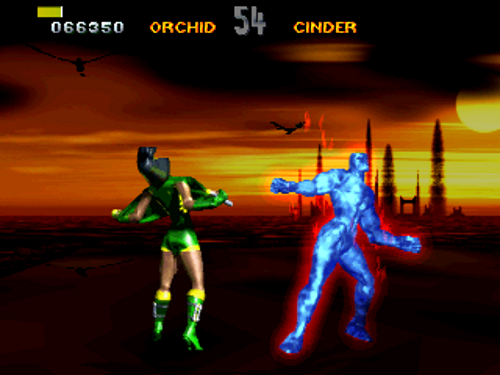
So I shunned Darkstalkers and sulked over to the new Killer Instinct machine. Its robots and ninja warriors and off-brand velociraptors presented far more comfortable characters, and the game’s sole human woman only briefly turned into a cat and faced away from the player when she pulled open her top for a finishing move. It was nice to see things back to normal. 


Yet things changed over the next year or so. I started reading GameFan Magazine, where Nick Rox and Takuhi and other writers would lionize the wonders of Capcom’s hand-drawn animation while pish-poshing the “plastic rendered deathfest” of Killer Instinct. Several 1996 issues had lavish spreads about the upcoming PlayStation version of Darkstalkers and the Saturn version of its semi-sequel, Night Warriors. I spent far too much time examining all the screenshots and artwork, picking out the details in the characters and their oddball attacks. 

 I was ready to give Darkstalkers another chance, and after getting a PlayStation later that year I lucked into a heavily discounted copy of Darkstalkers at a store-closing Babbage’s sale. I now had time to enjoy the game at home and soak in it all. 

And I loved it. Playing Darkstalkers outside of the arcade let me take everything: the colors, the animation, the background details from the swinging bar sign in London to the neon riot of the Las Vegas stage. Characters that I’d once written off as generic or silly now seemed remarkable. Jon Talbain wasn’t just a werewolf; he was a werewolf with nunchucks, a hilarious taunting pose, and a special move that sent him hurling like a ping-pong meteor all over the screen. Morrigan wasn’t a mere standard-issue sexy vampire woman; she was a playful succubus with Elvira-like swagger. Sasquatch wasn’t just another bigfoot; he was an adorable goof from his giant teeth to his huffy frost breath. 

As for Felicia, I was still uptight enough to dismiss her as a shameless piece of pandering. Then I saw the win pose where she turns into a regular cat and emits a pitch-perfect meow. At this point I grew convinced that she was the greatest character in the history of all artistic expression and that any who denied this should be exiled to a habitable yet remote island until they were willing to recant such heresy.


Darkstalkers even made me want to be better at fighting games. Capcom’s entries in the genre had always seemed a little complex to me next to Mortal Kombat or Killer Instinct, but with Darkstalkers I had an incentive to learn every move, as they always resulted in some entertaining new sight. It was worth struggling with a stiff PlayStation controller to see Bishamon slice his foe into halves like some Looney Tunes gag. 

All this grew from the less-than-perfect PlayStation port of Darkstalkers. It’s an impressive feat for what it is, but it has strange bouts of sluggishness and seems brutally hard. It took months for me to beat even the lowest difficulty setting. Yet it was a great introduction, and I was intrigued by the idea of a much better version. I can’t say that Night Warriors was my only reason for getting a Sega Saturn the next year, but it was the first game I picked up for the console. 

I never drifted away from Darkstalkers. I was there to import the Saturn version of Darkstalkers 3 and its RAM cart, there to buy Darkstalkers Chronicle: The Chaos Tower for the PSP a week before the actual system came out, and there to complain when the Darkstalkers collection for the PlayStation 2 never got translated and when no one bought Darkstalkers Resurrection years later. 

The lesson? Don’t give up on something after a rough first impression. Especially not if you’re a teenager who likes BloodStorm—or even an adult who still likes it.

Video Game Rental Stickers Tour: Part 2

I discussed my fascination with rental stickers a while ago, and I haven’t let go of it. As physical media grows scarcer and the last remaining rental stores vanish, it’s fun to look back on a lost era of game cartridges and discs that were covered in labels and warnings. So here’s another round of rental stickers found on eBay. And hey, you can buy them if you like! 


ART’S VIDEO CENTER’S KINGS OF THE BEACH 
Seller: Corey7521 
This one has it all: a shiny and professionally printed sticker slapped right on top of the game’s label, a less professional sticker with an inventory number, and then, on the back, a marker-written reminder that this is Property of Art’s Video until the end of time. It even refers to the game cartridge as a “tape,” because sufficient numbers of parents still called them “Nintendo tapes” circa 1990 and it would cost a store good money to print up new labels just for the game rentals.

Unfortunately, Art’s Video Center seems to be so long and so far gone that I can’t find any record of it online: no placeholder Yelp pages, no vague directory listings, no ancient archived news stories about the store’s grand opening. This auction and my article might be the only record of this rental outlet existing, so I’m glad to spotlight it here. And unlike other games I’m covering, Kings of the Beach is dirt cheap, just in case you want to own a piece of Art’s Video Center. 
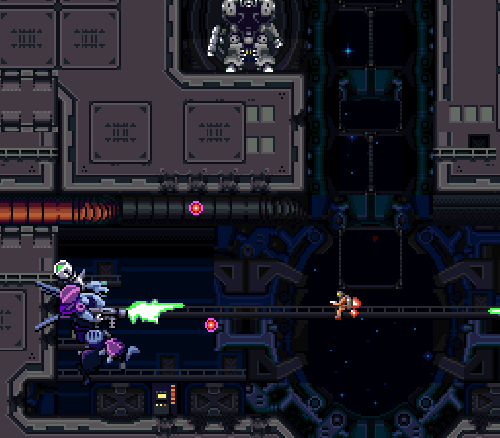
 

AN UNKNOWN STORE'S PRINCESS TOMATO IN THE SALAD KINGDOM 
Seller: awfulwaffles76
Some rental stores used generic cases for their video games, but this Princess Tomato in the Salad Kingdom has a less common white housing that I particularly like. Why? Because it makes Princess Tomato look like a kids’ movie in one of those cushioned, oversized white VHS containers. 
You can see it, right? A Princess Tomato cartoon, perhaps rendered in authentic Claymation or a reasonable facsimile, sitting right there next to the Disney films and Don Bluth movies and the censored, disguised anime imports in the children’s section of the video store? Perhaps some employee actually misfiled Princess Tomato there once or twice, either disappointing some poor kid who didn’t have an NES or delighting some fortunate kid who got a game rental for the price of a regular VHS checkout. 

Of course, Princess Tomato is not an animated film. It’s a cute adventure game where you explore a world of talking vegetables and where a sidekick persimmon throws out your items without asking. Like most cult-favorite NES games, it’s now very expensive. Still, if I was paying for a copy of Princess Tomato, I’d want the white Disney box with it.  


Unlimited Continues and Limited Enjoyment

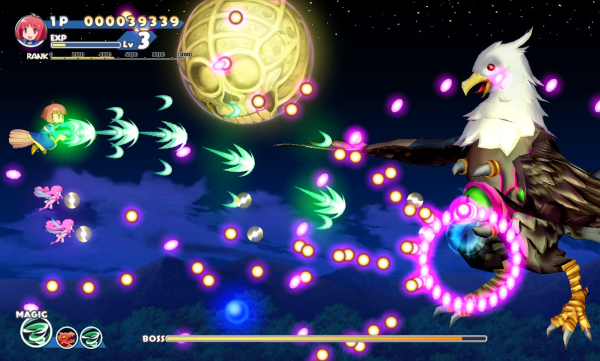
Cotton Fantasy arrived this month. It’s a cute, colorful, charming little shooter in all respects, and I said as much in my full review. It has a creative power-up system, clever stage design, and a great variety of playable characters. There isn’t anything really wrong with the game apart from one glaring, grating, unfortunate design choice: it gives you unlimited, on-the-spot continues. 

Upon losing all of their lives or energy, players are given the chance to continue. Some shooters boot the player back to the beginning of a level or an earlier point in that stage. But Cotton Fantasy lets players pick things right back up at the exact point where they perished, and the only penalty is the score resetting to zero. 


This isn’t uncommon in shooters. It’s a feature born from arcade games, where continuing requires the player to stuff another credit in the cabinet. In that light, getting to carry on the game with no pushback or punishment seems fair—a lot of shooters or side-scrollers even dole out power-ups to reward the player’s money.  

It’s not as welcome a feature in a game developed for a home system or an arcade game ported there. You’ve paid your money up front, and now it falls to the game to challenge you. That doesn’t happen when you can continue on the spot as much as you like.  

Unlimited continues rarely provoke any criticism from the devoted contingent of 2-D shooter fans who play their favored genre for high scores and the accomplishment of beating a game on a single credit. They’ll argue that shooters are meant to be one-credited and played for score, though if this were true the game shouldn’t let you continue at all.  

Some developers work around this. Treasure’s home versions of Radiant Silvergun and Ikaruga instituted a clever rule: players got a few continues to start, and each hour of time spent with the game granted another continue. And it worked. By the time you’d played enough to unlock free-play mode or rack up enough credits, you had also played enough to learn the patterns, master the weapons, and hone your reflexes well enough that you could make it to the last boss and its “BE PRAYING” admonitions anyway. It’s a shame that more shooters don’t apply that structure. 

Were shooters always like this? No. A glance across the libraries of the Super NES, Sega Genesis, and TurboGrafx-16/PC Engine reveals a wealth of shooters and action games, both original creations and those titles based on arcade games. And I have trouble finding a single one, from Axelay to Insector X to Spriggan to Zero Wing, that allows the player the crutch of unlimited, penalty-free continues right off the bat.  

When did this change? I’m not entirely sure, but I remember the problem coming to light when Strider 2 arrived on the PlayStation in the summer of 2000. GameFan, by then well into its second generation and billing itself as The Last True Enthusiast Magazine, ran a fawning review of the game, half of which was spent complaining about the Internet and sales figures instead of actually discussing the game in question. A month later, Electronic Gaming Monthly reviewed Strider 2 in somewhat positive tones but knocked it for giving the player unlimited, on-the-spot continues that, in their view “destroy this game for a wider audience.” 

Arcade of My Youth: Cap'n Bogey's Golf & Games

A woman knocked on our door one summer evening in 1992. She was circulating a petition against the planned construction of a huge arcade and mini-golf course not far from our neighborhood. As a Concerned Citizen, she felt that it would lower property values and promote delinquency in the delicate suburban environs of Beavercreek, Ohio. 

I feel bad for that woman. Not only did my father, a man so cautious he balked at giving his credit card to Blockbuster, decline to put his name on the petition, but her visit guaranteed that arcade one more customer: I was now aware of Cap’N Bogey’s Golf & Games, and I couldn't wait to go there.


Cap’n Bogey’s was close enough to our neighborhood to worry overprotective homeowners, and that meant it was within easy walking distance. Every weekend I’d hike there, usually early enough to avoid major crowds, and spend far too much time lost in a maze of arcade cabinets. My sister would tag along, but I’d make her walk a good distance behind me. Because you needed to look as cool as possible when you arrived at Cap’n Bogey’s.  

There were many arcades in the Dayton suburbs, but compared to the typical nook in a mall or the back room at a pizza joint, Cap’n Bogey’s wasn’t just an arcade. It was a kingdom. The main building surrounded itself with a golf course, bumper-boats, and batting cages. Inside, the first floor was devoted to a snack bar and redemption games, with everything decorated in white, blue, and occasionally pink. I usually walked past such juvenile distractions and made straight for the upper level and the genuine arcade games.

This was the 1990s, and that put me right in the middle of the fighting-game craze. Street Fighter II had started it in 1991, Mortal Kombat had cemented it in 1992, and within a few years every arcade had a wealth of head-to-head fighters and the whole industry was raking in profits not seen since the heyday of the early 1980s.

The Cap’n Bogey’s arcade was stocked with every genre, including four sit-down Dayton USA cabinets, two T-Mek machines wired for versus play, the elaborate foot-pedal setup of Time Crisis, and the glorious driving-shooting hybrid of Lucky & Wild. Yet it was the fighting games that drew me. The gaming magazines of the day couldn’t stop hyping up the latest Street Fighter or Darkstalkers or Samurai Shodown or Virtua Fighter, and the first place to see them was the arcade. This was well before consoles were on par with arcade hardware, and unless your parents bought you a $600 Neo Geo home system, the arcade versions were always just a little bit better.

Some of these games would vanish within a month, but the big names stayed and took me through the heights of an arcade renaissance and its whimper of an ending.

KILLER INSTINCT
Is Killer Instinct the best fighting game of the 1990s? Hardly, but I think it’s the best example of a 1990s fighting game. Rare and Nintendo fashioned it with CG-rendered visuals that looked impressive in early 1995 but awkwardly plastic by that September. The game boasted every possible stereotype in its lineup: a Predator-like robot, a mystically powered ninja, a boxer, a velociraptor, a low-detail ice alien, an equally low-detail fire mutant, and, of course, a female character whose signature finishing move involved pulling open her top to give her opponent a heart attack. I'd say that the 1990s were a different time, but in this case I'm not sure that applies.

I learned to play fighting games on Killer Instinct. I’d enjoyed Street Fighter II and Mortal Kombat, but I was never particularly good at them, rarely pulling off a special move more complicated than jamming a button really fast. Killer Instinct was approachable enough that I could pull off the special moves and even trigger the extended combo attacks that made the game’s announcer yell BLASTER or AWESOME. And when I went back to playing Street Fighter Alpha or The King of Fighters ’95, I actually understood what was happening.

There’s a better reason I remember Killer Instinct well. One Saturday, local radio station Z-93 set up a contest with a Super NES and the newly released port of Killer Instinct. The previously selected participants didn’t show, so the station held a quick lottery and drew names of five random arcade patrons. I threw my name in and, thanks to the relatively light crowd, I got picked.

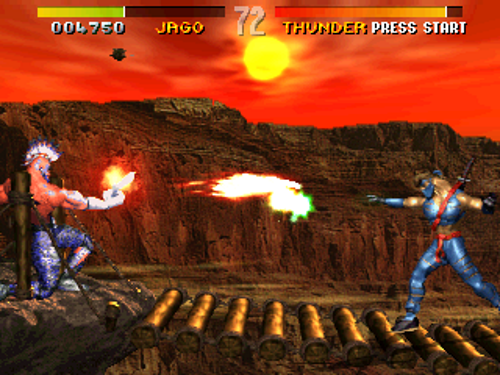
The contest wasn’t an actual tournament. Instead of facing each other, the five of us just played solo, using the ninja Jago, to see who could rack up the highest score in a single match. This was clearly planned by someone who still thought that video games were in the score-driven heyday of Pac-Man and Space Invaders, even though an actual fighter like Killer Instinct was all about beating an opponent and showing off an ULTRA combo.

And I won. I managed to perform a bunch of combos and Jago’s finishing move, which put me well ahead of the other participants. I got a nearly new Super NES and made a brief appearance on the radio. To this date it remains the nicest thing I’ve won in a contest, eclipsing the cake I got at a county fair when I was five and even the used DVD of Steel Angel Kurumi Encore that I received in a trivia challenge at Anime Central.

In retrospect, spending all my time in the upper-level arcade of Cap’n Bogey’s wasn’t as practical as visiting the lower-level, where at the very least I could have played skee-ball, earned tickets, and exchanged them for prizes. Yet that day I walked out with a game system and the assurance that, for once, no one could tell me that I’d wasted my time at an arcade. 

Valkyrie Elysium: The First Profile

Gosh, I really wish someone would make another Valkyrie Profile game. It's been over a year since Valkyrie Anatomia shut down, and that was a mobile game with all the expected baggage. It's gotten to the point where I'll latch on to any unrelated name with Valkyrie in the title, like Square Enix's newly announced Valkyrie Elysium.

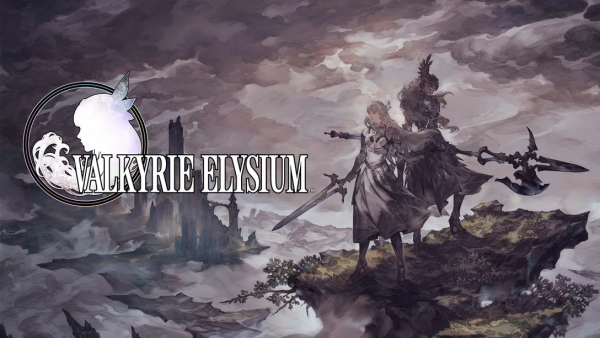
Oh wait. Elysium actually IS a new Valkyrie Profile. It has the signature series silhouette in its logo, after all.

Yet the game's initial trailer doesn't show much immediate connection with earlier Valkyrie Profiles. We're told that Odin has summoned a valkyrie to ferret out the reasons for the apparent ruin of the worlds both below and above. And as Valkyries are wont to do, she’ll roam the land and recruit the souls of brave and dead mortals to join her cause. 


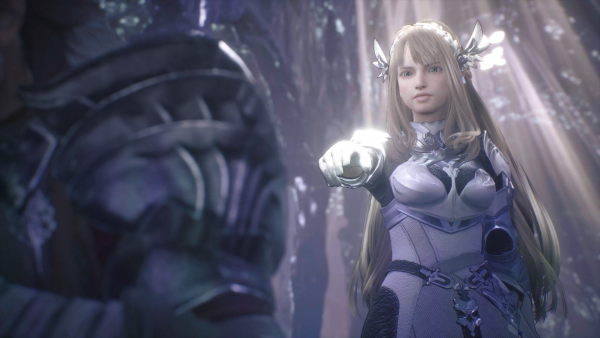
It’s the same premise as the original Valkyrie Profile, but Elysium has an apparently new heroine and a new emphasis on combat. The first trailer shows off a 3-D action game in which the blonde heroine (who’s seemingly not Lenneth Valkyrie OR her sister Silmeria) leaps and slices and dashes around. Square Enix’s initial writeups promise that her einherjar recruits can join her in battle, though there’s only a flash or two of that in the trailer.

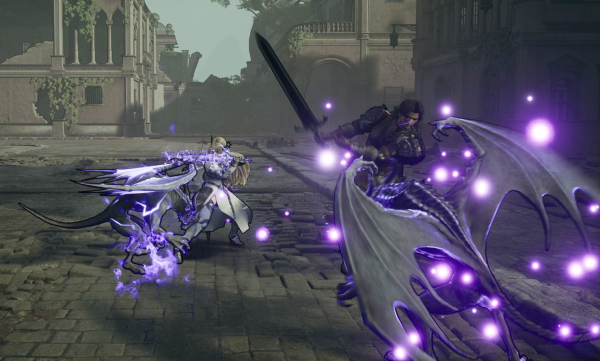
As many have critically observed, Valkyrie Elysium doesn’t look so great. The scenery is sparse well beyond an intentionally bleak landscape, and the battle system doesn’t show enough to set it apart from any other brawler where you might juggle enemies for mid-air combos. It resembles a routine mid-level action game from the PlayStation 2 or PlayStation 3 era.

And I'm looking forward to that. The rising budgets of the modern game industry eroded a lot of the middle ground over the past generation, bifurcating the market into indie creations and expensive triple-A blockbusters. In its primitive looks and apparently ambitious plot, Valkyrie Elysium hearkens back to an era where developers didn’t worry if their ideas were too big for their budgets—an era of Bujingai, Gungrave Overdose, Red Ninja, Spy Fiction, Nano Breaker, Folklore, and other 3-D action games with unique styles and compelling mechanics wrapped up loose and cheap, like a Christmas present from a younger sibling.


Developer Soleil Game Studios seems new and untested, but their catalog is awash in B-level action. Games like Wanted: Dead were once commonplace, and though they couldn't stand next to polished, lengthy, and balanced blockbusters, they could at least share a store shelf.

That’s why I’ll refrain from judging Valkyrie Elysium on appearances. It’s always the part of a game that interests me the least. I’m more intrigued by the prospect of Valkyrie Profile’s button-jabbing, combo friendly RPG battles morphing into a faster-pacer action game. I’m looking forward to seeing just what Elysium does with the whole concept of valkyries, a myth seldom explored fully by video games. If I were hung up on how nice a game looked or how smoothly it ran, I might have discarded Nier, Pandora’s Tower, Advance Guardian HeroesDrakengard 3, or perhaps even dear Gravity Rush. How disturbing.


Besides, Valkyrie Profile fans must admit that we weren't getting another game in any fancier packaging. Valkyrie Anatomia lasted four years but now seems largely forgotten. Covenant of the Plume, the DS strategy-RPG, earned far less of a following than it deserved. And even Valkyrie Profile 2, the last outing for consoles, didn’t catch on like the original. We're lucky to have a new Valkyrie game, opaque as it may be in referencing the original series. 

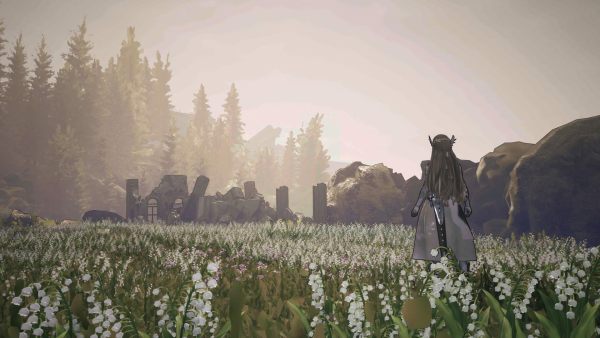
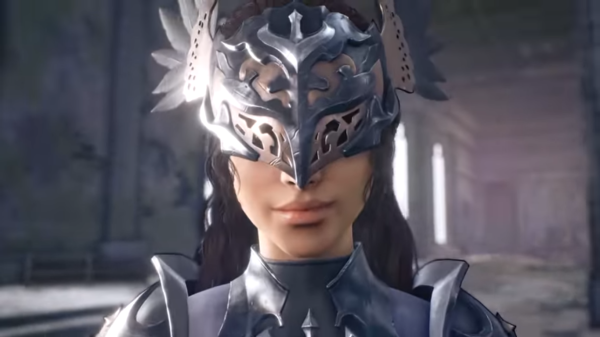
Of course, there are links to be found. You’ll see the field of weeping lilies that figures prominently into Valkyrie Profile motifs, and the official art and the last shots of the trailer show a halberd-wielding, raven-tressed armored figure who's a dead ringer for Hrist. She's the grouchiest of the three Valkyrie Profile sisters--and the only one who didn't get her own game.

The main illustration implies that she’s equal to the protagonist, though I'm afraid that 1980s cartoons like G.I. Joe, Masters of the Universe, She-Ra, Beverly Hills Teens, Visionaries, and Lady Lovely Locks conditioned me to assume that all fictional dark-haired women are innately evil. I'm not sure if I'm kidding.

And what about the new valkyrie heroine? My nutty suspicion is that she's related to the amalgam Valkyrie we saw at the end of Valkyrie Profile 2, when Hrist, Lenneth, Silmeria, and human princess Alicia all combined into one warrior like little Norse toy robots. That likely won't bear out in the game, but I should get it out there just in case I'm right and Square Enix owes me a payoff to keep me from suing. I'm pretty sure that's how spoilers work.


I might never be able to fully hate anything that involves Valkyrie Profile, but I think there’s some valid anticipation here. Valkyrie Elysium looks like a potentially cool new take on a favorite series and the sort of mid-range action game I’d like to see more often. And hey, the music’s nice.


Bounty Arms: The Hermie Hopperhead Connection

So what's new with Bounty Arms? Nothing major, as you might expect when it comes to a PlayStation action game canceled back in 1995. However, I made a Twitter post about how Data West’s Bounty Arms is chief among my video-game white whales, edging out Mega Man Legends 3 and Ultimate Journey and even Super Dog Booby


It received a decent number of likes for a game that never got noticed much when it was viable and in development, and I'm grateful for all of the responses—even the one from somebody who wants to see Bounty Arms heroines Chris and Rei as muscular circus clowns. Sometimes the best way to keep an obscure video game alive is through equally obscure predilections.  

So it's a good time to discuss Bounty Arms. In the absence of real news, I'll just speculate about the connection between Bounty Arms and Yuke's.   

Yuke’s is best known these days for their extensive lineup of wrestling games, but they’ve tried all sorts of genres since Yukinori Taniguchi founded the company in 1993. Taniguchi figures tangentially into Bounty Arms’ history, as he worked on a number of Data West titles, including Rayxanber III and the LaserActive shooter Vajra.  

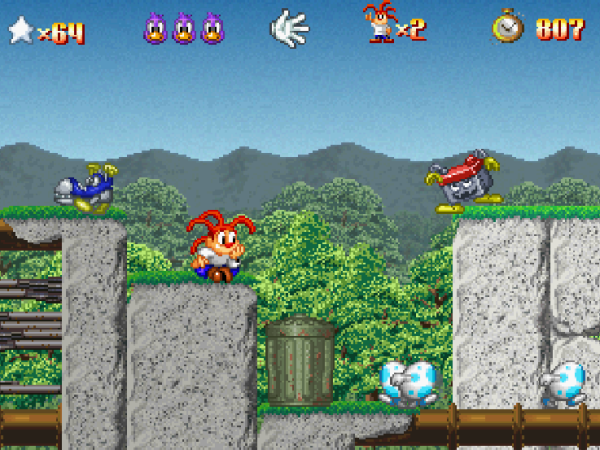
The first Yuke’s game unrelated to wrestling was an early Japan-exclusive PlayStation action-platformer called Hermie Hopperhead. While perhaps not a genre trailblazer in its depictions of a red-haired kid jumping on enemies and hatching allies from eggs, Hermie charmed GameFan founder Dave Halverson so thoroughly that he vowed to put it in every issue of his magazine until a publisher brought it to North America.   

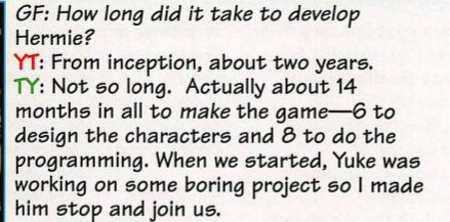
This did not come to pass, but before giving up, GameFan ran an extensive interview with Taniguchi and Sony’s Tetsuji Yamamoto. They discuss a lot about the company’s history, and there’s one interesting detail for the Bounty Arms files.  

Yamamoto mentions that Taniguchi was working on “some boring project” before they developed Hermie Hopperhead. Might this refer to Bounty Arms?  

I doubt that for two reasons. One: the timeline doesn’t quite add up, as Taniguchi had founded Yuke’s and apparently stopped working with Data West in 1993, years before Bounty Arms was announced or canceled. Two: I refuse to believe that anyone would find Bounty Arms boring, even in jest.   

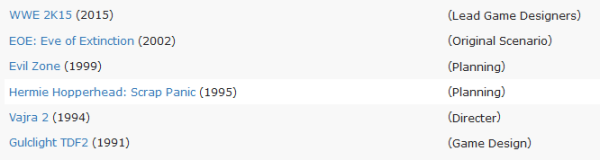
Yet there’s another connection. I’ve previously speculated about a former Data West staffer named Kenji Nakamura—and how he may be the same as Kazuhide Nakamura, who directed the first Vajra and designed or directed the three Rayxanbers. Even when sticking to separate credits, Kazuhide Nakamura directed Vajra 2, the last game Data West released before starting up Bounty Arms, and I suspect his departure was either a result of or the reason for Data West canceling it.   After leaving Data West, Nakamura joined Yuke’s. And what was his first game contribution there? 


Yep. Nakamura was a designer on Hermie Hopperhead. And that brings more speculation from me. Did he leave Data West to work on a new game at Yuke’s? Was he lured away by the opportunity to make a side-scroller about a street-savvy tentacle-haired boy and his battle against garbage enemies? Did Hermie Hopperhead kill Bounty Arms?  

Probably not, but it’s still interesting to play Hermie Hopperhead and other Yuke’s games that involved Nakamura, looking for any common ground or residual influences of Bounty Arms. I’m particularly curious about EOE: Eve of Extinction, a PlayStation action game with Nakamura as scenario creator and lead designer. It’s fallen into such obscurity that I can’t even remember if I ever played it, but I’m still driven to investigate for the sake of the Bounty Arms Preservation Society. And because the English version has a nice lineup of then-ubiquitous voice talent. Cam Clarke! Kim Mai Guest! Jennifer Hale!  

A few notes for those just learning about Bounty Arms: You can download the only known playable demo of the game here. And if you want to trick it into playing the entire first stage, check out these directions. And then you can devise nonsensical theories of your own!  

Little Things: Quarter Back Scramble

Lately I've grown interested in football games of the NES era, specifically those developed in Japan. At that point football (that'd be American football) hadn't proven nearly as popular in Japan as baseball or soccer or possibly even badminton, so I'm intrigued by what Japanese developers of the 1980s envisioned when crafting a sports game primarily for Americans.

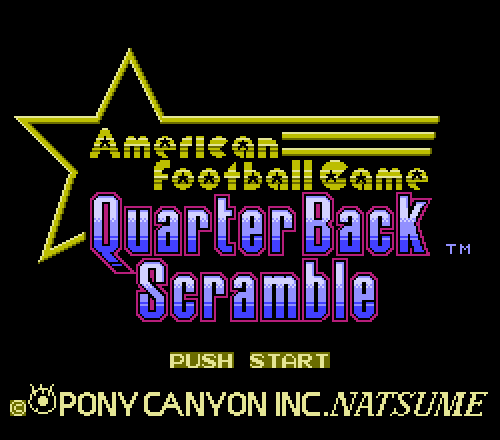
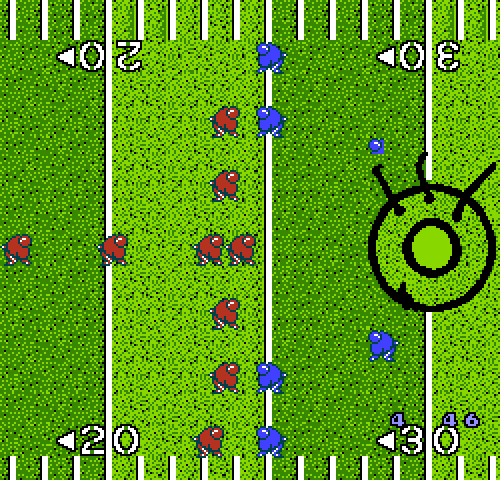
Quarter Back Scramble: American Football Game is a great example. Aside from the capitalization of “Quarterback” in its delightfully blunt title, it's mostly on point in its gridiron depictions, and it was scheduled to come out here as Mike Ditka's Big Play Football. It's also the work of Natsume, and its graphics and soundtrack even recall the slick appearances and punchy sounds of action titles like Shadow of the Ninja and S.C.A.T. 

Yet Natsume made one very strange decision with Quarter Back Scramble, and you'll see it as soon as you press start. 

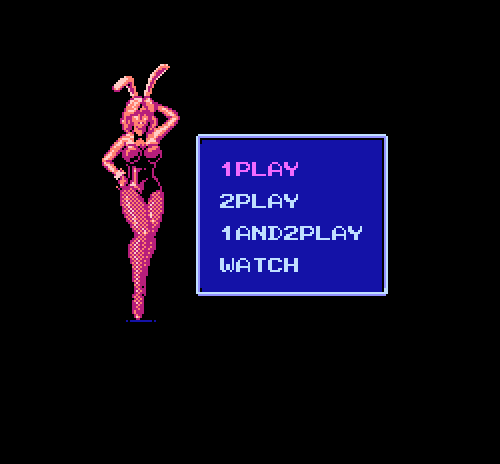
A woman in full Playboy bunny attire inexplicably poses next to the game's initial menu. She'd be right at home in a casino game of this era, but I have no idea what she's doing in a football title. There's a lot written about the sexist depictions of NFL cheerleaders, but I can find no record whatsoever of possible connections between Playboy costumes and football. Even the risque sights of the XFL cheer squads and the Lingerie Bowl were years away from Quarter Back Scramble's 1989 release.  

Natsume evidently wanted some sex appeal to accompany those staid gameplay options, but why not just show a cheerleader? Perhaps some confused programmer thought the rabbit-eared cocktail waitress regalia actually was the sort of thing football cheerleaders wore, but I doubt that, considering that a conventionally garbed cheerleader shows up in the game’s intro. Or perhaps Natsume just had leftover graphics from a canceled anthology of blackjack and poker games, and damned if they were going to waste them.

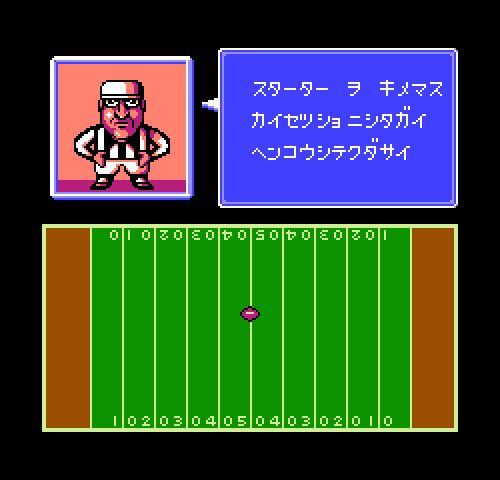
There are other amusing details in Quarter Back Scramble. I like the Pony Canyon logo in the middle of the field, as though the music publisher (and purveyor of many a crappy Famicom game) bought an entire football stadium. And like many sports games without official team licenses, Quarter Back Scramble had to make up its roster. You’ll pick from the Denver Miles, the Los Angeles Arks, the Chicago Forces, the San Francisco 50s, the New York Subways, and, my personal favorite, the Washington DC Hogs. With the real-world Washington team just about to announce a new name, I can only hope they’ll dig deep and reference a 1989 video game. 

I also appreciate Natsume’s rendition of the referee. Instead of a detached face or a stiff single image, he’s a squat little goblin in the super-deformed tradition of many an anime gag. And his expression relays that he’s not about to tolerate any guff from the more evenly proportioned football players.  

And then we have the game’s curtailed journey overseas. Accolade planned to release it on the NES as Mike Dikta’s Big Play Football but quietly canceled it. Footage of the American version shows only a few changes: the teams now have their official names, and the NFL logo replaces the Pony Canyon motif in the stadium—as well as the bunny-girl on the menu screen.  

However, Hidden Palace and the Video Game History Foundation recently released a prototype of the American version before Ditka and the NFL license were attached. It’s almost identical to the Japanese release, complete with rabbit-eared women inviting fans to Pony Canyon Stadium to watch the Denver Miles play the Washington Hogs. Accuracy aside, that would’ve been much more memorable for American NES owners than just another realistic football game.  


Clockwork Aquario: Emerging From The Depths

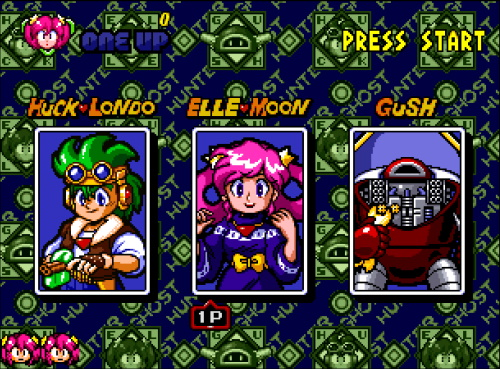
Clockwork Aquario is finally out. It's been a long wait, and I'm not just talking about the 28 years since the game went through some awkward arcade location tests and disappeared. It was 2012 when Westone co-founder Ryuichi Nishizawa found Aquario's source code and gave us a tantalizing look at Huck Londo, Elle Moon, and a robot named Gush...though they had slightly different names.

Nine years, slightly different names for Gush and Huck, and an extensive restoration project later, we have Clockwork Aquario on the Switch, PS4, and Steam just as it was meant to be in arcades back in 1993. I expected to like it at least a small amount, since I'm a fan of Westone's charming style and would probably put Monster World IV in my ten favorite games. 

Well, I love it more than I ever expected. My review goes into more detail, but the short of it is that Clockwork Aquario has everything I want from a side-scrolling action-platform runny-jumpy game. The enemy-tossing mechanic is a lot of fun, and Westone built the game with big, bright wonder and glued it together with a colorful energy that they couldn't do in, say, a Sega Genesis title.

I note that Clockwork Aquario is very short and doesn't really go that far with its ideas, lacking even a basic puzzle to solve by chucking foes around. Yet it's such a joyful, entrancing experience that such flaws never struck me as such, and it was only through forced nit-picking that I found any odd hit detection (stage four's flying fish) or the fact that Huck and Elle play mostly the same, with only Gush offering a bigger, slower target and a different style. It may have been designed as a simple bout of arcade escapism, never all that tough or that complex, but Clockwork Aquario has won me over so much it's joined the ranks of Games I Probably Won't Ever Shut Up About. I'll just have to make some room by rearranging Gravity Rush and Trouble Shooter.

Of course, I had to second-guess myself about  Clockwork Aquario's legacy overshadowing the game itself. It's a romantic reassurance to see a canceled game revived and completed and released to the world, as though some low-level time travel let us reach back decades and put a small injustice to rights. 

There's an assumption that canceled games are mediocre, messy, or otherwise lost for a good reason. That strikes me as specious. If you're cynical enough to assume that missing games deserve their fate, you should realize just as cynically that the game industry (and the entire entertainment industry, for that matter) routinely cancels things for vague and capricious reasons. Perhaps a narrowly chosen test audience hated it. Perhaps the publisher ran out of money. Perhaps an executive didn't have breakfast that morning and decided to nix a project because the lead programmer took their parking space. Or perhaps, as in Clockwork Aquario's case, it was a perfectly chipper action game when no arcade-goers really wanted that.

So Clockwork Aquario is wonderful both for what it is and what it suggests for other canceled games. True, this was a special case: the creators preserved a good percentage of the game and helped restore it. Yet I can't help but imagine how many other unreleased games might be waiting out there for a push onto modern systems. Might we see Bandai's The Ultimate Journey for the NES? Or SIMS' Devil Buster for the Sega Genesis? Or maybe someone will touch up and release another arcade relic, like Toaplan's Distopia. If so, I hope it gets the same treatment as Clockwork Aquario.

Fuga: Melodies of Steel, Memories of the Middle Ground

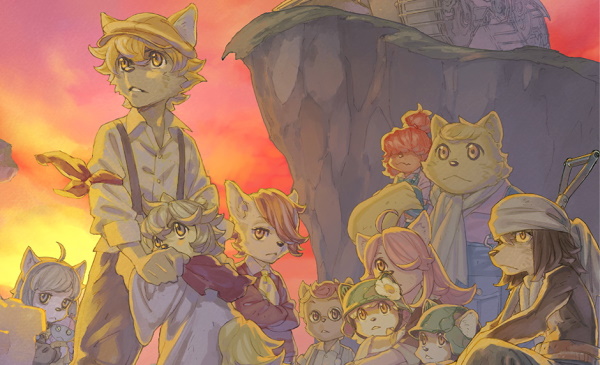
Fuga: Melodies of Steel belongs to the endangered species of middleweight video games. Neither a lumbering blockbuster nor a small-scale indie curio, Fuga is part of the Little Tail Bronx series that CyberConnect2 dearly loves and manages to visit about once a decade, and it’s their first independent release. It’s also priced at forty bucks and available only digitally, so it’s exactly the sort of title that may easily go neglected. And it shouldn’t. 

True, the game is niche by design. The previous Little Tail Bronx titles, Tail Concerto and Solatorobo and the obscure Little Tail Story, were joyful, bright-colored creations, but Fuga digs deep into a nightmarish animal-people vision of World War II.

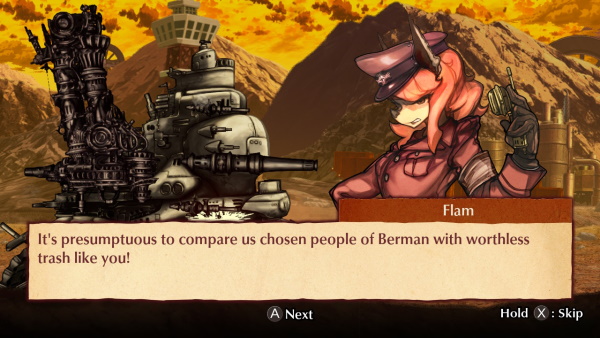
It never outright says that, but the allegory is apparent even before a gentle arcadia of villages, farms, and cat-folk named after foods is invaded by the Berman Empire, leaving a pack of kids to seize a mystical tank and head out for revenge. There's no dog-person demagogue named Badolf Bitler, but subtlety was never the aim here. 

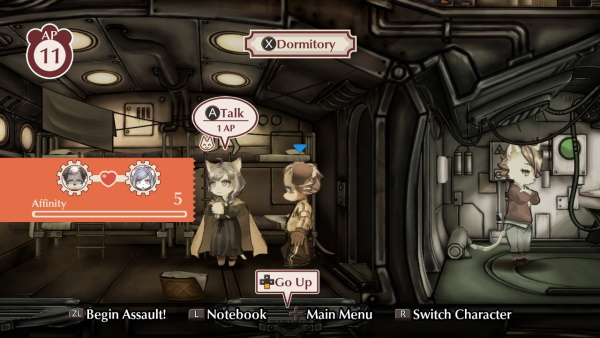
I reviewed Fuga months ago if you'd care to read my in-depth opinion, and I remain impressed by the way the game weaves simple tank battles and resource management into a small-scale social simulator. When not strategizing through the basic but hazardous showdowns with Berman armored units, you're helping the characters bond adorably over laundry and maps and the chicken farm that the tank somehow supports.

It all feels like a throwback to the Saturn and PlayStation era, when a developer could experiment and have the results on store shelves right next to the latest Marios and Maddens and Final Fantasies. The modern industry has plenty of room for independent, risk-taking creations, but rampaging budgets and triple-A releases have swept away that fascinating substratum of strange, inventive, and possibly flawed games that major publishers sometimes decided were worth the creative risks.

Today, unorthodox games usually get only online releases or limited-edition physical copies that don't earn the same attention. I think we’re better off overall, with hundreds of games that wouldn't even have been made twenty years ago, but I miss that level playing field. 

Self-publishing isn't the only chance Cyberconnect2 took with Fuga. I am perhaps the wrong person to ask about its use of an anthropomorphic version of World War II, complete with dog-people fascists conducting horrific experiments, spouting off about racial purity, or, in the case of the Dr. Mengele analogue, hiding his feline visage out of self-loathing. I always like it when something cute or allegedly lightweight dares to embrace sensitive material, no matter the incongruities. When others are offended or embarrassed, I remain amused and even impressed by something like Xenosaga's reckless integration of religious figures. That's another story for another time, though.

Yet even with characters who look like Polly Purebred: She-Wolf of the SS, Fuga doesn’t mock of any of its wartime traumas. It’s far more grim than its predecessors, and its cheerful scenes of characters forging friendships and fishing for scrap metal hit harder simply because they’re just respites from the looming horrors of a massive war. What could be incoherent instead fits together very well.

So I'd recommend Fuga: Melodies of Steel, whether you go for its digital release or wait for a physical copy that no one seems to be planning as of yet. It's a charming game, and it's also a visit to a place most publishers rarely go these days. CyberConnect2 cared enough about Fuga to put it out there themselves instead of waiting who knows how long for a larger company to notice, and for that I wish the game all the success a furry tank battle RPG could possibly have in this day and age.

Happy Gravity Rushoween

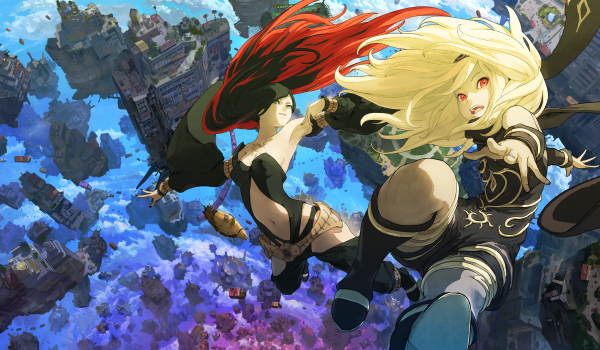
Regular visitors to this site might have noticed certain subtle hints that I like the Gravity Rush games. How much do I like them? Well, I ended up on Retronauts to discuss the series. As the podcast points out, Gravity Rush falls just outside of their ten-year cutoff, but I think it's worth that little bend in the rules.

I also think Retronauts is ahead of the historical curve in talking up Gravity Rush. True, the series did not become an evergreen Sony title like Ratchet & Clank or Gran Turismo or a certain mythology-mauling disgrace that I loathe too much to name. Yet it has everything an enduring cult classic needs: unique gameplay, gorgeous worlds, memorable characters, and just enough mystery and depth to invite speculation and sequel hunger even after Gravity Rush 2 wrapped up almost everything. There may never be another Gravity Rush game, but I don't think it'll ever go without a strong and potentially obnoxious fan base. And I'll always do my best to be part of that.

I'm also on the new Retronauts episode about Addams Family games, in which it's revealed that Fester's Quest might not be the weirdest game in this category. Uncle Fester fighting aliens is offbeat, but that TurboGrafx-16 outing is an entirely new world of baffling decisions. By the way, I have to correct myself. In the podcast I mention that Fester's Quest had a poster in Nintendo Power. Technically, it just had maps on the back of a poster. A minor gaffe on my part, but I don't want any avid collectors haunted by the suggestion that their old Nintendo Powers are incomplete. 

So that's my way of wishing everyone a happy Halloween. If you're in search of something appropriate to play, check out my older entry about Darkstalkers and other suitable holiday games. Or you could just fire up Fester's Quest.

A Dino Land Discovery

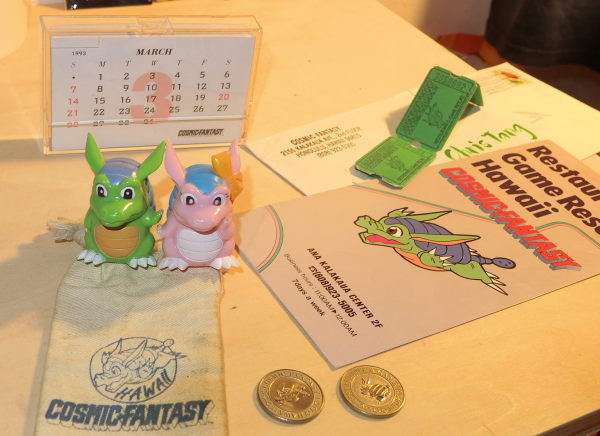
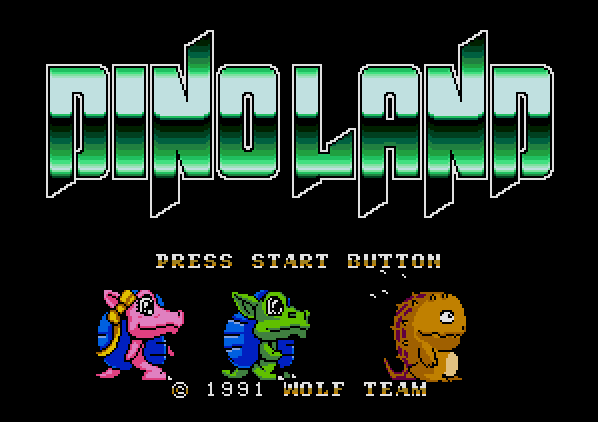
My previous entry sunk deep into the history of Dino Land, a middleweight pinball-video game from Telenet Japan and Wolf Team. While it had little time in the spotlight, Telenet used the Dino Land characters as mascots for their Cosmic Fantasy arcades. I recounted tales of people getting prize figures of the game’s protagonists, Bunz and Meeshell, and I wondered if we’d ever see evidence of them. 

Well, longtime reader Chris Tang (@strikeharbinger on Twitter) came through with amazing, incontrovertible photo evidence that those Dino Land figures existed. He even had some original tickets, a flyer, and a carrying bag from the Cosmic Fantasy Restaurant and Game Resort in Hawaii!


You’ll note that Bunz and Meeshell are molded so that their hands link together, making for an adorable pair of plastic toys and possible wedding cake toppers. Perhaps Dino Land wouldn’t be the number-one choice for a Telenet-themed reception, but I don’t think anyone will make bridge-and-groom figures of Earnest Evans and Annet Myer any time soon. 

I’m very glad to see these little collectibles. Dino Land may not be remembered among the best Telenet and Wolf Team offerings, but I’m fascinated that a company’s arcade briefly appropriated them for mascots. It’s a reminder of just how much odd video-game merchandise popped up in the 1980s and 1990s—and how little of it is documented well. The Japanese game market was compact enough that a publisher could crank out short runs of toys, t-shirts, or other promotional trinkets that would soon be forgotten by anyone who didn’t stop by a particular arcade or subscribe to the right fan club. As the push to preserve old video games and their attendant media expands into new horizons, we shouldn’t forget their toys, the proof that someone believed in a game enough to capture it in plastic.

Now, with this mystery laid to rest, I think I’ll see if anyone has the art cards from the Battle Mania Daiginjou cassette soundtrack.

Dino Land: Token Prehistoric Pinball

Telenet Japan has a good reputation if you know where to look. Aided by developer Wolf Team and its American publishing arm Renovation, Telenet dug out a fine little niche on the Sega Genesis in the early 1990s. Much like mid-tier anime OVAs rented from Blockbuster, Telenet’s action titles were flashes of an intense, bizarre realm beyond the conventions of the early 1990s. If they weren’t consistently well-crafted, games like Valis, Gaiares, Final Zone, Sol Deace, El Viento, Granada, and Arcus Odyssey were stylish and engaging enough to earn cult followings and, once the game-collector scene mutated beyond all control, command high prices. 

Dino Land isn’t among the upper tier of Telenet and Wolf Team fare in reputation or inflated eBay auctions. It’s a pinball game stocked with little dinosaurs, a far cry from the intergalactic wars and boomerang-slinging Peruvian sorceresses of other Renovation releases. For a while in 1992, however, it was the perfect game. 


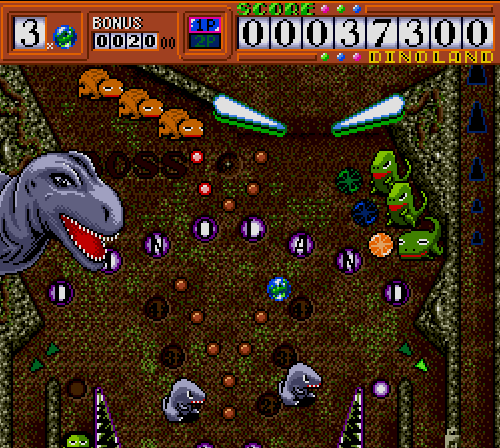
It’s a cute enough treatment of pinball, with prehistoric levels crawling with dinosaurs and their equally fearsome relatives. As in Alien Crush and Devil’s Crush, players send a ball flying across a unorthodox multi-level board, defeating little enemies and triggering secrets.  

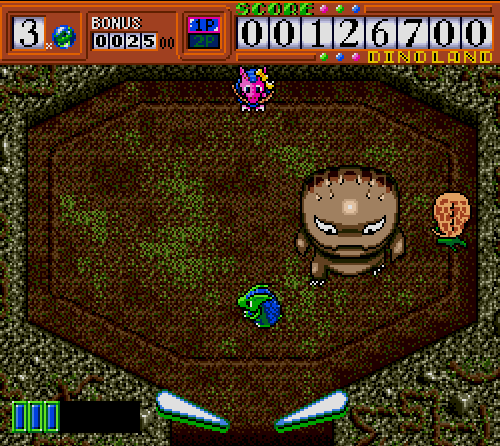
The actual ball, however, is a coiled-up Mesozoic armadillo named Dino-Bunz, and he’s out to rescue his pink girlfriend, Meeshell. If you land in the right spot, Bunz will unroll himself and march off into a boss fight, also played out in pinball form. And while most of the game occurs in the main jungle board, triggering its slot machine in the right way can warp Bunz to undersea or aerial pinball fields with bosses of their own.


It's too bad that Dino Land doesn’t do enough with its little creatures. The multiple stages and bosses are an interesting conceit, but the general flow of the game grows monotonous while too much of the scenery is only briefly charming. Compared to the spidery xenomorphs of Alien Crush or the monstrous imagery of Devil’s Crush, Dino Land seems bland in both looks and music. It’s actually more fun to watch the little protagonist scuttle around the board and high-score screen than it is to play the pinball. 


Even the dinosaurs aren’t varied enough. You’ll see a giant sauropod and some assorted genetic carnivores, but there’s nary a Triceratops, a Stegosaurus, or a Velociraptor to be seen. Bunz, Meeshell, and their non-combatant friend Malchi are all of an indeterminate arma-dino species, though they’re similar enough that I can declare them honorary Ankylosaurs.  

Yet there's more to Dino Land than a mere pinball simulator.

Unsung Game Creators: Takeru, Part 2

The second half of Unsung Game Creators’ Takeru feature is now up! While the first part was modestly hopeful in chronicling the developer’s side-scrolling action games Cocoron and Little Samson, the conclusion delves into the legacy of Nostalgia 1907, an adventure game that brazenly ignored just about every popular trend of its era. It’s a fascinating title for that reason as well as its own ambitions, but as we see, it wasn’t what the market really wanted.

We capped off the video by pointing out a unique thing about Takeru: they didn’t develop any licensed games. Just about every smaller developer, from Treasure to Wayfoward, funded their future cult classics by taking on projects based on movies, cartoons, and anything else that might have turned the heads of casual customers.

I won’t say that this was Takeru’s only mistake and that they should have canceled Little Samson and farmed out their esteemed ex-Capcom talent to making video-game versions of whatever TV shows or films looked at them twice. After all, they could have picked up Stunt Dawgs or A Far Off Place just as easily as a Jurassic Park deal. And perhaps Takeru just wasn’t around long enough to land any licenses.

As always, we’re thankful for every like, view, comment, and subscription we get—and for the patience subscribers showed during the long delay for this video. We’ll tackle some shorter subjects next, and they’re not quite as depressing as this one!

Metal Warriors: A Clinking, Clanking, Clandestine Classic

Metal Warriors walked a difficult path. Fresh off the cult favorite Zombies Ate My Neighbors, developers Dean Sharpe and Mike Ebert conceived Metal Warriors as their homage to mecha anime like Mobile Suit Gundam and Armored Trooper Votoms. LucasArts greenlit the idea, and the project went through bug-testing and development with surprising ease.

The problem came in getting the game to market. LucasArts initially struck a publishing deal with Nintendo, who discarded the game and countless other Super NES titles as new systems emerged in early 1995. Konami scooped it up for a mid-1995 release, but the production run was a mere 50,000 copies, and it was soon lost in the utter chaos of a year where multiple new consoles launched and the established ones saw their strongest libraries ever.


Metal Warriors inevitably provoked comparisons to Cybernator and the rest of the Assault Suits series. They’re both tales of robot warfare wages in space and on the earth, with semi-realistic mecha that clank and lumber just as much as they jet around with rocket packs or swing beam sabers (or lightsabers, as we can probably call them without fear of LucasArts suing themselves). Metal Warriors casts its player-named character, Stone by default, as the linchpin in a struggle against the dictator Venkar Amon and his Dark Axis Forces. No benevolent leader would name his army the Axis, so there’s plenty of fearsome opposition in the enemy mecha and their pilots.

Yet Metal Warriors shrugs away all ripoff accusations. In an interview from the second Untold History of Japanese Game Creators, Sharpe and Ebert reveal that they were inspired more by Blaster Master and the freedom it gave players in letting them exit a vehicle at will. Metal Warriors does the same, and Stone can eject from any mecha at any time, equipped only with a jetpack and a dinky firearm that damages only other tiny, robot-less humans. It turns Metal Warriors into less of a straightforward action game and more of a giant puzzle, as you’re driven to leave your protective mock-Gundanium frame several times in each stage. Or you can just see how far you can survive in puny pilot form. True freedom is often suicidal.


The designers didn’t stick to routine robots, either. Artist Harrison Fong devised an inventive roster of half a dozen different mecha. The Nitro and the Havoc are standard humanoid types, rushing and jetting and firing much like an Assault Suits machine, but it’s hard to find stock anime equivalents for the rest of the lineup. There’s Prometheus, a plodding bipedal tank that makes up for its slow pace and lack of jumping by sporting a flamethrower, mines, a shield, and cannons that let player control just when a shell fragments. There’s the Ballistic, which moves by rolling into a ball, charging up and smashing into things, though it can only fire when stationary. There’s the Drache, a flying ship with a dive attacks and eight-way gunfire. And there’s the Spider, which does the best it can by crawling on any surface and immobilizing enemies. It’s okay, Spider. You’re still an essential part of the game. 

Dynamite Düx and the Lost Sega Mascot

The history of Sega mascots is rather short for a company with such a voluminous catalog. Sega’s first attempts at company spokes-things appeared mostly in game manuals instead of the games themselves, as the rabbit-like Dr. Asobin and the blandly human Dr. Games traded places. Sega then toyed with Fantasy Zone’s faceless ship Opa-Opa before giving the vaguely simian Alex Kidd an iconic slot almost by default. In 1991, however, Sega concocted Sonic the Hedgehog and never bothered with another mascot. 

But what other characters could have filled that role? Which Sega game had the makings of a mascot if Sonic had never existed? I can think of one: Dynamite Düx.


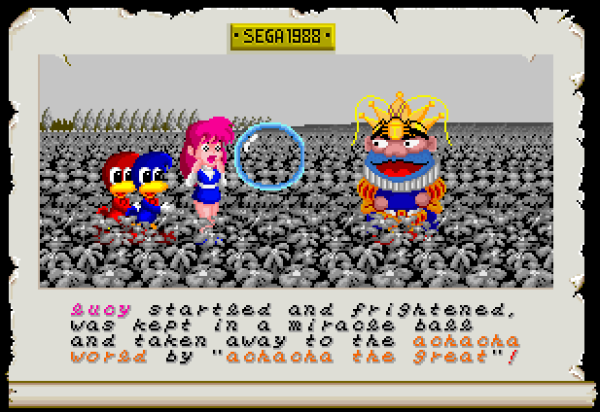
An obscure Sega title today but a modest success back in 1988, Dynamite Düx appeared during the heyday of the side-scrolling brawler, or “beat ‘em up,” popularized by Double Dragon. As the genre favored, things start with a woman’s abduction. Lucy, the owner of two large and partly dressed ducks, is kidnapped by an enchanter, and her pets take up arms to rescue her.

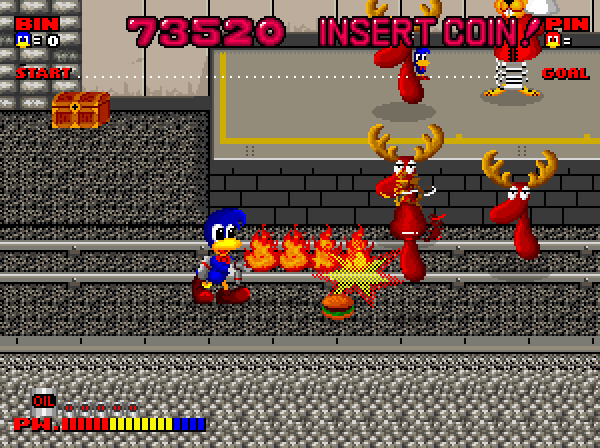
The typical brawler of the era had players controlling vigilantes and bashing around a street gang, but Dynamite Düx roams more freely. Heroes Bin and Pin face ranks of comical animals, including Bullwinkle-like moose heads and goggle-eyed soldier hounds, but their arsenal is suitable for any Contra or Metal Slug. Bombs, flamethrowers, machine guns, and rocket launchers all can be picked up and fired, and the game allows its heroes a little more range than the humanoid crime-fighters of other belt-scrollers. You're not limited to attacking just from the side, and that helps a lot in the crowded battles.


It’s messy and short and in need of more memorable bosses, but Dynamite Düx shines with the cartoon nonsense that video games handled so well back then. It’s an neat little hybrid: an early 1980s arcade game in concept, but constantly showing off the large characters and memorable sights that would define arcade classics from the era of Strider and Ghouls 'N Ghosts

Little Things: Totally Rad


If anyone tells you that story doesn’t matter to a video game, you’ll find the perfect counterargument in an NES side-scroller called Totally Rad. Jaleco’s American branch took a somewhat bland Famicom title named Magic John and remodeled its plot into a parody of the early ‘90s surfer-dude patois that everyone mocked and imitated at some point in between the first two Bill & Ted movies and Wayne’s World. The revamped dialogue turns a conventional game into a gnarly, badical, most righteous zeitgeist fragment, and it’s the main reason anyone really remembers Totally Rad.


Jaleco's American branch knew what they had with Totally Rad, and they knew it needed to stand out in some manner besides gameplay. That’s because Totally Rad largely just coasts through the basics of a decent action title of the NES era. It’s a perfect example of Jaleco’s proclivity for merely adequate games and developer Aicom's varying levels of quality. Protagonist Jake has a chargeable shot and a fun assortment of magic spells that range from healing to shapeshifting, and yet the level design is sometimes tedious and the control seems just a little more sluggish than the norm. It's not total in its radness, but it's still worth a play-through if you’re exploring NES side-scrollers, particularly those inspired by Mega Man. Then again, you could always just watch the tubular cutscenes or page through the faithful instructions.


There’s one more thing that I really like about Totally Rad. One very minor thing. 
 

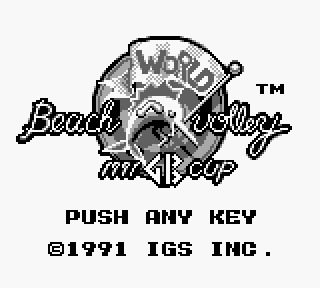
Might Have Been: World Beach Volley

[Might Have Been tracks the failures of promising games, characters, and companies. This installment looks at World Beach Volley, released for the Game Boy in 1991.] 

Cute sports games often go unappreciated. Most sports titles may strive for realistic takes on baseball, soccer, football, ice hockey, curling, field hockey, bowling, water hockey, snooker, cricket, dino hockey, and every other type of pastime, but credit must go to the developers who went the opposite direction and turned a popular sport into a simplified cavalcade of big-headed characters and approachable gameplay. It’s still a viable field today, but it was especially prolific on the Game Boy, where basic hardware inspired—or perhaps demanded—more abstract appearances. That’s where you’ll find Graphic Research’s World Beach Volley.


Straightforward in its presentation, World Beach Volley offers a player two-on-two matches with adjustable rules about points and court-swapping. Controls are handled well with two buttons for serving, spiking, and blocking. It’s all similar to Technos Japan’s excellent Super Spike V’Ball, though perhaps not as aggressive with its fierce spikes. 
 
Two players can take part via a link cable, but it’s not so bad to be stuck with computer-controlled opponents and partners. The AI actually proves helpful here, as it can spike and block instead of just setting up your character for a move. This also results in your teammate getting in your way at times, but that's the price of an independent thinker.


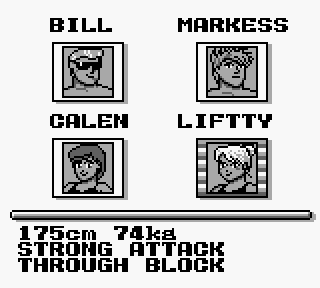
Shunning any real-world rules about gender-based leagues, World Beach Volley offers an international tournament where men and women compete side by side. You’re given a spread of six countries with four players apiece, complete with delightful names and specialties. What’s more American than a blonde spiker named Liftty and her “strong attack through block” or the “Big Fighter” Bill? Or perhaps you’d prefer the Russian player named Rossyan or Lie and her “Chinese Hope,” whatever that means? 

Lufia and the Fortress of Doom's Grand Opening

I did not own Lufia and the Fortress of Doom as a kid, but my cousins did. Each summer they’d bring it along when the family gathered at grandma’s house, and each summer I’d play the first few hours of the game. By the next summer my save file would be gone, long since overwritten by my cousins or one of their friends. I didn’t mind, because this meant that I got to play the game’s introduction all over again.

In Lufia and the Fortress of Doom, Neverland Company and writer/director Masahide Miyata made a bold move for a Super NES RPG from 1993: they opened with its final battle—or a final battle, at least.


It begins with an ominous crawl across a floating isle, the home of four godlike beings of destruction called Sinistrals. Four brave mortals, led by a warrior named Maxim, rise to face this threat, and we’re taken right to their climactic journey through the isle. Tales of ancient heroes are very common in a fantasy RPG, but instead of simply telling us how things went, Lufia and the Fortress of Doom lets us join the tale at its peak.


We find Maxim and his allies already at the heart of the Sinistrals' inner sanctum. With finely tense music and eerily vacant halls, the castle evokes a final stage so well a casual viewer might glance and assume that this is, in fact, the gripping climax of a 40-hour RPG and not just an opening in medias res

As befitting a final dungeon, heroes Maxim, Selan, Artea, and Guy are all high in levels and outfitted with powerful weapons and magic, and it’s hard for them to lose against the monsters that pop up throughout the fortress. You might notice, however, that those monsters pop up very often. Remember that.

The Sinistrals await at the heart of this citadel, and Maxim’s party tackles all four of them. Each is a screen-filling creature that’s a little harder to beat than the grunt-level monsters, though you’d have to make a real effort for them to defeat you. Aside from that, however, they feel like end bosses. They even disintegrate dramatically, just like a proper chief villain should.

Lost Anime: Metal Hazard Mugen

The anime industry was in chaos around 2007.  American publishers were ailing after years of releasing too many mediocre series via outdated methods, stores were deluged with unwanted DVDs, and Japanese companies still sought exorbitant licensing fees for shows with all the international sales potential of Fish Police. It’s no surprise that some anime projects vanished entirely in this bubble of fragile markets and unsustainable ideas. One of them was Metal Hazard Mugen, a series that made the remarkable move of telling people to stay away from it. 


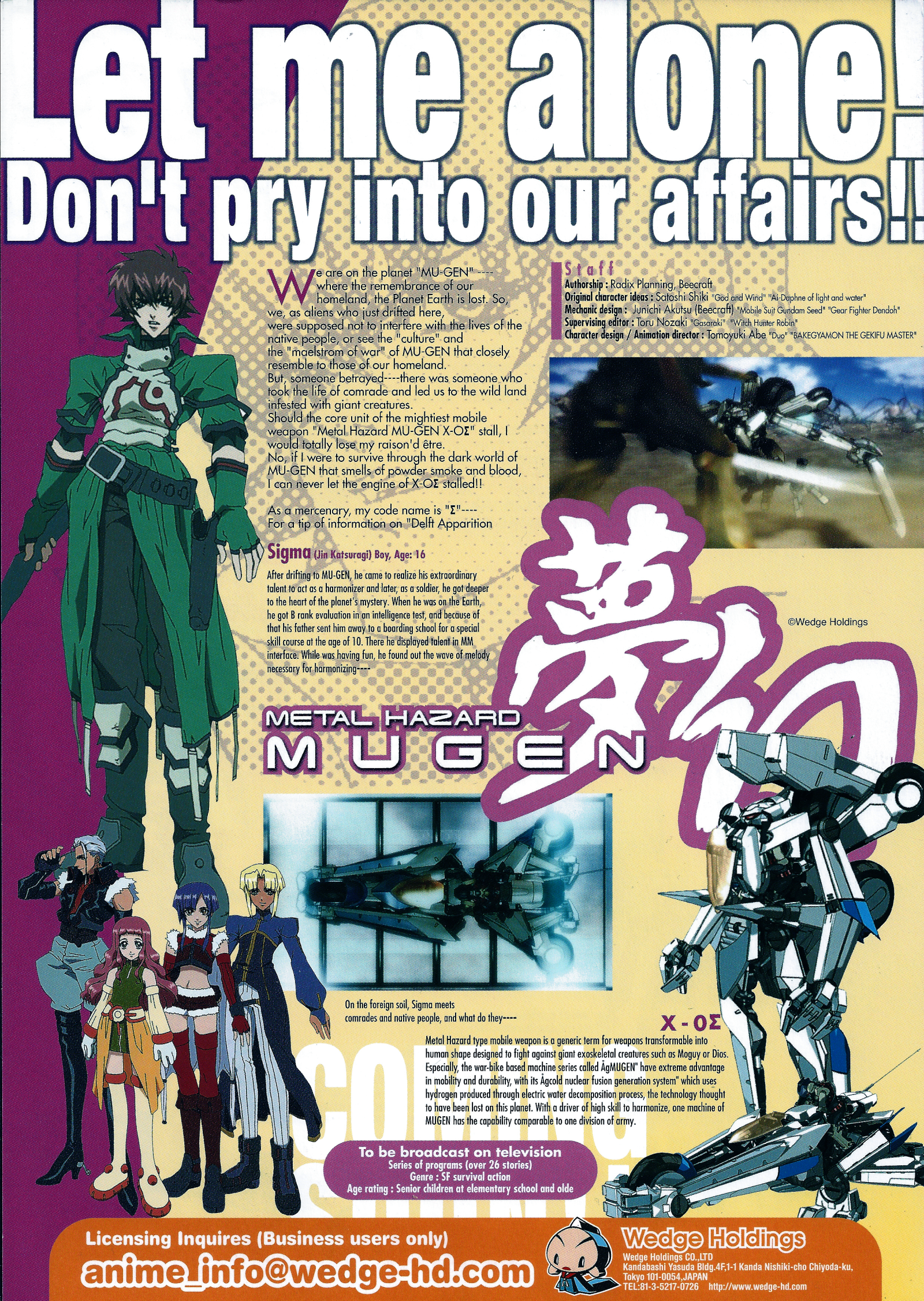
That’s the first impression the Metal Hazard Mugen flyer gives us, anyway, with its taglines of “Let Me Alone!” and “Don’t pry into our affairs!” At the Tokyo Anime Fair of 2007, Wedge Holdings promoted Mugen along with the CGI action flick Cat Blue Dynamite and a cuddly kids show called Kuma3. Cat Blue Dynamite came out online while Kuma3 apparently aired on Japanese TV, but Metal Hazard Mugen never surfaced. 

Reading the rest of the sell-sheet reveals that the taglines aren’t reverse psychology as much as they're trying to evoke the show’s bitter young hero and insular alien planet. Metal Hazard Mugen unfolds on a distant world where humans are the unwanted colonizers, and a mercenary and wealthy-family scion named Jin “Sigma” Katsuragi has discovered a talent for harmonizing with mecha. One of these, the Mugen X-OE, is a particularly powerful transforming car-robot, and it seems to be very, very important that its engine doesn’t stall, lest the pilot lose his raison d'etre. Maybe he's just late for work. 

The awkward text raises a number of questions. We’re told that humankind’s “remembrance of our homeland, Planet Earth, is lost” a mere paragraph before we learn how our protagonist ranked in an intelligence test back on that supposedly lost Earth. Sentences cut off at random, leaving us to ponder unexplained terms like “Delft Apparition” and “MM interface.” It’s almost confusing enough to be a Yoshiyuki Tomino series.  


Beyond the odd phrasing, though, Metal Hazard Mugen looks to be the most generic anime series you could find in 2007. It presents a hodgepodge of standard character designs, posed statically around equally stiff GC images of robot combat and linked by unmemorable jargon. There’s little to sell the series apart from a name or two in the credits: Toru Nozaki had some pull from scripting or co-creating Sunrise shows like Argento Soma, Flag, and Gasaraki, and Junichi “Beecraft” Akutsu is an experienced Gundam designer. It's strange that there’s no director listed, but perhaps the project was just that early.

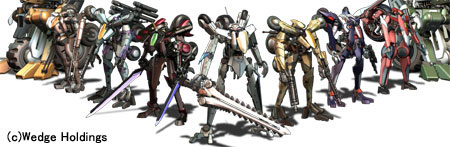
Did Metal Hazard Mugen have any potential? It’s possible that Nozaki might have thrown a curveball or two, as he did with Garasaki’s drift into spiritualism and anti-American politics, and the Mugen robot itself, presumably a Beecraft design, isn’t a bad take on a transforming motorbike mecha. And, uh…well, the blond, blue-clad character’s design is okay.  

The greatest flattery for Metal Hazard Mugen is that it doesn’t look that much worse than some of what actually made it to the market. At this point anime studios had cranked out drab mecha and science fiction series from Cybuster to Pilot Candidate to Starship Operators to Innocent Venus, and American publishers were still buying them. One can’t blame Wedge Holdings for thinking that Metal Hazard Mugen deserved to clog up a shelf at Suncoast with volumes two, three, and five of its overpriced DVD releases.  


Yet there was no publisher to rescue Metal Hazard Mugen. As far as I can tell, it never aired, and I can’t find a trailer for it. It’s even hard to locate evidence that it was ever announced; the most prominent news comes from a Turkish site’s snippet about Wedge Holdings announcing the series along with Kuma3 and Velvet Under World. The latter was a vanity project from actor Takehito Koyasu that only got as far as a trailer and some music albums. I’m not sure if Metal Hazard Mugen even reached that stage.  

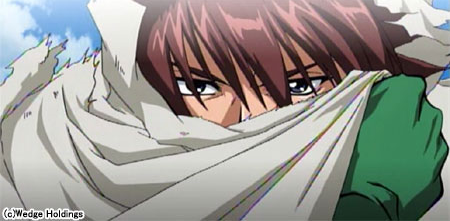
It’s possible that some pilot footage was cobbled together for the lone screenshot that survives online, but I doubt things went beyond that. Animation tends to cost more to produce than a live-action show, and no one would bankroll all of Metal Hazard Mugen’s 26 planned episodes without some guaranteed TV deal. Even so, I can’t fully dismiss the possibility that Metal Hazard Mugen was completed and aired on some obscure satellite station, possibly with full English voicework. Strangers discoveries have arisen among obscure anime.  

Perhaps Metal Hazard Mugen didn't fail simply on its own merits. If Radix Planning is the same company as Radix Ace Entertainment, they went out of business in 2006. Wedge Holdings still exists, but they’ve apparently given up on getting a piece of the anime market. I'm sure they'll love it if everybody pesters them about a certain anime series canceled almost fifteen years ago.  

Metal Hazard Mugen stirs no interest today. No one will mourn it as they might Five Killers or some other promising canceled anime of the bubble era, and that’s a fitting legacy. Mugen presents nothing but an unremarkable front, and in doing that it embodies everything forgettable about the global anime boom. But hey, it was thoughtful enough to tell us that it just wanted to be left alone.