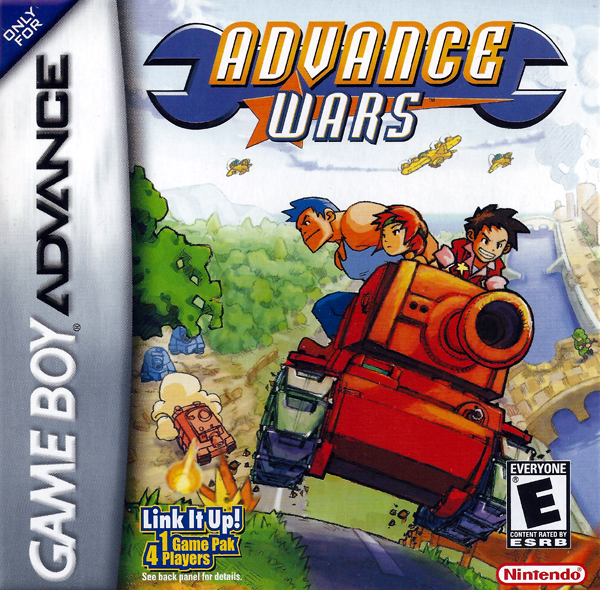
Sony’s Greatest Hits line is straightforward and mostly beneficial: publishers shamelessly reissue their games, and any interested holdouts or impulse buyers get to nab previously full-priced titles for about twenty bucks. These Greatest Hits revivals show slightly new packaging, however. Original PlayStation re-releases have a neon green border, while PlayStation 2 and 3 titles bear red standards. This doesn’t sit right with some collectors, who resent those colors glaring at them from a shelf otherwise filledwith traditional Sony-brand black labels.
I suppose that’s important, but I’d like to tell you about one Greatest Hits game superior to its original release.

That game is
Mega Man Legends, the first in a series that reimagines Mega Man as a 3-D action game in a world of floating isles and mechanized treasure hunting. It’s a wonderful line carried by capable designs and adventurous charms (for which Capcom looked more to
Yatterman than
Astro Boy), and I recommend all three titles.
I’d like to say that Capcom will put them on the PlayStation Network in North America just as they’ve done in Japan, but that’s unlikely. The most prevalent rumor is that Capcom doesn’t want to re-license the English voice acting. Using those performances might be controversial, anyway, since Teisel Bonne’s voice actor was convicted of child porn possession in 2008. Recording new voices or otherwise editing the game would be expensive and contrary to Sony’s PSN standards. And
Mega Man Legends never was a huge seller in the first place.
If you want the
Legends games legitimately and in English, it’s the second-hand market for you right now.
Mega Man Legends 2 and
The Misadventures of Tron Bonne already climb to exorbitant prices, but the original
Legends is more common and thus costs less than it did brand-new back in 1998 (and by the recently ballooning standards of retrogame collecting, that’s a bargain). If you go for it, don’t be ashamed of getting the Greatest Hits version and its day-glo cover. Here's why.
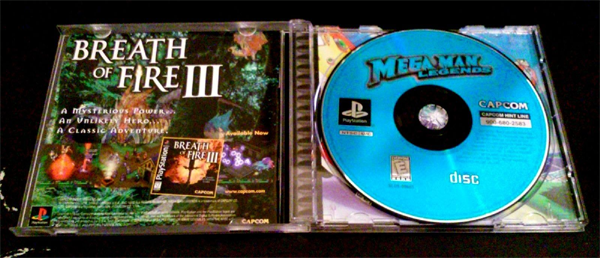
This is what you’ll find if you open the original black-label version of
Mega Man Legends. The manual’s back cover promotes
Breath of Fire III. Lacking the impressive artwork that accompanies even mediocre
Breath of Fire games, the ad isn’t all that interesting. By the way, I stole the photo from
this auction, so let’s be nice and visit it for the next few days.
And what about the Greatest Hits edition? It may be the color of a radioactive party favor, but within lies a nice surprise.
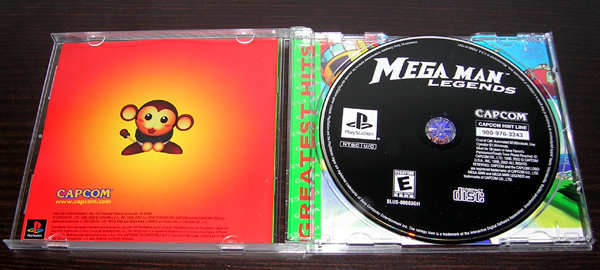
Yes, the back of the manual shows Data, Mega Man’s loyal Save Monkey! Fans of the series seem to adore the Lego-esque Servbots, but Data is every bit as cute. He saves your game, provides upgrades, and even does a little dance if you stand there and watch him. He’s much better than some pitch for a middle-ground Capcom RPG.
You’ll note that the Greatest Hits disc itself is a stodgier black instead of the original release's authentic Mega Man blue. Yet that's a cavil easily pushed aside. The Greatest Hits version of
Mega Man Legends has a precious little monkey-robot welcoming you every time the case pops open, and so it emerges as the better choice.

Even so, those persnickety collectors may have a point about the Greatest Hits label. It looks a little strange in my game library.